Darfur dispatch: A photo essay from the frontline of a forgotten war

 Facebook
 Twitter
 Flipboard
 Send
Send
 Reddit
 Linkedin
 Messenger
 Telegram
 VK
VK
 Bluesky
 Threads
 Whatsapp
Twenty years of war in Darfur through the lens of Swedish photographer Peter Biro. As conflicts drag on, attention fades and images lose their urgency. But the reality he captured does not disappear — and neither, he says, should our awareness of it.
Darfur is currently one of the worst-affected regions in the ongoing war in Sudan, where much of what is unfolding echoes — and in some ways repeats — the violence of the early 2000s.
 ADVERTISEMENT
ADVERTISEMENT
ADVERTISEMENT
Peter Biro, reporter and humanitarian aid worker, was there at the time, documenting the Sudanese government and allied Janjaweed militias as they carried out a ruthless campaign against rebel groups and civilians in Darfur, killing hundreds of thousands of people and displacing millions more.
As a Euronews reporter, I met Peter years later, while covering humanitarian crises around the world for the Euronews flagship programme Aid Zone.Sudan was still at war, rape was still being used as a weapon of war.
In this photo essay, images Peter captured 20-years ago echo those taken today, as he returns in what is now the fourth year of the country's latest civil war. “History repeats itself,” he told me. “The scars run deeper, with civilians once again caught in the cycle of violence.”
Tawila: a town overwhelmed by war, disease and displacement
"I first came to Sudan’s Darfur region over two decades ago, when the world was just beginning to grasp the scale of the first war. I remember the dust, the long drives between settlements, the resilience of people who had already lost too much. Back then, the violence felt both immediate and incomprehensible — villages burnt to the ground, testimonies of mass killings and rape of civilians. I left thinking that what I had witnessed was the worst it could get.
Returning now, in the third year of Sudan’s current war, I realise how wrong that was.
Tawila, in North Darfur, is where that realisation settles in. From a distance, the town seems to dissolve into a patchwork of tarpaulins and makeshift shelters, stretching further than the eye can follow. Smoke rises in thin lines from cooking fires and the wind lifts scraps of plastic and cloth as if the entire settlement might come undone at any moment.

But what strikes me most is not the scale, it is the familiarity. The patterns are the same. The displacement, the loss, the violence, the sense that people are once again being pushed to the very edge of survival.

A staggering 700,000 people are now living in and around Tawila, making it one of the largest displacement sites in the world. The numbers are almost impossible to comprehend until you see them — in the endless rows of shelters, in the crowds gathering at water points, in the sheer density of human need compressed into a single place.

The war that erupted in April 2023 — a power struggle between the Sudanese Armed Forces and the paramilitary Rapid Support Forces (RSF) — may appear, from the outside, like another political crisis spiralling out of control. But here, in Darfur, it folds into something older and more entrenched. The same fractures I saw twenty years ago, over land, identity, power, have reopened, deepened.
Tawila has become a destination of last resort; people arrive here because there is nowhere else left to go.

I meet families who have fled not once, but multiple times, from one fragile refuge to another. Each time they move, they lose more: possessions, livestock, savings, connections, their lives. Resilience, a word we use so easily in humanitarian work, is visible everywhere here, in the way people rebuild, share and keep going. But it is under extreme strain. You can only start over so many times before even the strongest begin to fray. The infrastructure has long since given way under the pressure. Water points are overwhelmed. Health services and food supplies are stretched beyond their limits. Aid systems, already fragile, are struggling to keep up.

I think back to my first time in the region — initially on the Chad-Sudan border as people fled in 2004, then in Darfur in 2006 — when access was difficult but not impossible, and the world’s attention, however fleeting, still translated into some momentum.

Now, insecurity, damaged roads and restrictions imposed by armed groups make reaching places like Tawila extraordinarily hard. The crisis feels both immense and largely unseen.
That is what unsettles me most.

People here have lived through months of siege, particularly those fleeing from El Fasher, the capital of North Darfur. They describe roads filled with families moving on foot or by donkey cart, carrying what little they have left. Along the way, many are stopped by armed men, robbed, beaten, sexually assaulted, sometimes killed. One woman, Jawaher, tells me about fleeing with a small group when RSF fighters intercepted them. They beat her and took all of her possessions, even her shoes. Then they opened fire. Two people she was travelling with were killed in front of her.
And then there is the slow violence of disease and hunger.
Cholera is spreading through the settlement, fed by unsafe water and overcrowded conditions. Measles too, cutting through communities where vaccination has long been disrupted. Health workers are doing what they can, but the gaps are obvious. There are simply too few supplies.

Malnutrition is perhaps the most visible marker of how bad things have become. In a feeding centre supported by the European Union, I see children with thin limbs and swollen bellies, their bodies already weakened. Mothers tell me they are eating less so their children can eat at all. It is a choice no one should have to make.

I remember, 20 years ago, thinking that the international response — however imperfect — at least carried a sense of urgency. There was outrage, attention, pressure from politicians and Hollywood actors.

Today, Sudan feels like a crisis competing for space in an already crowded and damaged world. Funding is short. Attention is fragmented. Aid agencies are forced to make impossible decisions about who gets help and who must wait.

It forces me to confront a harder truth: that without sustained attention, without political will, without the resources to match the scale of need, history is bound to repeat itself.

For people stranded here, survival depends on fragile aid pipelines, on whether supplies make it through, on whether the next delivery arrives in time. But it also depends, in part, on whether the world is willing to look closely enough and to care."
Go to accessibility shortcuts Share CommentsRead more
Remembering Martin Parr: Britain's 'national photographer'
Схожі новини
Росіяни вночі атакували Дніпро: у місті палає багатоповерхівка, - ОВА. ФОТОрепортаж
В окупованому Криму пролунала серія вибухів
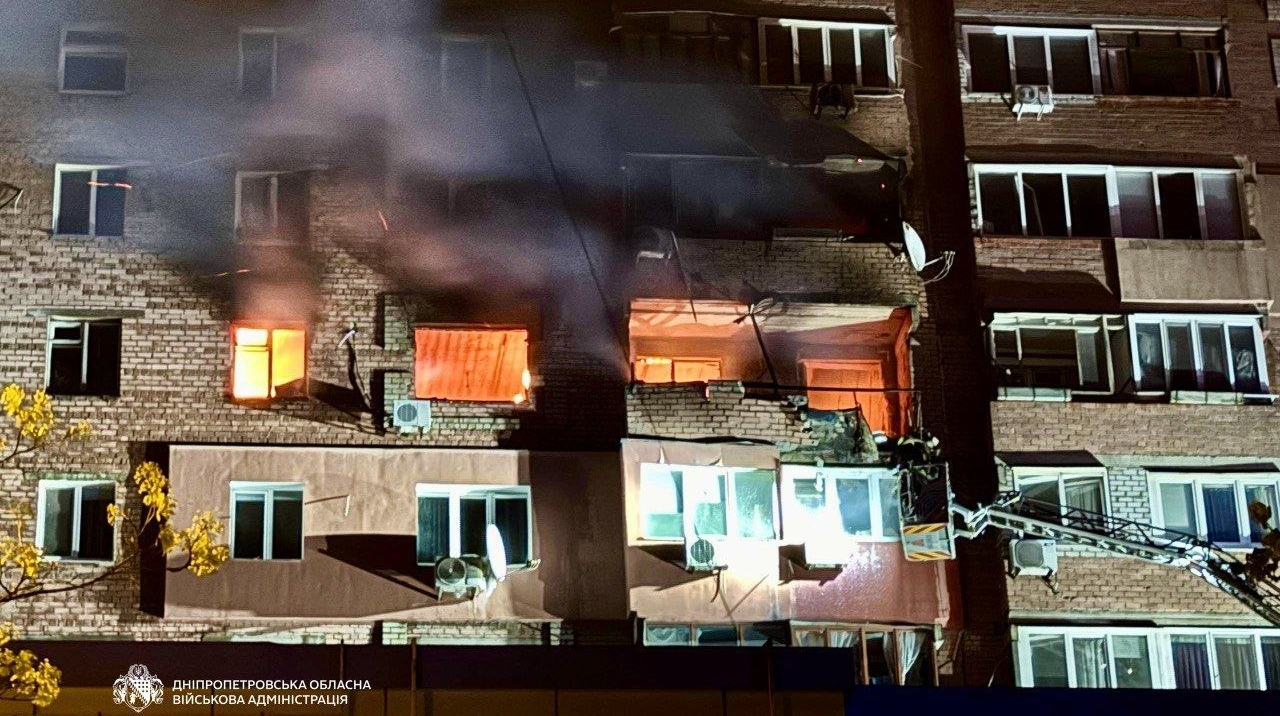
Масована атака на Дніпро: пошкоджена багатоповерхівка, двоє поранених