'Danger to the region': EU and UNICEF send 100 tonnes of aid to DR Congo amid Ebola outbreak

 Facebook
 Twitter
 Flipboard
 Send
Send
 Reddit
 Linkedin
 Messenger
 Telegram
 VK
VK
 Bluesky
 Threads
 Whatsapp
There are currently no vaccines or treatments available for the Bundibugyo virus. However, the EU is contributing €7.4 million to the development of vaccines and treatments with the WHO for a research and development plan, aimed at fast-tracking clinical trials.
The European Union and UNICEF have sent 100 tons of humanitarian supplies to the Ituri Province in the Democratic Republic of Congo to support the Ebola response.
 ADVERTISEMENT
ADVERTISEMENT
ADVERTISEMENT
UNICEF said the shipment includes essential medicines, infection prevention and control items, personal protective equipment, cholera and malaria treatment supplies, high-performance tents and related equipment.
The aid, which flew out on Monday from Liege in Belgium, is expected to support around 100,000 people affected by the outbreak.
RelatedAccording to the EU Commissioner for Preparedness and Crisis Management Hadja Lahbib the aid will also help five million people who are largely dependent on Humanitarian aid, one million of which are displaced and "spread across some 60 camps."
On 17 May, the World Health Organisation classed the latest outbreak of the Ebola disease caused by Bundibugyo virus as a public health emergency of international concern.
Meanwhile, Commissioner Lahbib said that this outbreak causes a "danger to the region, the country, and neighboring countries."
There are currently no vaccines or treatments available for the Bundibugyo virus. However, the EU is contributing €7.4 million to the development of vaccines and treatments with the WHO for a research and development plan, aimed at fast-tracking clinical trials.
According to the commission the EU is coordinating its approaches on prevention and preparedness with the Africa Centres for Disease Control and Prevention, the World Health Organisation, as well as EU Member States through the Health Security Committee (HSC).
Since the first recorded outbreak in 1976, the Democratic Republic of the Congo has experienced 17 Ebola outbreaks, nine of them within the past 16 years.
As the disease spreads through direct contact with the bodily fluids of symptomatic patients, the European Centre for Disease Prevention and Control says the likelihood of transmission to people living in the EU and EEA remains low.
Go to accessibility shortcuts Share CommentsRead more
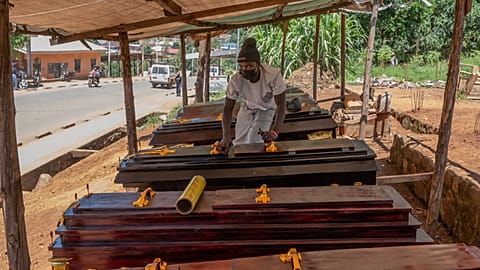
WHO chief warns Ebola outbreak 'outpacing us' as deaths hit 220
Схожі новини
Israel pushes ground ops beyond security zone after massive strikes in Lebanon

Wives not deemed maids, refusal to do household chores not cruelty: High Court

Ex-JPMorgan banker's lawyer resigns ahead of sex assault lawsuit hearing