Cyprus election expected to shake up national politics
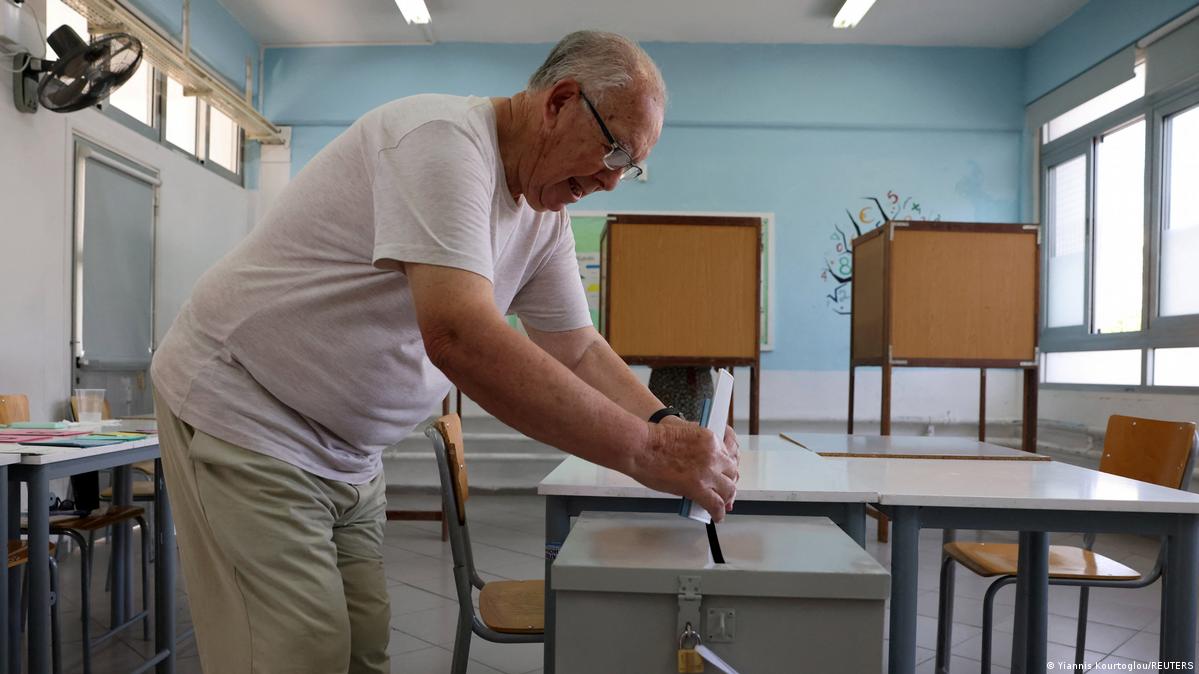
Voters in Cyprus will head to the polls on May 24 for what is shaping up to be one of the most significant parliamentary elections in decades.
Although the parliament holds limited powers within the presidential system of the Republic of Cyprus, the outcome of the election is expected to shake up the country's political landscape.
Citing recent opinion polls, journalist and political analyst Sotiris Paroutis says that Cyprus is heading toward "a profound transformation of its political scene," characterized by the weakening of the country's two dominant parties and by the collapse of traditional centrist forces. Meanwhile, new political forces are gaining support.
Traditional rivals compete for first place
Polls suggest that the race for first place will once again be decided between Cyprus's two traditional political heavyweights: the conservative Democratic Rally (DISY) and the left-wing Progressive Party of Working People (AKEL).
For DISY, the election will be a major test of political resilience following the loss of the presidency and the internal tensions that followed the election of independent candidate and former DISY member Nikos Christodoulides as president in 2023.
AKEL, meanwhile, hopes to win the general election for the first time since 2006 by capitalizing on the political momentum it has built in recent years.
What this means for Cypriot politics
But even if the two major parties remain dominant, opinion polls indicate that they are unlikely to repeat the high vote shares they obtained in recent decades.
Both parties are expected to get approximately 20% of the vote each.
Corruption scandals, growing public frustration and declining trust in the political establishment appear to be steadily eroding Cyprus's long-standing bipartisan model.
In Cyprus, the president, who is elected directly by the people, is both head of state and head of government and appoints the cabinet ministers. This means that while the parliamentary election has no direct influence on the makeup of the government, it will have a bearing on the alliances that the parties will have to form in the hope of getting their candidate elected in the next presidential election, which is scheduled for 2028.
The far right emerges as a third force
According to opinion polls, the far-right National Popular Front (ELAM) is expected to emerge as the country's third-largest political force, securing around 10% of the vote.
The party first entered parliament in 2016 at a time when it was widely viewed as politically aligned with Greece's now-defunct neo-Nazi Golden Dawn party.
A decade later — and after the conviction of Golden Dawn's leadership by Greek courts — ELAM has not only tripled its electoral strength but has also established itself as a normalized political player in parliament.
Analysts attribute this transformation to a deliberate political rebranding strategy and the recruitment of figures from across the political spectrum.
Under the slogan "Cyprus First" and with both hardline anti-immigration rhetoric and conservative positions on LGBTQ+ rights, ELAM now appears capable of exerting considerable influence on future political developments, particularly in parliamentary alliances and the election of the parliamentary speaker, which is the de-facto second-highest political office in the country.
The rise of post-ideological politics
One of the defining features of this election campaign has been the gradual decline of traditional centrist parties, including the Cyprus Green Party, the EDEK Socialist Party and the Democratic Alignment party.
According to opinion polls, these centrist parties are losing support to new political formations and are unlikely to enter parliament.
The new political parties are presenting themselves as alternatives to the traditional party system.
The Direct Democracy movement
Perhaps the clearest example of this shift is the Direct Democracy movement led by Fidias Panayiotou.
The young YouTuber made headlines in 2024 when he won a seat in the European Parliament after leveraging his enormous popularity on social media.
Cyprus: YouTuber takes direct democracy push to polls
To view this video please enable JavaScript, and consider upgrading to a web browser that supports HTML5 video
The movement promotes a model of participatory politics centered on technology and direct citizen involvement in decision-making.
At the same time, it attempts to transcend the traditional left-right divide by attracting supporters from different ideological backgrounds, particularly younger and anti-establishment voters.
Opinion polls vary considerably when it comes to predicting how the Direct Democracy party will fare, with estimates ranging from between 4% and 12%.
Anti-corruption campaigner
Another newcomer seeking to capitalize on public anger toward the political establishment is the centrist ALMA party founded by former Auditor General Odysseas Michaelides.
Michaelides entered politics after being removed from office over what authorities described as "inappropriate behavior."
In recent years, however, he has cultivated the image of an uncompromising anti-corruption campaigner. Polls suggest ALMA could secure around 8% of the vote by channeling widespread public frustration over corruption, a lack of accountability and declining trust in state institutions.
Toward an 'apolitical' parliament?
"Political parties have lost their credibility, and that is why we are now seeing movements emerging and claiming seats in parliament," said Dr. Nayia Kamenou, assistant professor in the Department of Social and Political Sciences at the University of Cyprus.
"Ideological purity is gradually fading as a defining characteristic," she told DW.
The growing support for parties and movements with vague ideological identities has caused concern among Cyprus's traditional political establishment.
In a recent statement, Parliamentary Speaker Annita Demetriou (DISY) reacted to the rise of newer political movements by saying she "shudders at the thought of who we may have in the next parliament."
Edited by: Aingeal Flanagan
AdvertisementСхожі новини
На Вінниччині розвивають українське виробництво: до 150 млн грн передбачено на індустріальні парки – Свириденко
Уряд оновив правила бронювання для «критичних» підприємств — кого торкнуться зміни
НКЕК пропонує впровадити регуляторний збір до 1,5% від доходу операторів