Cosmic crystal ball reveals an ancient dying star | Space photo of the day for May 22, 2026
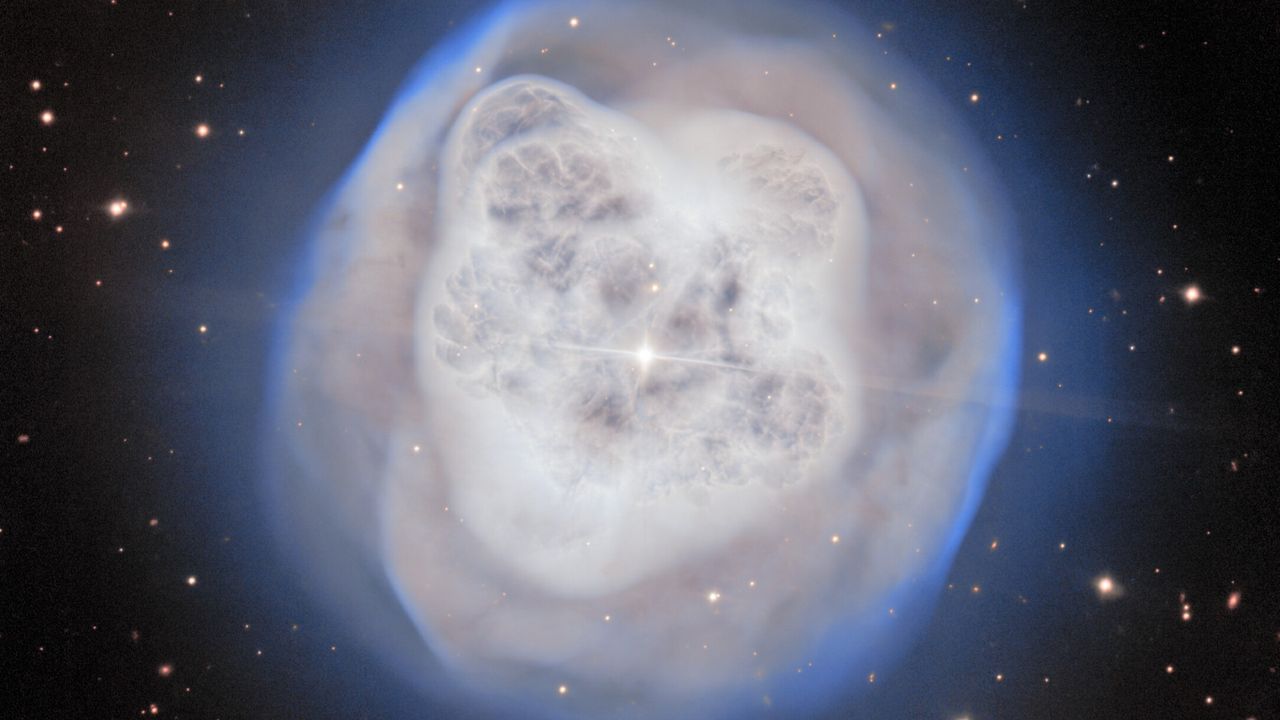
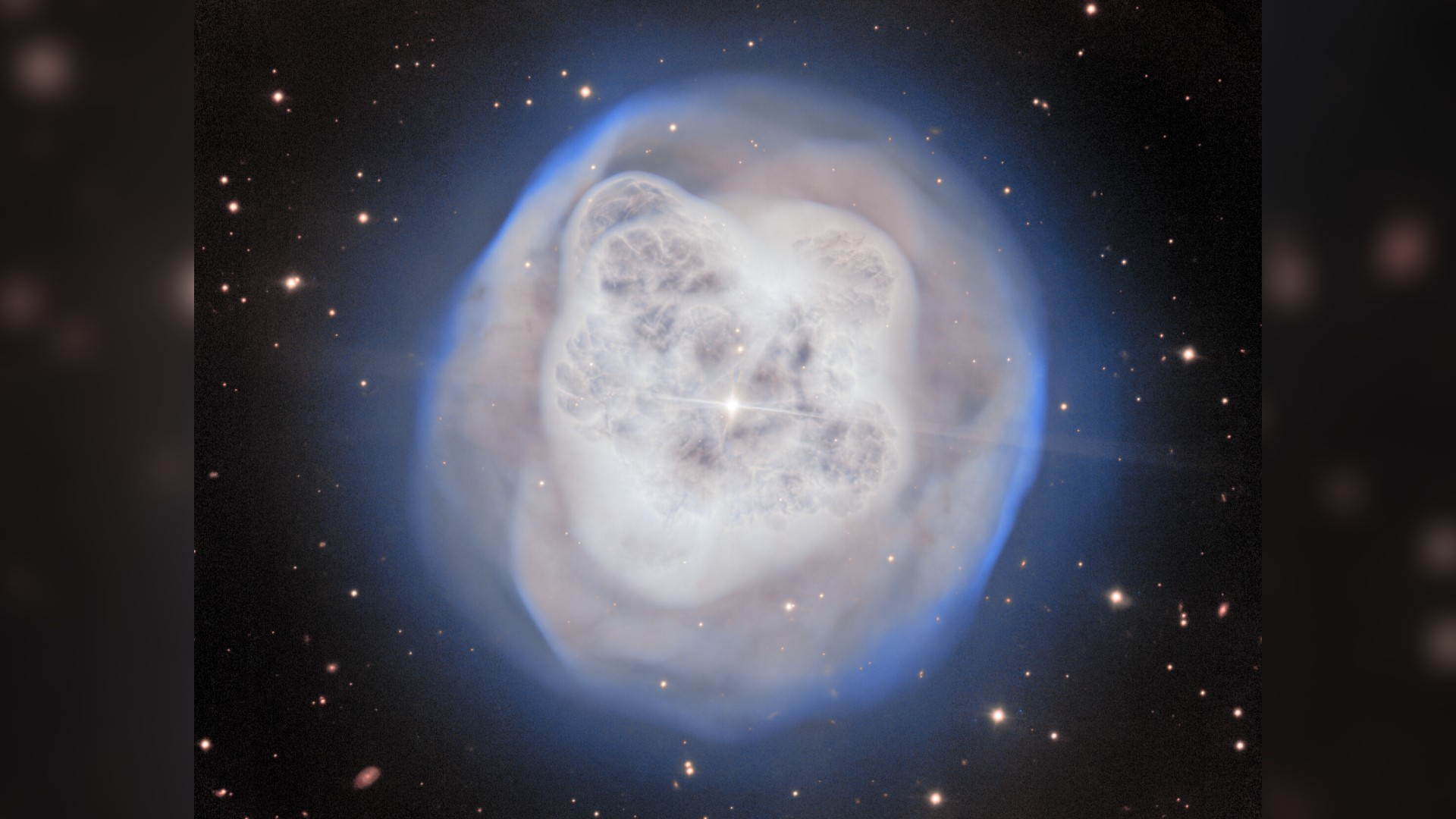
A breathtaking image from the Gemini North telescope in Hawaii has us gazing into a cosmic crystal ball.
The image captures the Crystal Ball Nebula, or NGC 1514, a planetary nebula found some 1,500 light-years away from us in the constellation Taurus, the Bull.
What is it?
Planetary nebulas don't get their name from the fact that they have anything to do with exoplanets, but because they have round orb-like shapes. They form when stars begin releasing their outer layers of gases at the end of their lives, forming spherical or near-spherical structures that can resemble planets through telescopes.
Latest Videos FromView more
In the case of NGC 1514, this nebula actually consists of two stars that orbit one another every nine years. According to the U.S. National Science Foundation's NOIRLab, which operates the Gemini North telescope, one of these stars began releasing its outer layers as it died.
"Scientists believe that one of these stars, which was once several times more massive than our sun, released its outer layers while in the throes of death," NOIRLab wrote in a statement accompanying the image. "As the progenitor star and its binary companion orbit each other, they mold the expanding shell of gas with their strong, asymmetrical winds, forming the lumpy layers we see today."
Why is it amazing?
Aside from being a stunning reminder of just how gorgeous cosmic objects can be, this image of the Crystal Ball Nebula also reminds us of how looking back into space is akin to looking back in time.
Because the light from this planetary nebula took 1,500 years to reach us, we are seeing these stars as they were long ago. While crystal balls are often used in occult practices such as fortune telling to gaze into the future, this "Crystal Ball" serves as a window into the cosmic past.
View MoreYou must confirm your public display name before commenting
Please logout and then login again, you will then be prompted to enter your display name.
Logout
Brett is curious about emerging aerospace technologies, alternative launch concepts, military space developments and uncrewed aircraft systems. Brett's work has appeared on Scientific American, The War Zone, Popular Science, the History Channel, Science Discovery and more. Brett has degrees from Clemson University and the University of North Carolina at Charlotte. In his free time, Brett enjoys skywatching throughout the dark skies of the Appalachian mountains.
Схожі новини
Stress impairs your brain’s ability to link memories — dampening insight
Hit a lab project glitch? Thinking about your thesis title like a storyteller can help you focus