Colombia’s climate crossroads: Trumpism casts shadow over presidential battle
Colombia is a global leader in climate activism. Could US influence drag country to a future of mining and fracking?
Several hours after dark in a quiet Caribbean neighbourhood, a cluster of environmental activists gather on plastic chairs between a mango tree and a courtyard wall emblazoned with the words “Colombia, respira!” (Breathe, Colombia).
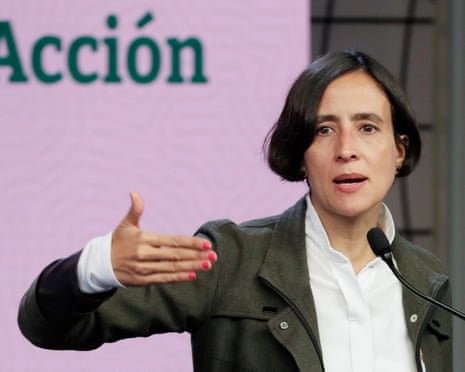
So many people have turned up that some have to stand. That is because tonight’s speaker is Susana Muhamad, one of the most admired socio-environmental campaigners in the world, and this is a moment of profound historical significance.
This month’s presidential election will decide whether Colombia remains a global leader on the climate and exemplar of “popular environmentalism”, or whether it switches to the side of fracking, mining and other forms of fossil fuel extractivism. In other words, whether it will change from green to grey.
The movement is braced for a struggle. President Gustavo Petro, of Pacto Historico, is constitutionally barred from serving a consecutive second term, so the party has selected Iván Cepeda to run for president and continue his policies. The far-right candidate, Abelardo de la Espriella, and the centre-right candidate, Paloma Valencia, are both enthusiastic about reopening the oil spigot and fracking. US interference is a big concern, with Donald Trump, talking of military intervention in Colombia.
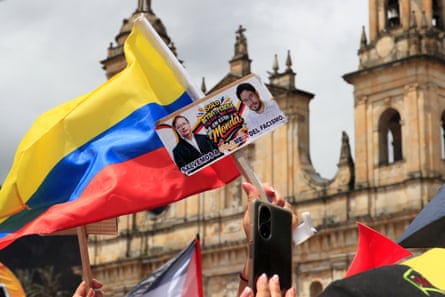
Muhamad, a former environment minister, tells the attenders: “We must win in the first round because the future of Colombia will be decided here, in this very complicated international context. If we don’t win, our country will be another in Latin America aligned with Donald Trump. We have to win. Otherwise, everything we’re talking about will be completely suspended for four years. Goodbye.”
Muhamad speaks of the progress Colombia has made in declaring its part of the Amazon rainforest a fossil fuel-free zone, how Petro has tried to curtail mining, protect people from pollution and realise the country’s potential as a “great power for life”.
She contrasts this to what is happening in Bolivia, where the pro-business government has sold off tracts of the Junín River basin to a lithium mining company, and to Ecuador, where the far-right president, Daniel Noboa, is trying to weaken Indigenous land defenders and open up protected lands for mineral exploitation and to allow a US military base on the Galápagos Islands.
Colombia plays an outsized role in the push for climate justice. In recent years, Muhamad has become a familiar face on the international stage, notably as a leading advocate for the transition away from fossil fuels at the Cop29 climate conference in Dubai, and then as president of the biodiversity Cop16 in Cali, Colombia.
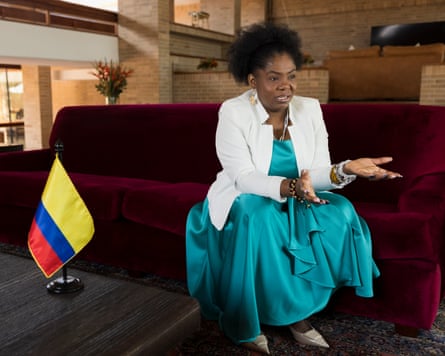
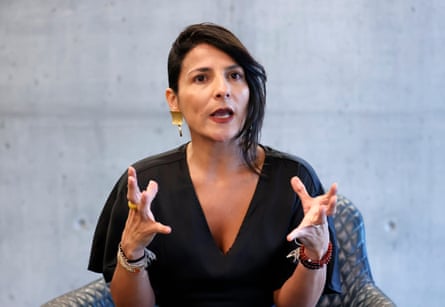
Muhamad is by no means a lone voice for the environment in the Pacto Historico government. Francia Márquez, the vice-president of Colombia, won the Goldman environmental prize for her campaign to halt illegal goldmining in her ancestral community of La Toma. The environment minister, Irene Vélez Torres, has just co-chaired the world’s first conference on transitioning away from fossil fuels, involving an alliance of countries that want to accelerate the energy transition rather than be held back by the consensus-based UN system and the vetoes of big oil producers.
Petro demonstrated his commitment at that conference in Santa Marta with a call for Colombia to set an example of how to mobilise the population to overcome the “suicidal” economics and “fascistic” politics of the fossil fuel industry.
The leadership demonstrated by Petro’s government has moved the phaseout of oil, gas and coal from the margins into the centre of global diplomacy, according to Tzeporah Berman, the founder and chair of the Fossil Fuel Treaty Initiative. As a result, she said, this month’s presidential ballot will make international waves. “The implications of this election reach far beyond Colombia. At a moment of escalating climate disasters and geopolitical instability, the world is watching whether this leadership continues, or whether political pressure from the fossil fuel industry succeeds in pushing countries backward.”
Environmentalists in Colombia believe the national commitment draws its force from grassroots activists. Colombia is one of the world’s deadliest countries for environmental defenders. As Juan David Amaya, a 19-year-old climate activist and founder of the pan-Latin American youth organisation Life of Pachamama, put it, the main difference between activists in Colombia and those in Europe is that “there, they don’t kill you”.
After a campaign against oil palm plantations in his home region of San Carlos de Guaroa, Amaya has received numerous death threats. “In Colombia, doing this is an act of rebellion born from hope, born from love. But it also comes at a very high cost,” he said.
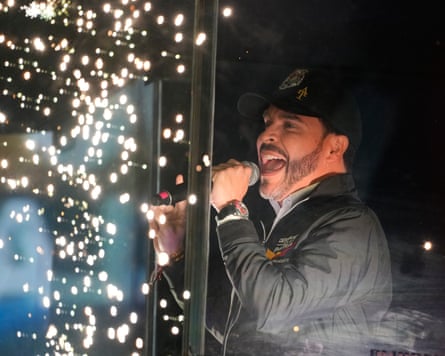
“Colombia has made significant progress over the last four years in political discourse and action, which has mobilised many governments around the world. Today, governments like Panama, Mexico, Brazil and Colombia stand out for their ambition, their political leadership, and once again for telling the world: we must take action.”
Paula Andrea Hernández, a Pacto Historico campaign manager, says: “We call it popular environmentalism because it comes from peasants and fishermen. We have suffered severe extractivism, often arm in arm with illegal militias, for so long that people realise the fight for territory and environment needs to be about power.”
Domestically, climate and environment are rarely mentioned directly in campaign debates but shape the context of hot-button issues such as security and health: drug trafficking often overlaps with illegal mining and forest clearance, and shortcomings in medical provision are shown up by water contamination, rising temperatures and floods.
“The environment has become a central issue,” observed Leon Valencia, a political analyst. It is not straightforwardly binary: “There are sectors on the left that favour oil exploitation, and sectors on the right that defend conservation and green markets. What both sides have agreed upon is that the relationship with nature has become a strong political identity … Colombia is experiencing a progressive environmentalisation of public opinion.”
Some campaigners complain that the Petro government’s rhetoric is not always matched by actions. Deforestation of the Amazon has slowed since the Pacto Historico came to power but it continues and illegal gold mining is widespread. Many parts of Colombia are virtually ungovernable because they are controlled by armed groups.
There has been political opposition in Bogotá, the world’s third highest capital city, where the business lobby in Congress has blocked the government’s most ambitious moves to restrict mining. Rightwing commentators said Colombia’s first leftwing government would be an economic disaster, especially when Petro promised to replace fossil fuels with avocados. In fact, GDP growth has remained positive for the past four years.
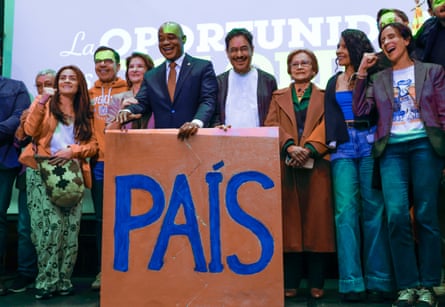
Julia Miranda, a lower house deputy from the New Liberal party and an advocate for nature, insisted the Petro administration had proved ineffective domestically despite talk in the international arena of Colombian environmental leadership. “It is a false discourse – mere rhetoric while their environmental policies have been a failure,” she said.
Miranda supports Valencia, but on the question of phasing out fossil fuels she sees room for compromise. “Colombia needs to work with complete seriousness and consistency on the energy transition, but in the meantime we need to use our resources, for example gas.”
That would be a setback for the transition and could mean Colombia pulls out of or weakens its commitment to the global “coalition of the willing” that it helped to form in Santa Marta last month. But those goals are still to be fought for.
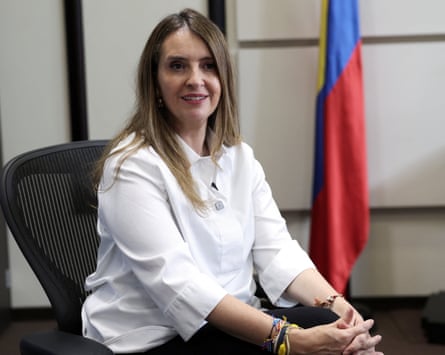
With 10 days until the election on 31 May, the outcome remains unclear. Polls suggest Cepeda, Petro’s successor as the Pacto Historico candidate, will lead in the first round but fall short of the 50% needed for an outright victory. If there is a runoff, either one of his two rightwing challengers would be favourite.
“That would be an abysmal setback” said Renzo García, a biologist and congressman. “A victory by Paloma Valencia or Abelardo de la Espriella would mark a return to an extractivist model, where we hand the country over to the economic interests of the world’s elites and serve as a pantry for minerals, oil and agribusiness without taking into account the rights of nature.”
Explore more on these topicsShareReuse this contentСхожі новини
Saitama man arrested over alleged drunken driving of fake police car
Survey begins to determine remote island’s suitability for nuclear disposal site

Бензин продовжує дорожчати: скільки коштує пальне на АЗС 21 травня