Chinese supertanker carrying two million barrels of Iraqi crude oil attempts to pass Strait of Hormuz
A Chinese supertanker, laden with two million barrels of Iraqi crude, was reportedly navigating the Strait of Hormuz on Wednesday, according to LSEG and Kpler ship-tracking data.
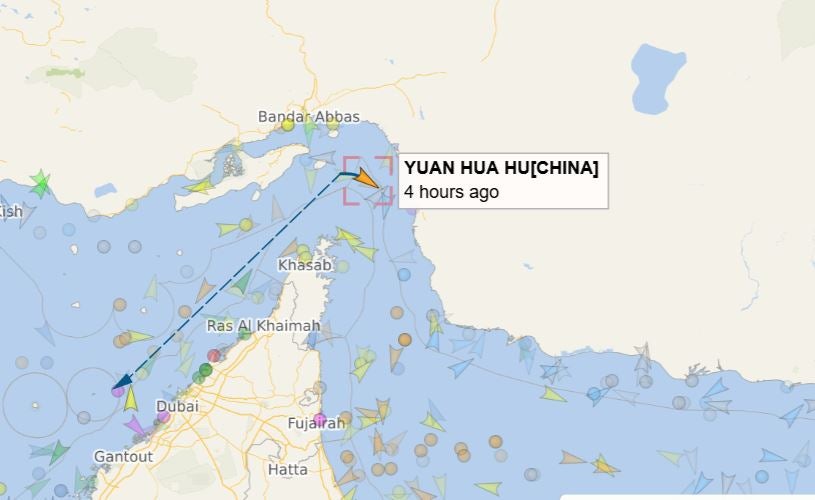
The Very Large Crude Carrier (VLCC) Yuan Hua Hu was observed past Iran's Larak Island, on the eastern side of the strait and heading south.
This voyage, if successful, would mark the third known passage by a Chinese oil tanker through the Strait since the US-Israeli war with Iran began on 28 February.
The development coincides with Iran's apparent efforts to firm up control over the Strait, having recently struck deals with Iraq and Pakistan to ship oil and liquefied natural gas from the region, sources suggest.
Other nations are reportedly exploring similar arrangements, potentially normalising Tehran's long-term command of the vital waterway.
The VLCC is owned by COSCO Shipping Energy Transportation's Hainan unit and chartered by Unipec, the trading arm of Chinese state oil major Sinopec.
 open image in gallery
COSCO Shipping Energy Transportation and Sinopec did not immediately respond to requests for comments.
The Yuan Hua Hu loaded nearly 2 million barrels of Basrah Medium crude at Iraq's Basrah terminal in early March and has remained stranded inside the Gulf since then, according to the tracking data. It is headed to Asia.
China-flagged VLCCs Cospearl Lake and He Rong Hai exited the Strait of Hormuz on 11 April.
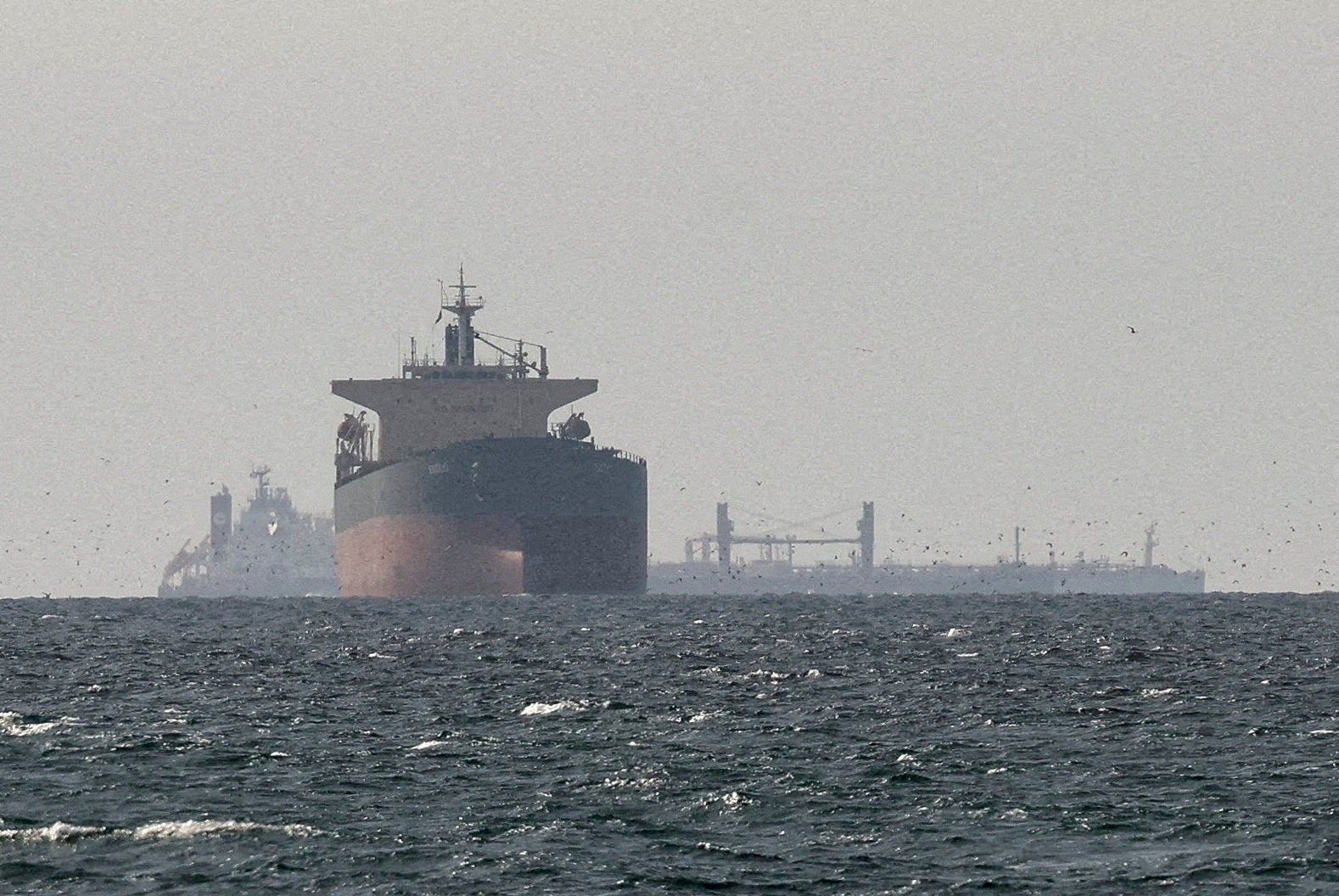
Iran’s grip on the Strait of Hormuz has jolted the world economy, causing a spike in fuel prices that has rippled through other sectors with effects far beyond the Middle East. It has also left tens of thousands of mariners and hundreds of ships stranded in the Persian Gulf.
 open image in gallery
Iran effectively seized control of the critical waterway after the US and Israel attacked it on 28 February. Weeks of heavy bombing and a U.S. naval blockade imposed last month have yet to loosen its grip.
Iran says it will only reopen the strait if the war ends and the blockade is lifted. US President Donald Trump is seeking wider concessions, including the rollback of Iran's disputed nuclear program.
1,550 vessels, from 87 countries, are currently stranded in the Persian Gulf, according to the US military and 22,500 mariners are stranded on these ships, including many from South and Southeast Asia.
Join our commenting forum
Join thought-provoking conversations, follow other Independent readers and see their replies
CommentsСхожі новини
OECD chief sees Japan's zero consumption tax plan as costly

ЄБА закликає доопрацювати законопроєкт про морські порти та пропонує спрямувати портові збори на захист інфраструктури
Імпорт російського скрапленого газу до ЄС сягнув піку з 2022 року, найбільше купує Франція - Welt