Chinese EV Manufacturers Surge Into South Korea's Fiercely Competitive Auto Market
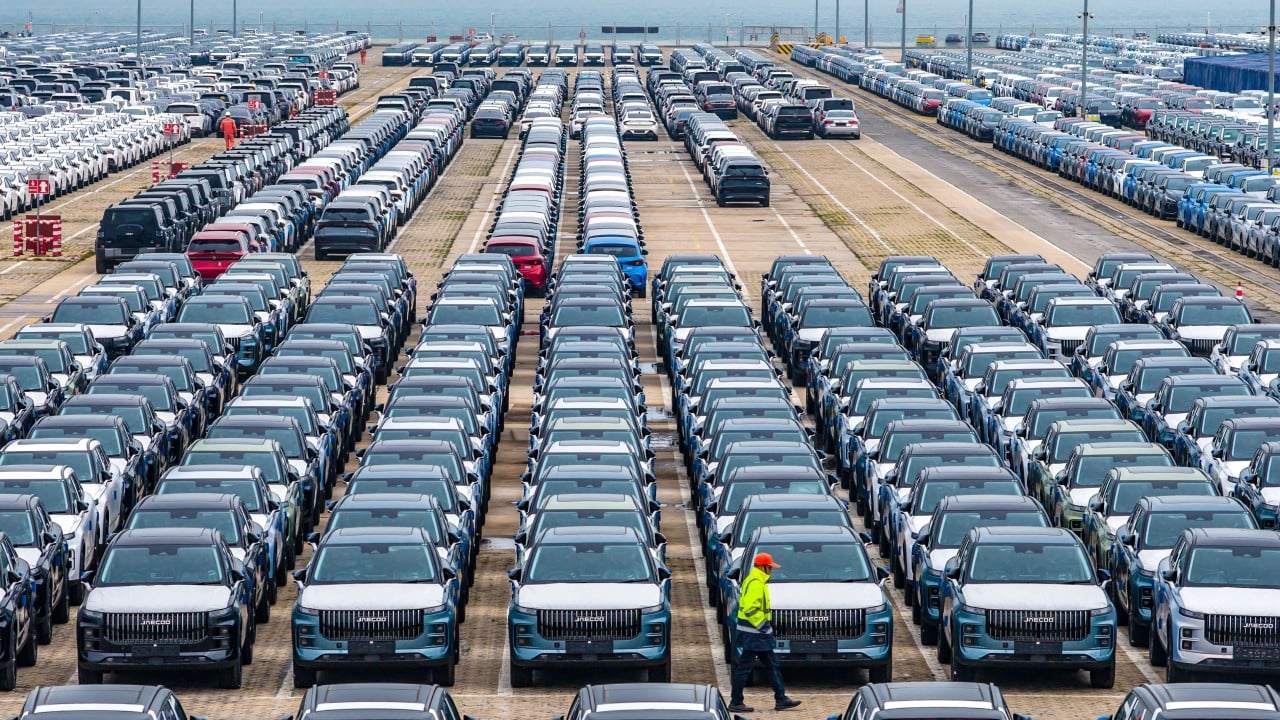
China-manufactured electric vehicles now represent one-third of all new vehicle registrations in South Korea, driven primarily by Tesla's Shanghai-produced models while domestic competitors like BYD and Chery establish their foothold in a market traditionally dominated by local automakers.
The penetration of Chinese-made EVs into South Korea's automotive landscape has accelerated dramatically, with sales reaching 25,000 units during the first quarter of 2026—a remarkable 286.1 percent surge compared to the same period the previous year, according to figures released by the Korea Automobile and Mobility Association (Kaida). Over the same timeframe, South Korean manufacturers delivered approximately 51,000 units, though their year-on-year growth rate stood at a considerably slower 126.1 percent.
The market share transformation has been particularly striking. Chinese EV manufacturers captured 33.9 percent of the market in 2025, up sharply from just 4.7 percent in 2022, while domestic Korean brands witnessed their share contract from 75 percent to 57.2 percent during the identical interval.
Strategic Expansion and Market Dynamics
Industry analysts point to several factors driving this shift. "Most Chinese firms have identified overseas expansion as a growth pillar of 2026, in light of slowing EV demand at home," noted Xu Tianchen, senior economist at the Economist Intelligence Unit, adding that "South Korea is certainly one of the target markets."
Elevated fuel costs stemming from geopolitical tensions involving the United States and Israel in Iran, combined with less stringent regulatory requirements compared to traditional markets, have created favorable conditions for Chinese manufacturers to expand their presence. However, industry observers cautioned that gradually reducing subsidy programs may temper the expansion trajectory.
Evolution of Product Offerings
Chinese EV exports to South Korea underwent a significant transformation in terms of product mix. Initial shipments concentrated on commercial applications, particularly buses, while passenger vehicle competitors struggled against the entrenched positions of Hyundai Motor and other established Korean brands.
The landscape shifted beginning in 2024, as competitively priced models incorporating advanced technologies broadened their market penetration. Troy Stangarone, non-resident fellow at the Carnegie Mellon Institute for Strategy and Technology, emphasized that "Chinese brands are well placed to compete in Korea as a leader in quality and affordability."
Tesla's Dominant Role
Despite the rise of Chinese manufacturers, Tesla—rather than homegrown Chinese brands—emerged as the primary catalyst for growth among Chinese-manufactured vehicles in the South Korean market. The American company's Shanghai-produced vehicles achieved extraordinary traction, capturing the position of South Korea's top-selling imported brand during the first quarter of 2026.
Tesla's competitive strategy involved marketing vehicles with reduced specifications relative to their American counterparts, featuring shorter driving ranges and smaller battery capacities while reducing prices by up to 10 million won (US$6,740). This approach yielded substantial results, with Tesla sales climbing 311 percent between 2022 and 2025 to reach 59,916 units, according to Kaida data cited by Stangarone.
Схожі новини

Китайский вызов Tesla и Porsche. BYD презентовала электрический седан на 1000 лошадиных сил

Капсула часу з 80-х: на аукціон виставили Toyota Supra Turbo з мінімальним пробігом
Капсула часу з 80-х: на аукціон виставили Toyota Supra Turbo з мінімальним пробігом