Chinese Brands Project Confidence at the Beijing Auto Show: Large Premium SUVs (Gallery)
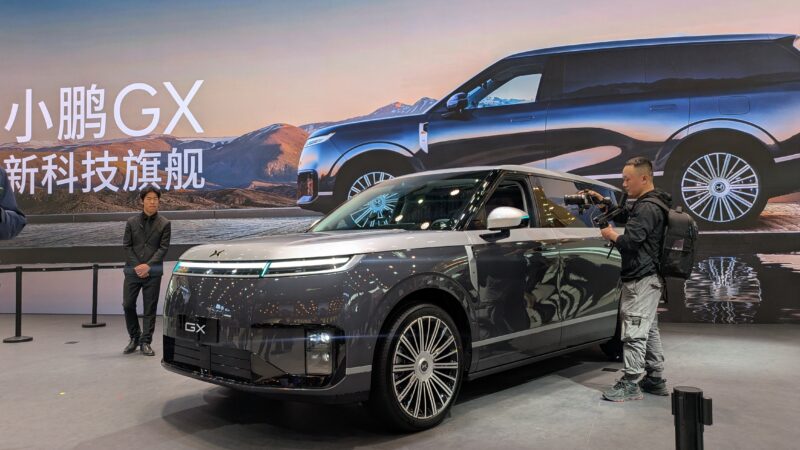 Photo by Larry Evans
April 29, 20261 hour
Larry Evans
0 Comments
Support CleanTechnica's work through a Substack subscription or on Stripe.
Photo by Larry Evans
April 29, 20261 hour
Larry Evans
0 Comments
Support CleanTechnica's work through a Substack subscription or on Stripe.
Auto China (aka the Beijing Auto Show) was an eye-opening experience. There was a sense of continued progress. Vehicles were refined and well-sorted. Material quality and fit and finish continue to improve, even over models that impressed just a few months ago. Competition continues to be fierce. Meanwhile, the vehicles have become more capable while technology continues to evolve. Some may miss the small, crazy concepts of a few years ago, but the latest models offer a more refined experience. Chinese cars now project a level of confidence in being world-leading, and not just in value. Through their positioning, they also project a level of economic confidence, despite oil-related headwinds to the overall global car market. There were too many models to go into depth on all of them, but a few categories stood out. Perhaps the most telling of the recent shift is the emphasis on large, premium SUVs. Some may have associated this size and shape of vehicle more with Europe or the US in the past, but China now offers far more options with more advanced technology and prolific electrification. I wrote previously about the multiple introductions from press releases, but it is a different experience to see them in real life.
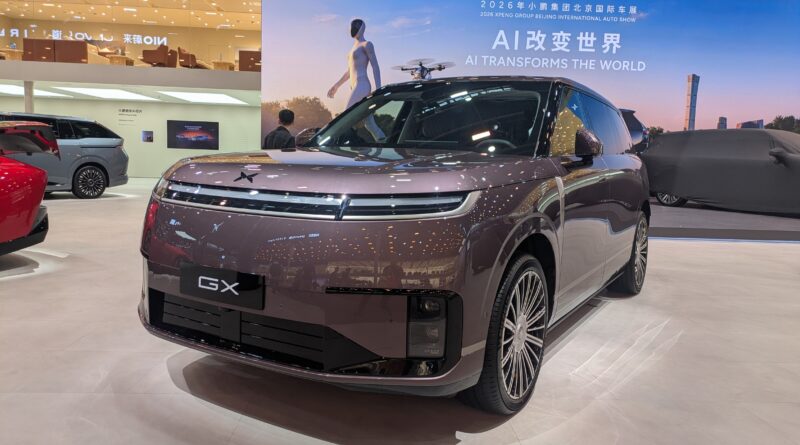
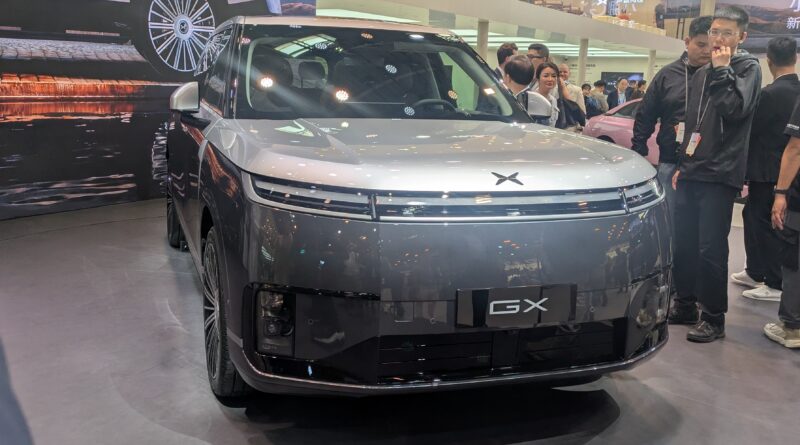
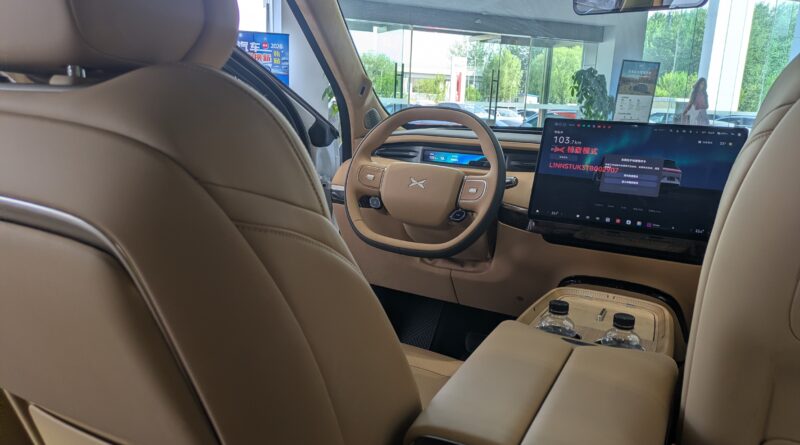
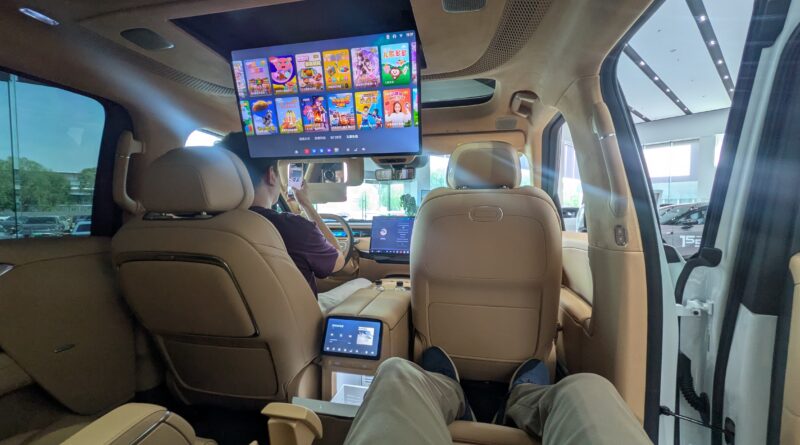
I was able to get the most exposure to the new XPENG GX, as XPENG flew me out to the show, and it serves as perhaps the best example of the shift. At 5265 mm long, the GX is a little larger than a Range Rover on the outside, yet not quite as large as an Escalade IQ (EV), but the interior packaging is more efficient than those models. The rear seats are more comfortable than airline business class, with multiple massage functions. The refrigerator keeps beverages cold, which was welcome in the dry climate of Beijing. A large screen folds down for rear-seat entertainment. Materials and build quality are excellent. The third row is useable and surprisingly comfortable for adults. Passenger windows have electrochromic darkening. Mechanically, it has steer by wire on the front and rear, brake by wire, and an air suspension with active dampening. Multiple layers of redundancy are present across major systems to ensure safety. 650 km of range (466 miles) and 5C charging are more than adequate for the BEV, as is the sub-4 seconds 0–100 km/h (62 mph) acceleration. Everything is powered, including the doors, which will come in handy when picking up passengers, especially when a driver isn’t present. This gets to another important aspect of the GX: featuring XPENG’s VLA 2.0 intelligent driving system, it will serve as the foundation for their robotaxi. Compared to some other robotaxi models, if the GX pulled up, it would feel like a first-class upgrade. The price comes in a little under 399,800 RMB (~$58,000), but lower-priced models may follow. For reference, this price is a little less expensive than a Model YL with “Intelligent assisted driving” (can’t call it FSD in China). More on that comparison and VLA 2.0 to come.
However, the GX is just one example of a clear shift in the market to large, 3-row SUVs. Executive transportation had traditionally focused on premium MPVs, particularly ICE Toyota and Buick models not offered in the US. There are even Maybach MPVs in China. Then several electrified premium offerings began entering the market from Chinese brands, like the Denza D9, Zeekr 009, and XPENG X9. In many ways, the latest crop of large SUVs serves an overlapping role.
In the past, many of the MPVs were targeted to provide premium transportation services. They could work well for a family, but it did not seem like the primary market focus. Now, new SUVs seem to be more focused on private buyers. While they could undoubtedly serve in a transportation role, the style has a more personal appeal, particularly to people looking to drive their families. China has recently introduced a number of programs to encourage people to have more children, and those children are going to be a bit spoiled in the back of these SUVs.
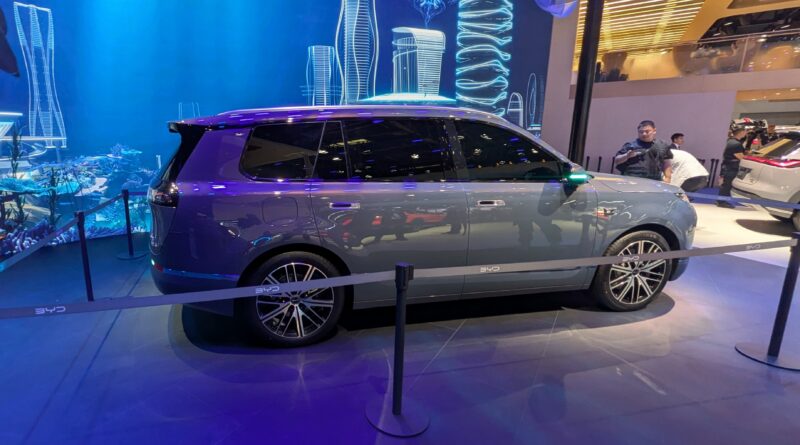
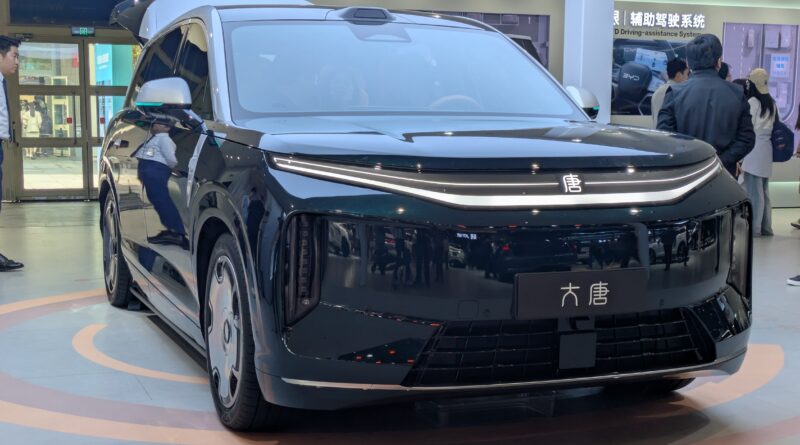
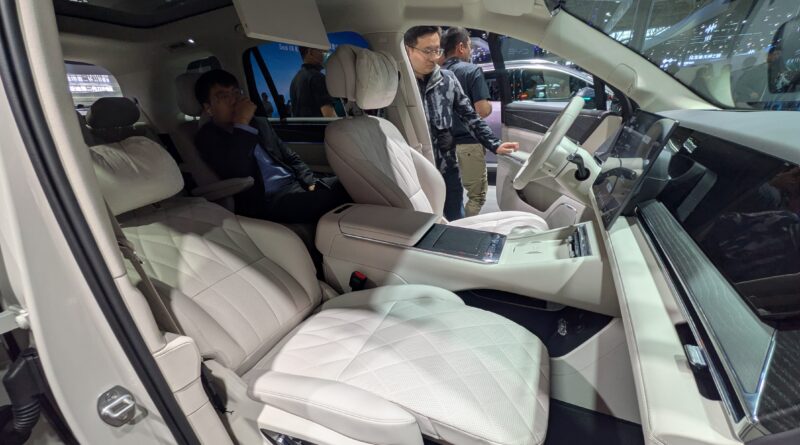
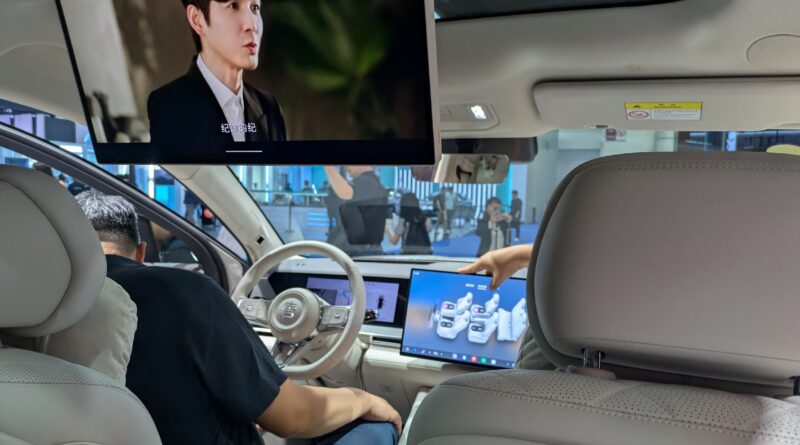
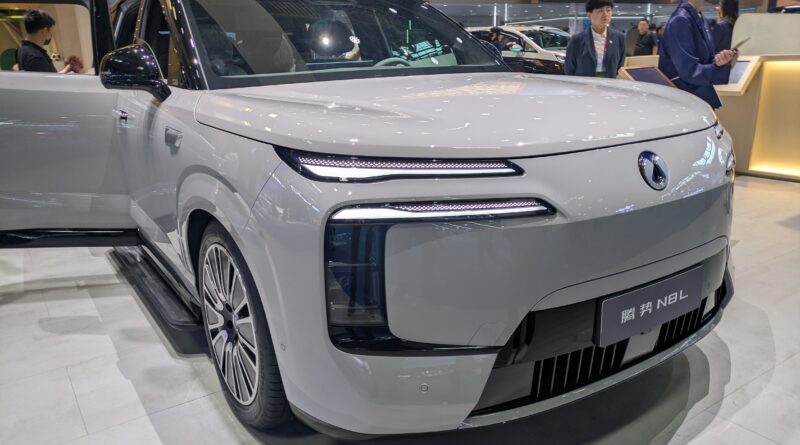
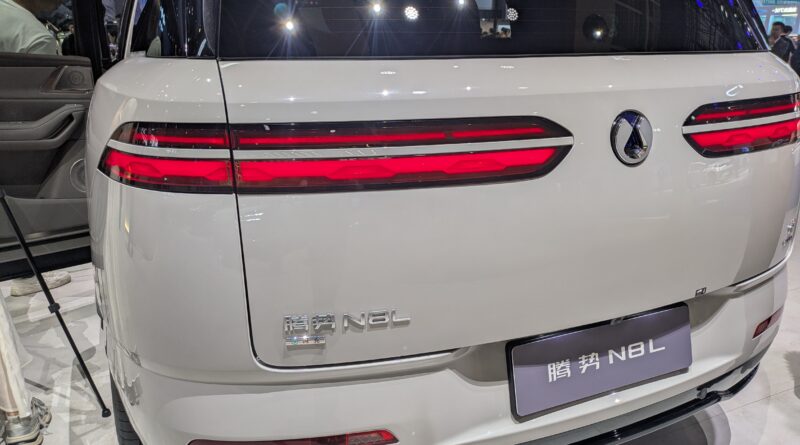
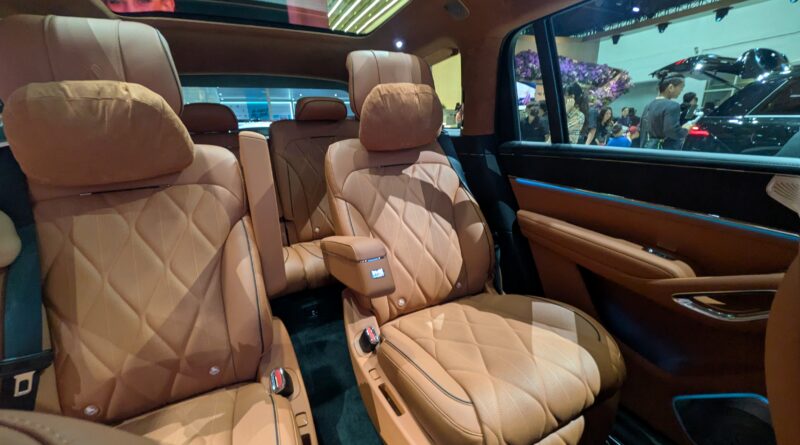
While at the show, I was able to sit in a few models. Denza seems to have a tendency at shows to have exhausted media use the seats to take a break and catch up on emails. I didn’t have a chance to sit in one in Guangzhou, but I did get to sit in an N8L this time and understand the appeal in the level of comfort. BYD’s new Great Tang and Sealion 08, however, close the gap in comfort and luxury, providing some internal competition. While NIO’s ES9 was also impressive on the inside, the dance moves from its active suspension attracted crowds on the floor. Meanwhile, Li Auto’s L9 EREV takes the brand away from its recent spaceship design language to something more traditional.
Here’s a sample of premium SUVs on display from Chinese brands:










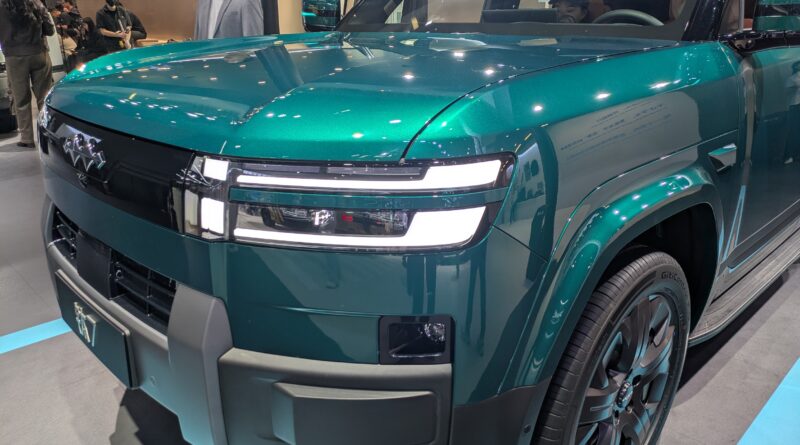


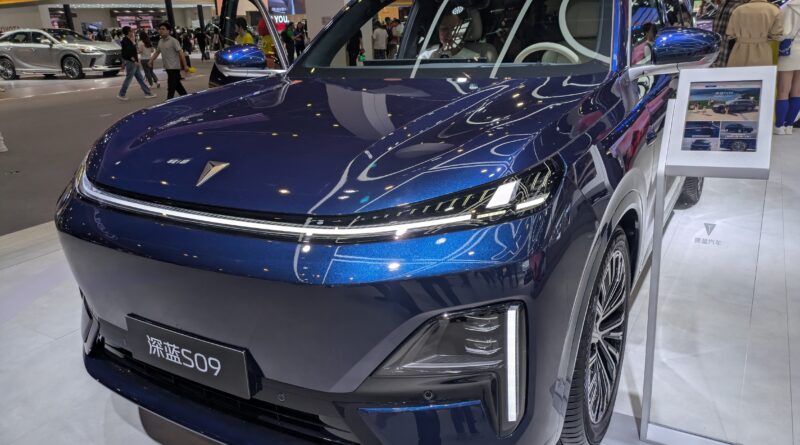

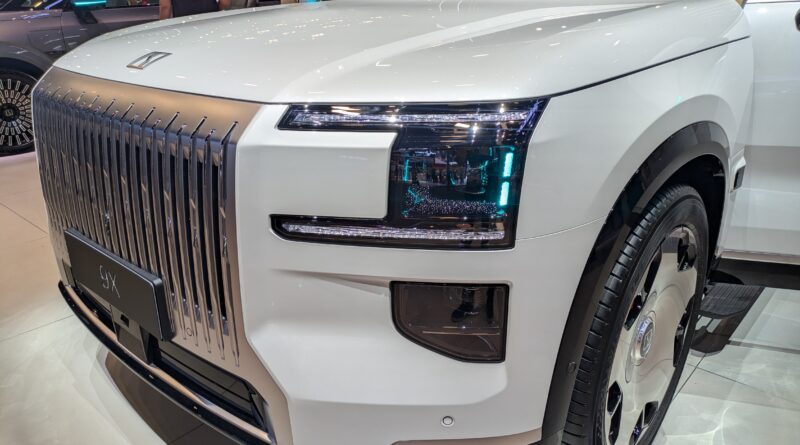


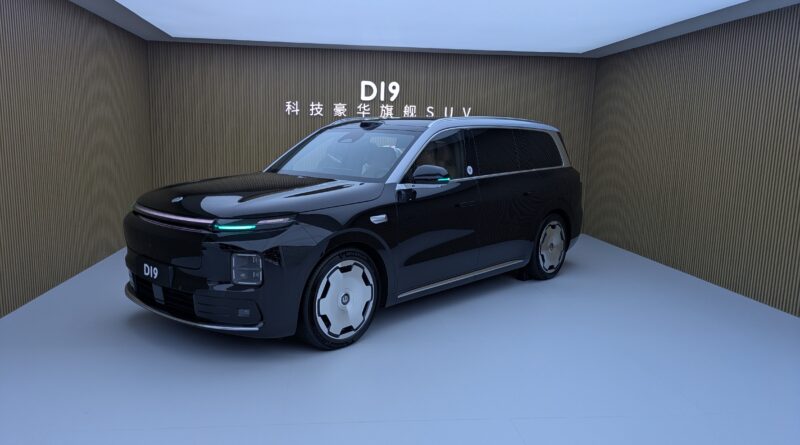

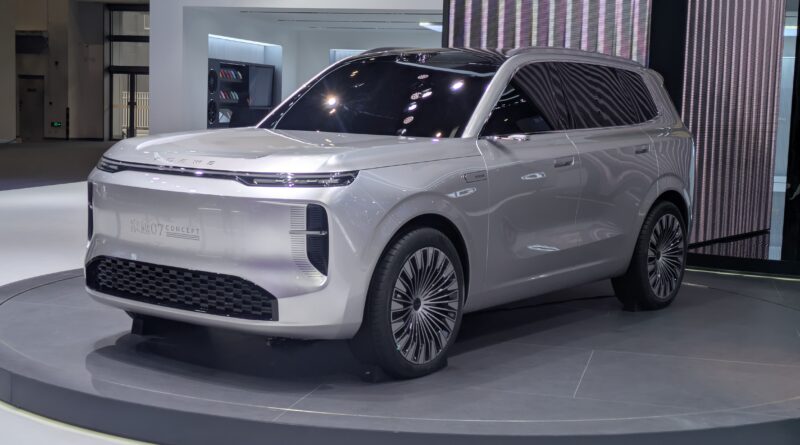


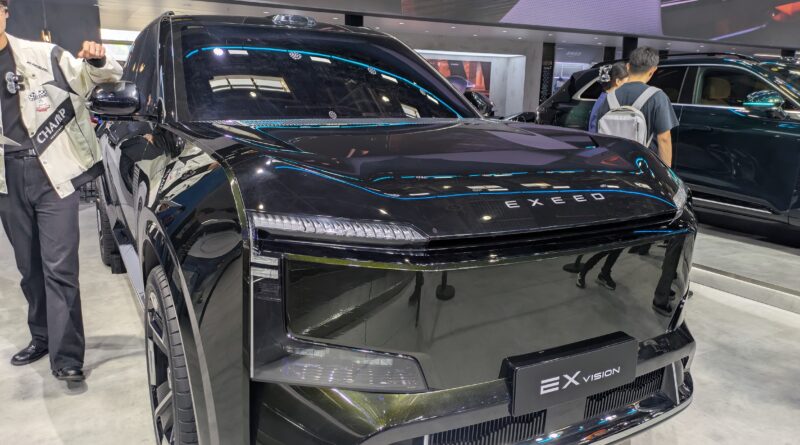


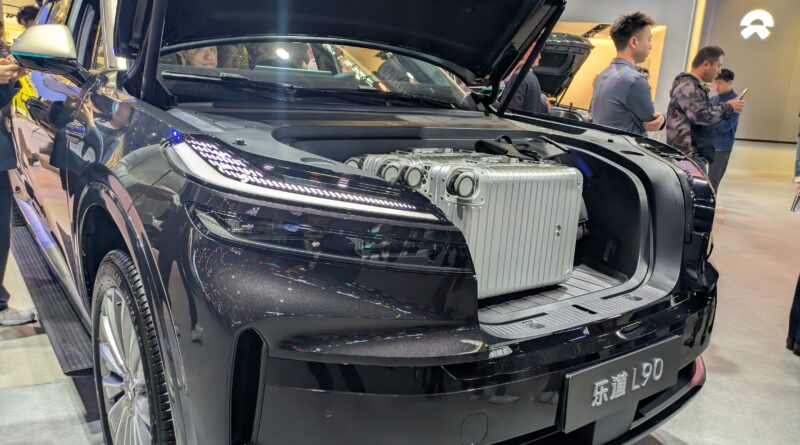

Even though SUVs may not be the most efficient form factor, the electricity cost of driving a large, luxurious electric vehicle is still far less than a far more modest ICE vehicle. Residential electricity in China averages $0.078/kWh and public fast charging is slightly more expensive, but it still tends to be less expensive than residential electricity on average in the US. Meanwhile, gasoline is almost a dollar per gallon more expensive in China. As such, the cost savings are significant. In addition, the purchase prices for of these capable NEV SUVs come in at a fraction of the cost of legacy ICE, while offering more performance, technology and features. For comparison, a Range Rover costs 1.4 million RMB ($210,000 US) in China, while a Lincoln Navigator starts at 1.26 million RMB ($180,000 USD).
Which gets to a bigger shift. New BEV models offer more range than many ICE vehicles. New PHEV/EREV models offer more battery range than typical BEVs of a few years ago, while extending that range far beyond what any human bladder can handle. The low cost and convenience of charging compared to gas make people more likely to run on battery alone. Charging stations are prolific in China and getting faster. Many BYD models now recharge as fast as ICE cars refuel, and other brands are not far behind. With new batteries being introduced by CATL and others, charge times are poised to drop across the industry in China to the point of being a non-issue. Charge speed may soon be as relevant to consumers as time to refill a gas tank is to ICE drivers.
At the same time, these SUVs have acceleration beyond what ’80s supercar fans could have dreamt of, putting power levels beyond what most users would ever need. Active suspensions and 4-wheel steering systems seem to let these large vehicles defy physics. While the Chinese market tends to prefer a little more isolated experience than some Western markets, that is a matter of taste that can be addressed with tuning. Rides are smooth and silent.
Meanwhile, intelligent driving and self-parking capabilities make large vehicles that some would feel intimidated to drive on tight, crowded streets easily manageable. Technology that some intend for 2-seat, Spartan transportation pods also seems to be leading to more large, luxurious vehicles.
Some people once thought electrification would lead people to drive slow, subcompact jellybean-shaped cars. However, it also enables people to drive a wide range of vehicles to fit a range of tastes and needs. With electrification being the norm for Chinese brands, they don’t have to sell people on it being an EV. The cars are just better because they are EVs. While some of us may miss the emphasis on climate change in the discussion, letting people live better while reducing their carbon footprint at the same time becomes important for mass adoption.
However, these SUVs are decidedly not economy cars. They are not the types of vehicles that automakers would emphasize if they are anticipating an economic downturn. XPENG, for example, could have easily moved up the MONA L03 compact SUV launch if they wanted to showcase a more affordable model, but the emphasis of the show was different. Electrification seems to isolate the Chinese automobile market somewhat from gasoline price disruption.
The overall emphasis in the show on large premium EVs gives a sense of confidence in their market. The vehicles keep getting more refined. I have a feeling that some designers are feeling challenged to imagine new features to offer in their vehicles. Beyond large premium SUVs, there was also an emphasis on sports cars and sporty sedans, but I will save that for a future post.
Sign up for CleanTechnica's Weekly Substack for Zach and Scott's in-depth analyses and high level summaries, sign up for our daily newsletter, and follow us on Google News! Advertisement Have a tip for CleanTechnica? Want to advertise? Want to suggest a guest for our CleanTech Talk podcast? Contact us here. Sign up for our daily newsletter for 15 new cleantech stories a day. Or sign up for our weekly one on top stories of the week if daily is too frequent. CleanTechnica uses affiliate links. See our policy here.CleanTechnica's Comment Policy
Share this story!
Схожі новини
Rivian is adding 150+ fast chargers at popular LA shopping hubs
Why Ghana walked away from a US health deal