Ceasefire extended: What's next in the Iran war?
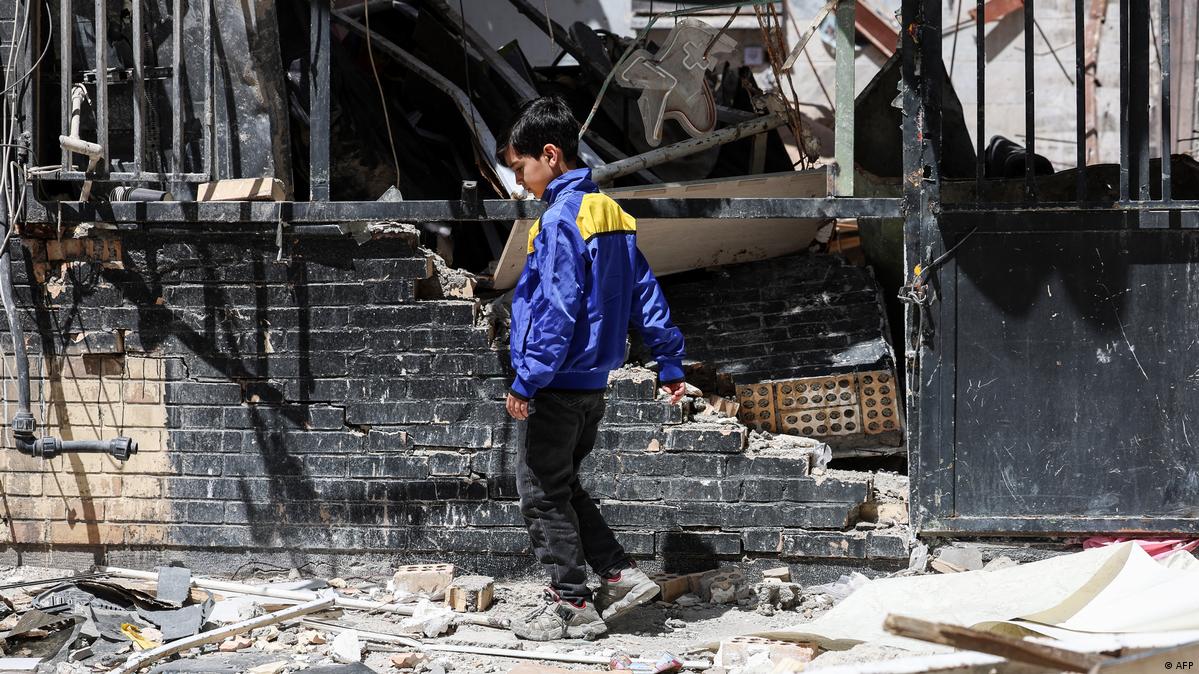
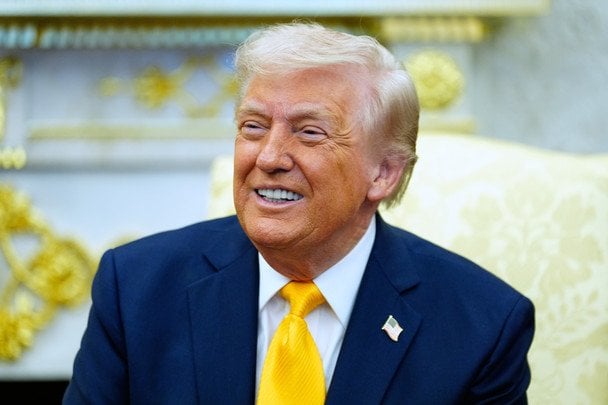
Donald Trump likes to issue ultimatums, even if they don't end up being enforced. The US president issued one such deadline at the beginning of April, putting massive pressure on Iran, before announcing a 14-day ceasefire just as the time was about to run out. This deadline too has passed without a result, and was again extended. It is worth noting that the most recent agreement contains no specific end-date.
Trump now says the US will hold off on attacking Iran until it has submitted a new proposal for ending the conflict and the discussion of this has been concluded "one way or the other."
The US Navy will, however, continue to blockade Iranian ports.
Three scenarios, between peace and war: What will happen next?
The 14-day ceasefire did enable the first direct negotiations between the US and Iran in almost a decade, but so far a lack of trust on both sides has precluded another round of talks. On several occasions there appeared to be a prospect of fresh meetings in Islamabad, mediated by Pakistan, only for these to be postponed again or canceled altogether.
The US is insisting on a 15-point plan, while Iran has 10 demands of its own. But neither side is likely to want to maintain the current state of uncertainty indefinitely. Two additional, completely different scenarios are therefore conceivable. The two sides may re-enter negotiations, close the gap between their positions, and eventually reach a peaceful agreement. Or the tone will continue to deteriorate, and the tense military situation in the Strait of Hormuz will escalate – in which case fighting may resume.
Iran seizes two container ships
To view this video please enable JavaScript, and consider upgrading to a web browser that supports HTML5 video
What are the main bones of contention between the US and Iran?
Of the US's 15 demands, two are considered central: Iran must give up its nuclear program, and it must enable free passage for ships through the Strait of Hormuz.
On the nuclear issue, Trump cannot afford to fall back on the concessions made in the nuclear agreement co-negotiated by his predecessor Barack Obama. Trump unilaterally withdrew from this agreement in 2018, and re-imposed many of the sanctions that were previously lifted, claiming this would enable him to get a "better deal."
US media reported that the recent talks foundered primarily over the issue of timelines. Iran, they say, was prepared to halt its nuclear program for five years, but the US insisted on at least 20 years without uranium enrichment. There was also disagreement over how this could be monitored, and what would happen to the enriched uranium Iran already possesses.
The second major issue has arisen since the war began on February 28. Iran's response to the attack by the United States and Israel was to bring civilian shipping through the Strait of Hormuz, a vital passage for international trade, to a standstill. When the regime in Tehran realized how effectively it was able to implement this blockade, it introduced the idea of some form of toll.
Imposing a toll is economically tempting for Iran, and as the rest of the world is already starting to experience shortages of fuel and other commodities, it also provides Tehran with tremendous leverage. As recently as Wednesday – after the extension of the ceasefire – Iran announced that its Revolutionary Guards had attacked three freighters in the strait.
The US is absolutely not prepared to accept the blockade. In mid-April, President Trump imposed a blockade of his own on all ships trying to approach or leave Iranian ports. Iran is therefore cut off at present from its economically vital access to these trade routes. A return to free passage for shipping, as was the case before the war, would now have to be secured by an international naval mission so shipping companies would no longer need to fear for the safety of ships and crews they send through the Strait of Hormuz.
What other issues might affect the chances of a rapprochement?
The war has damaged the US president domestically. Parts of his own MAGA movement have distanced themselves from him, because he has broken his own promise that the US would not get involved in protracted and expensive military operations abroad. The economic impact of the blockade is being felt in the US, as in the rest of the world, and not only at the pump. It is therefore possible that Trump decided not to set another ultimatum in order not to find himself compelled to take action.
Added to this, the mid-term elections are coming up in six months' time, when US citizens decide the make-up of Congress. If the Republicans were to lose their majority to the Democrats, there would be serious consequences for Trump. This increases the pressure on him still further: on the one hand, not to get completely bogged down in a lengthy war; and, on the other, to achieve a favorable outcome.
Iran's regime under the new Supreme Leader, Mojtaba Khamenei, is probably in less haste, although, practically speaking, the US blockade is also damaging the Iranian economy. This is not necessarily the case for the Revolutionary Guards, however, whom experts now describe as a "state within a state" – and whose influence has extended still further as a result of the conflict. The Revolutionary Guards are seen as being more interested in governance than de-escalation.
And there is one more key factor: The war was started by both the US and Israel. The war aims of the Israeli government and its prime minister, Benjamin Netanyahu, are not the same as those of the United States. Israel lies within range of the rockets of its arch-enemy, Iran; its security interests are therefore existential in nature. Alongside the air strikes on Iran, the conflict between Israel and Iran-backed Hezbollah in Lebanon has flared up again. In the first few days of the ceasefire between the US and Iran, Israel continued to heavily bombard Hezbollah in Lebanon.
Here, too, a Trump-mediated ceasefire is now in place, primarily between the Israeli and the Lebanese state. The calculation is that if Israel and Lebanon, which have officially been at war since the state of Israel was established in 1948, were to actually normalize their relations, and if, as part of that process, Beirut got Hezbollah to disarm, this would be beneficial for Israel's security. However, it is by no means certain that this outcome is achievable — and this peace process is also closely linked to ongoing developments between the US and Iran.
This article has been translated from German.
AdvertisementСхожі новини
В Одесі дрон влучив у житловий будинок — МВА
Трамп заявив про «повний контроль» США над Ормузькою протокою

«Не робіть дурниць»: священник Філюк розвінчав популярний міф про квіти на могилах