Cannes Film Festival: Alexandra Matthaiou on the Directors' Fortnight

 Facebook
 Twitter
 Flipboard
 Send
Send
 Reddit
 Linkedin
 Messenger
 Telegram
 VK
VK
 Bluesky
 Threads
 Whatsapp
Copy/paste the article video embed link below:
Whatsapp
Copy/paste the article video embed link below:
 Copied
The director spoke to Euronews about her third short film participating in the acclaimed film festival. It makes its world premiere during the Directors' Fortnight, the section that has long highlighted independent and daring cinematic voices.
Alexandra Matthaiou travels to Cannes with her short film Free Eliza (Notes on an Anatomical Imperfection).
 ADVERTISEMENT
ADVERTISEMENT
ADVERTISEMENT
The film is a co-production between Cyprus, Greece and France and is among nine shorts selected for this year's programme.
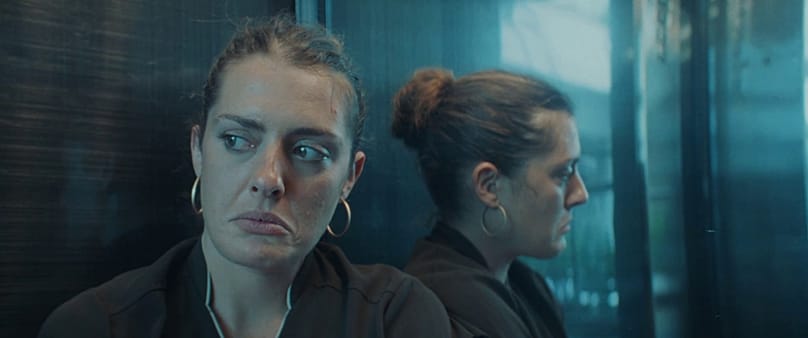
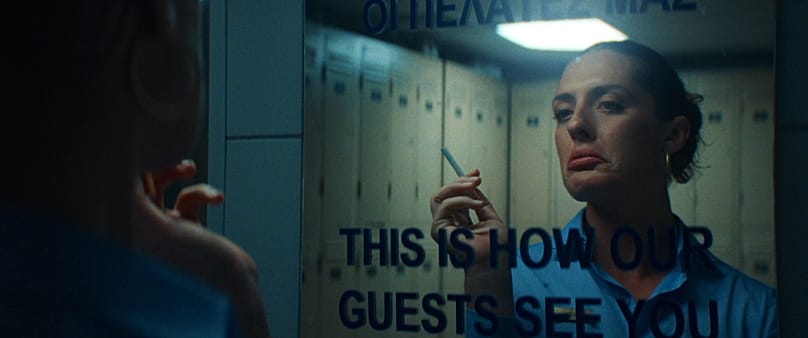
Elisa, the heroine, works in a luxury hotel. Due to an anatomical anomaly, she cannot smile. In a world where positivity reigns supreme, this is a serious problem. Elisa will have to defend her difference or adapt to the demands of others.
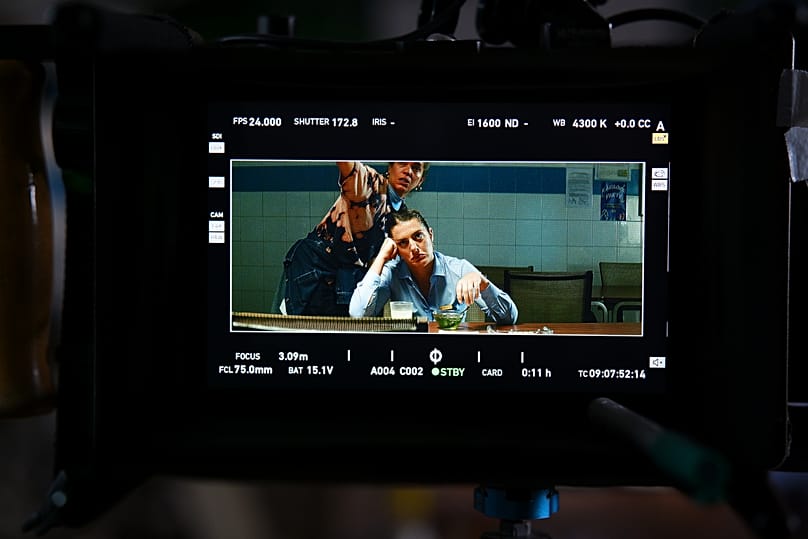
The shooting of Alexandra Matthaiou's third short film lasted four days and took place in the hotel that inspired her. We met her a few days before she left for the Cannes Film Festival:
"It was a funny start, the beginning of this film. Me in the same hotel as a jury at the Cyprus Short Film Festival. One day, I saw at breakfast a girl who worked there, who had the saddest look I've ever seen. I just remember writing a note, because it made a terrible impression on me. Why? It was in complete contrast to the palm trees, the pools, the happy tourists. I'm very concerned about the issue of toxic positivity, because I see it everywhere, and especially in an environment like a hotel where being an employee almost doesn't allow you to be anything but happy. I mean nothing can be bad in a hotel because you take care of those staying there, so your own daily problems are left on the outside. That's how I started working on it."
How did you construct this character's universe and do you see as her as a heroine?
"For me, Eliza is a heroine who kind of fools the audience's own preconceptions a little bit, because when you see this disability of hers, it's very easy to get confused and think that she's a person who's not happy or who lives in a depression, because everything is her fault. Gradually the heroine dismantles all of that through the film, because we discover that her own inner world, the way she sees everything around her and the way she has developed to dream, even if she doesn't succeed at everything she dreams, we understand that it is so rich that it ultimately makes her unapologetically very powerful.
That's what I wanted to say with this film. On a first level it's about smiles and the lack thereof and how that differentiates you from those around you. But on a second level what I was interested in seeing through this heroine is people who tend to deviate from the norm of what is considered socially ok. But that's very much intertwined with the work we did with Gregoria Methenitis, who plays the role of Elisa. She has given her form. It's not just the script, and it's not just me."
Is Eliza a person, a character we meet around us?
"You know, I think we've seen too many similar stories: people working in environments that oppress them, that don't make them happy. It's not that Elisa is very different in that, but there's a grey landscape in which she enjoys this work to a certain extent. It gives her joy. What makes it very difficult for her though, is the social pressure of those around her to be something other than what she is. Of course, the irony is that she is possibly happier than others around her, who, with these veneers of joy and wearing smiles, think they are more normal."
Would you agree that Eliza's anatomical anomaly is an ironic commentary on the worn happiness and toxic positivity that is prevalent around us today, and how society reacts to diversity?
"It's funny to me that I'm making this film, because I'm a person who smiles a lot, by nature, throughout my life. Growing up I've come to understand that being able to interact with people with a smile is a weapon. You immediately seem less threatening. You can probably even conquer things more easily than other people who lack this social skill. But I do think it's worthwhile to tenderly and caringly engage with people whose temperament may not allow them to bridge a social dialogue with a smile. I don't consider it a disability in any way."
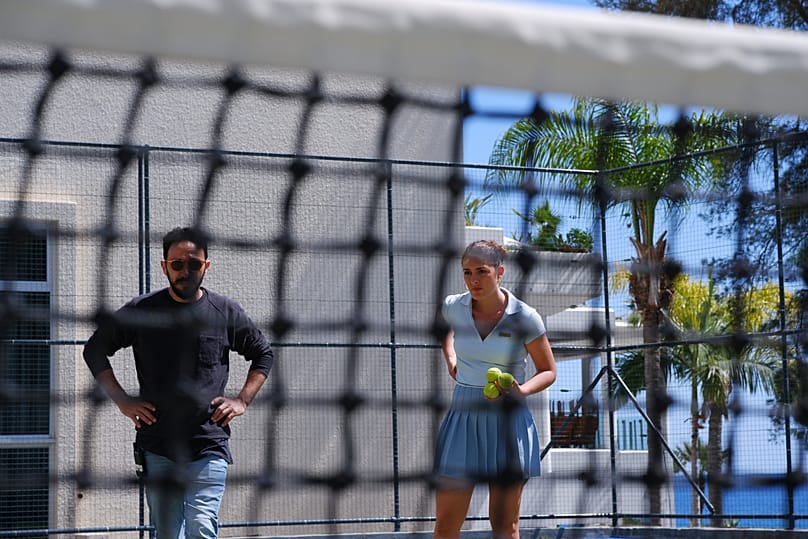
During the film, Eliza dreams of other lives, other jobs. What do you think would be the ideal job, the dream job of your heroine?
It would clearly be Lady Gaga (laughs) or a superstar performer. I mean, she's a girl who is hungry to be in the spotlight, to turn the spotlight on her.
Presenting at Cannes
After the success of her previous short film A Summer Place, which received the Drama Queer Award and Honorable Mention for Female Performance for Mary Mina at the 44th Drama Short Film Festival in Drama, and with numerous awards abroad (AFI, Palm Springs, Tampere and Uppsala), Matthaiou turns her attention once again to a heroine unlike any other.
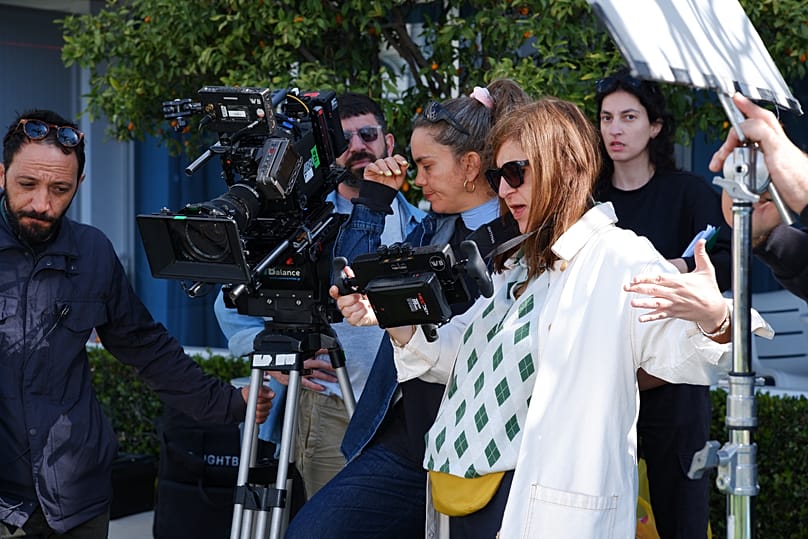
Matthaiou is particularly interested in the female experience. She wants to illuminate unexplored zones of female nature and psychology:
"First of all, I want to apologise to my favorite men, because as much as I love them, I find female heroines in film and literature infinitely more interesting. I also greatly admire female creatives. It's the way I see things and it's always about my generation, the millennials. The processing that is done on us as women and in relation to what we bring to society, and what we expect to build, the refractions that all that thinking makes is much more complex than men.
I am very much opposed to what has been recorded so far as a female stereotype, what a woman means, woman as archetype, woman as object of desire, woman as femme fatale. So I want to dwell a little more on more real women. In them I infuse something more surreal and a little more paradoxical, because that's how I see things."
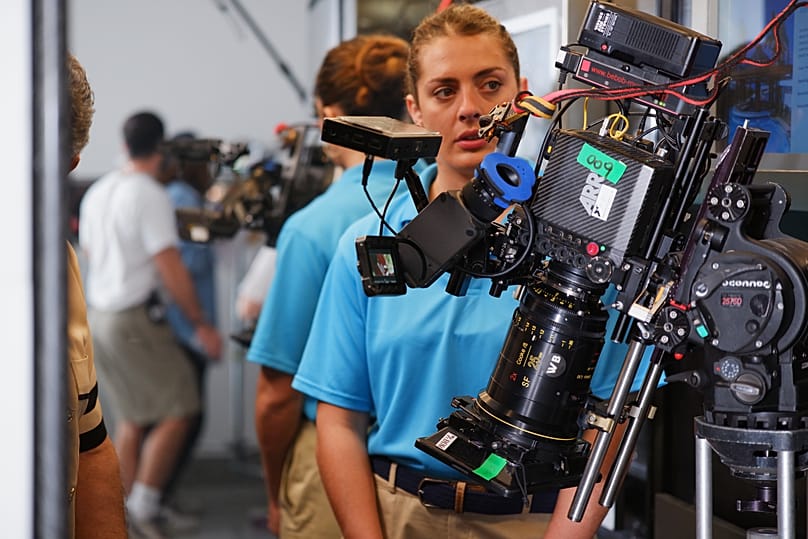
At the same time, the director is currently preparing for her first feature film. Does Cannes and the participation in the Directors' Fortnight pave the way for a better distribution, a better future for this production?
"I'm terribly happy that the film is premiering at Cannes. That is, for all of us film people, it is a festival that is very much in our hearts. You dream about it. You don't think you can take part, because there are a lot of films that are very worthy. So the fact that it happened gives me tremendous joy.
It also happens at a good time, because I'm working on my feature film, so it all helps in our work, in pushing you a little bit more. Things continue to be difficult, of course, but at least it helps you get noticed a little bit more easily. I couldn't imagine a more fitting segment than the Directors' Fortnight for Elisa, and I'm so glad it happened."
The film is a production of This Is The Girl Films, co-produced with the Ministry of Culture of the Republic of Cyprus, Onassis Culture, Homemade Films, Everybodies and La Cellule Productions.
"Free Eliza (Notes on an Anatomical Imperfection)" is screening on 21 & 22 May, as part of the 58th Directors' Fortnight (Quinzaine des Cinéastes).
The 79th Cannes Film Festival runs until 23 May.
Go to accessibility shortcuts Share CommentsRead more
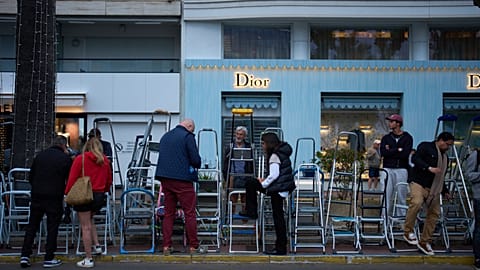
Cannes Film Festival 2026: Fans lock down red carpet spots ahead of opening
Схожі новини
Залужний, Буданов і учасники спецоперації вперше розкриють деталі прориву до "Азовсталі" у фільмі "Сталеві птахи"