Can the Quad stay relevant to boost Indo-Pacific security?
Foreign ministers from the US, India, Japan and Australia — the four nations that make up the Quadrilateral Security Dialogue, better known as the Quad — are set to meet in New Delhi over three days from Sunday to discuss Indo-Pacific security, energy supplies and emerging technologies.
The meeting comes as China continues to test geopolitical and security boundaries in the region.
But it's another issue, which is not on the agenda, that looms large over the gathering: how to keep the alliance alive and relevant in an ever more challenging geopolitical landscape and an increasingly assertive China.
Trump's tariffs, peace claims stir tensions with Modi
The Quad, which unites the four nations in seeking a Free and Open Indo-Pacific (FOIP), has not had a meeting of national leaders since 2024, when then-President Joe Biden hosted his counterparts in Wilmington, Delaware.
India was meant to host the next annual meeting in the latter part of 2025, but that never materialized amid tensions between India and the new administration of President Donald Trump.
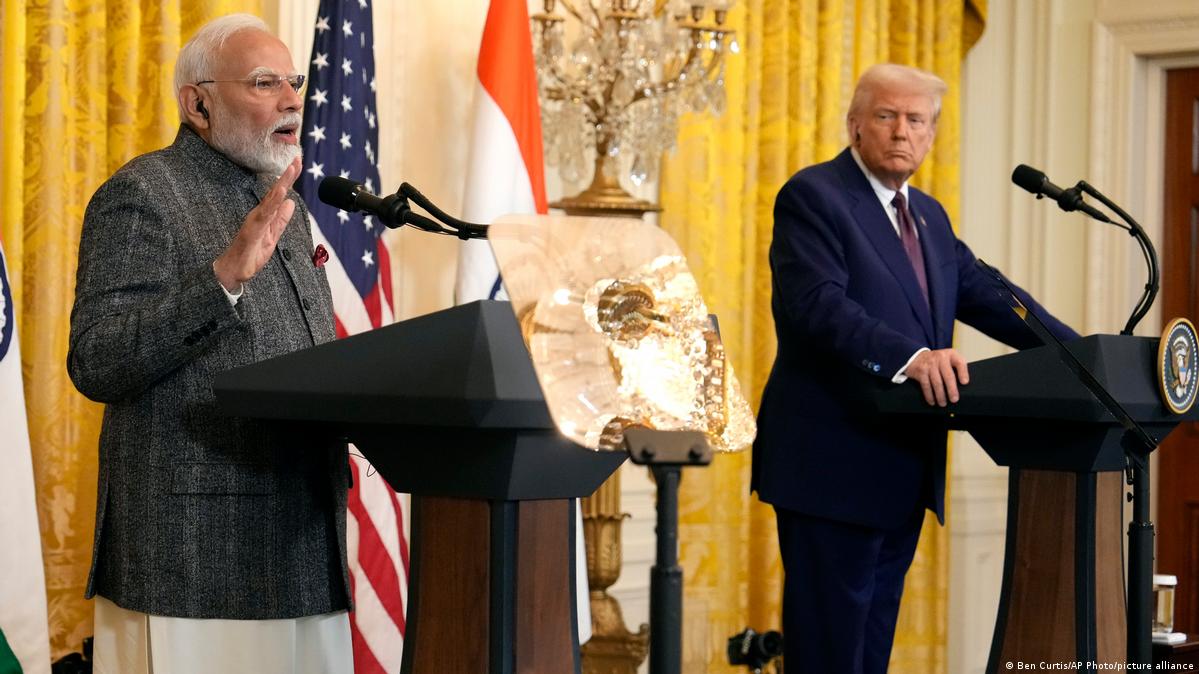
Trump has imposed tariffs and punitive duties on Indian imports to the US, straining ties with Indian Prime Minister Narendra Modi. The US president further antagonized New Delhi by claiming to have mediated a settlement to border clashes between India and Pakistan in May last year . The US president was also critical of India purchasing Russian military equipment.
Rubio's delicate diplomatic mission
One year on, Secretary of State Marco Rubio, who is heading the US delegation to India, is tasked with smoothing ruffled diplomatic feathers. With Trump's attention apparently focused on the war in the Middle East and, potentially, Cuba, Rubio's mission could be a challenging one.
"The US, Japan and Australia already had an important and effective trilateral security arrangement, but the whole purpose of the Quad was to bring India in as another power to give it more influence and reach," said James Brown, a professor of international relations at the Tokyo campus of Temple University.
"Unfortunately, this US administration does not seem to have grasped that or valued India's presence as an ally, which has badly alienated Modi," he told DW.
Japan and Australia have made efforts to keep the four-way alliance intact and functioning, with Brown suggesting that the Quad might actually benefit from the US being represented by Rubio, rather than Trump, in India.
Writing in the Foreign Policy magazine, Derek Grossman, a professor at the University of Southern California, cautioned that should Trump decline to take part in the next leaders' meeting, likely to be held in Australia around the end of 2026, "then the Quad will be relegated to geopolitical insignificance, and it may even spell the end of the grouping entirely."
And the big winner in that scenario, analysts point out, would be China.
"Beijing has consistently viewed the Quad with suspicion and often portrays it as an attempt at containment," said Joseph Kristanto, a maritime security analyst at Singapore's S. Rajaratnam School of International Studies.
Threats to regional security
"A weakened or fragmented Quad would reinforce narratives of declining US commitment, allied disunity and the limits of minilateral security cooperation in the Indo-Pacific," Kristanto told DW. "More broadly, uncertainty around the Quad could also unsettle smaller regional states seeking a stable balance of power without choosing sides."
He played down, however, suggestions that the alliance is on the brink.
"I don't think that recent tensions within the Quad indicate a collapse of shared interests; rather, they highlight the growing challenges in managing a partnership among four countries with distinct strategic cultures, priorities and expectations," Kristanto said.
That is arguably helped by the fact that the Quad, initiated in 2007, primarily at the urging of then-Japanese Prime Minister Shinzo Abe, is not a treaty alliance with binding commitments on member states. Equally, it was not designed to operate with the rigid discipline of NATO-style institutions, with that informal and flexible structure providing a different type of resilience.
The Quad has also weathered previous periods of inactivity and political hesitation that were similar to the current climate, not least when Australia, under former Prime Minister Kevin Rudd, distanced itself from the alliance out of concern that it would hurt Australian business interests in China.
But experts say it is still crucial that the US-India relationship is mended so that the alliance can endure.
"Despite deepening defence cooperation and growing strategic convergence in the Indo-Pacific, Washington and New Delhi approach the partnership from different perspectives," said Kristanto.
"The US views India as a key strategic partner expected to play a greater role in regional balancing. At the same time, India remains committed to strategic autonomy and is cautious about arrangements that resemble alliance commitments or bloc politics."
Divergences over Russia, trade and expectations of political alignment further complicate the relationship, yet it is "sustained by strong structural drivers, especially shared concerns about China and long-term Indo-Pacific security," he added.
US imposes 50% tariffs on India over ties with Russia
To view this video please enable JavaScript, and consider upgrading to a web browser that supports HTML5 video
Is the Quad set for strategic limbo?
The most serious challenge to the Quad could be inactivity, Kristanto told DW.
"The greater risk the Quad faces is a gradual strategic drift, characterized by fewer summits, reduced momentum, weaker coordination and a slow erosion of political relevance," he said.
If it appears that Washington's focus is shifting, the analysts DW spoke to believe discussions on adding other nations to the arrangement could be revived. South Korea, New Zealand and Vietnam are all seen as potential future partners under a "Quad-plus" arrangement.
For now, all the focus will be on the positions that Rubio takes while he is in India.
"The central issue is not whether leaders can eliminate all underlying tensions, but whether they can demonstrate continued political commitment, sustain practical cooperation and prevent the perception that the grouping is entering strategic limbo," said Kristanto. "The Quad's future will likely depend less on perfect unity among members and more on their capacity to maintain cooperation despite disagreements."
Edited by: Karl Sexton
AdvertisementСхожі новини
Trump to miss son's wedding amid Iran talks, White House commitments
Dream wicket for me: Sakib Hussain relishing Virat Kohli's dismissal

Indian-origin man sentenced in UK to nearly 10 years over £8 million drugs plot