Can Iran withstand the US naval blockade?
May 1, 2026

A ceasefire has been in place between the US and Iran after weeks of fighting, with Washington now seeking ways out of the conflict with Iran. Two options are on the table. The US could extend its naval blockade of Iranian ports, or launch a new wave of attacks to pressure the Iranian regime to give in.
"The US often combines strategic messaging and deliberate ambiguity to give it room for maneuver," says Iran expert Fatemeh Aman, who previously worked for Washington D.C.'s Middle East Institute and the Atlantic Council.
Indeed, the Wall Street Journal reports that US President Donald Trump is preparing a long-term blockade of Iran. The outlet, citing government sources, says the US aims to keep up the pressure on the Iranian economy and exports until Tehran is willing to make concessions.
The US administration is also weighing further military operations against Iran, according to US news outlet Axios. On Wednesday, Trump urged the Iranian leadership to agree to a peace deal, telling them to "better get smart soon."
The Trump administration wants Iran to give up its nuclear program, hand over 400 kilograms (882 pounds) of highly enriched uranium, and reduce its regional influence.
It is currently unclear when the US will lift its blockade of Iranian ports.
Pressure around the Strait of Hormuz
Restricting shipping through the Strait of Hormuz has become Iran's most important means of exerting pressure. The strait is of central importance to the global economy, as Persian Gulf states use it to export much of their oil and gas. The number of ships passing through the strait has fallen by over 95% since the start of the war two months ago, according to the United Nations.
These supply shortages also apply to fertilizers, which are important for developing countries, as well as petrochemicals, says International Energy Agency (IEA) head Fatih Birol. He fears the Iran conflict could trigger the largest energy crisis in history.
The US imposed a naval blockade on Iranian ports to cut off Tehran's oil export revenue. Iran, in turn, says it may reopen the Strait of Hormuz for international shipping if the US ends its blockade.
It is estimated that around 33% to 45% of Iranian government revenue comes from oil and gas sales. Since the US imposed its blockade on Iranian ports, exports have dropped significantly.
The impact on oil production
The US naval blockade has gradually restricted Iranian oil exports, says Homayoun Falakshahi, a senior analyst at data firm Kpler, in an interview with DW. Shipments have declined significantly, while stockpiles have built up.
Falakshahi says Iran is forced to hold its oil in storage until enough empty oil tankers are available and can leave the Persian Gulf.
This has forced Iran to reduce its oil production — a move that has already been necessary in the past due to sanctions imposed on Tehran. Other countries in the region, such as Iraq, are also being forced to reduce their oil production amid shipping restrictions.
Iranian oil production could fall by around 1 million barrels per day within a month, bringing it closer to domestic consumption levels, says energy expert Dalgah Chatinoglu. At the same time, Iran still has around 170 million barrels of oil on tankers that had already left through the Strait of Hormuz before the blockade, meaning it can still expect to generate some oil revenue over the next two to three months, Chatinoglu tells DW.
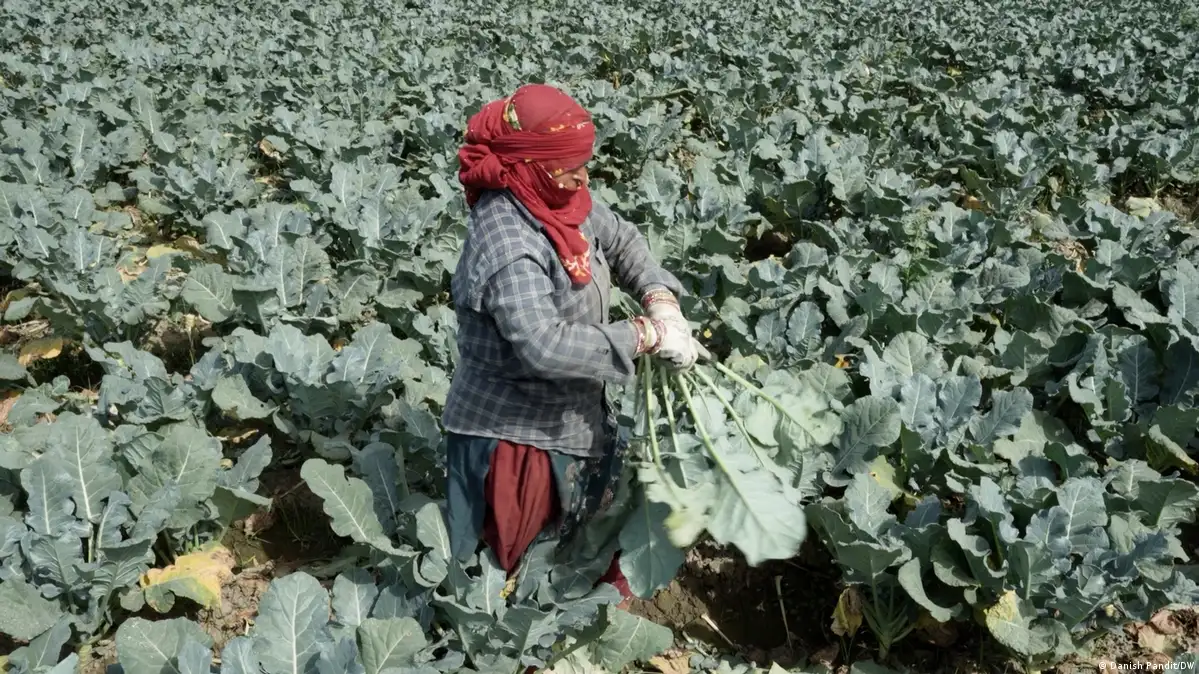 02:46Iran war triggers fertilizer crisis for India's farmers
So far, Iran appears to be able to withstand the US naval blockade. However, a long-term suspension of oil production could cause irreversible damage, as wells may need to be shut down. According to Chatinoglu, unproductive wells risk permanent damage due to disrupted flow. Whether this occurs depends largely on the duration and intensity of the US blockade.
Rising economic pressure
Economic pressure on Iran is increasing as the government struggles to meet domestic obligations, including paying security and military personnel. This situation is compounded by years of economic mismanagement, corruption and international sanctions. Iran's average inflation rate was estimated at 51% last year, with a further rise to around 69% forecast for 2026.
An extended blockade would deepen these economic problems. However, Iran expert Fatemeh Aman says, "maintaining a long-term blockade requires considerable military resources, rests on shaky legal ground, and involves political risks."
A prolonged restriction of maritime traffic could also harm other countries, increase tensions in the Persian Gulf and impact global trade, above all Asian economies that are heavily dependent on energy imports from this region, Aman says.
"This raises the question of whether Washington's pressure can still be controlled or is causing unintended problems."
Additional reporting by Morad Rahmati. This article was originally written in German.
Схожі новини

UK: Hindu group bids against Christian-Muslim group for same piece of faith land

Россия ночью атакует Украину ударными БпЛА — онлайн

Иран смягчил позицию по переговорам с США — WSJ
