Chinese Researchers Pursue NASA's Vision of Robotic Space Construction
Chinese Researchers Pursue NASA's Vision of Robotic Space Construction
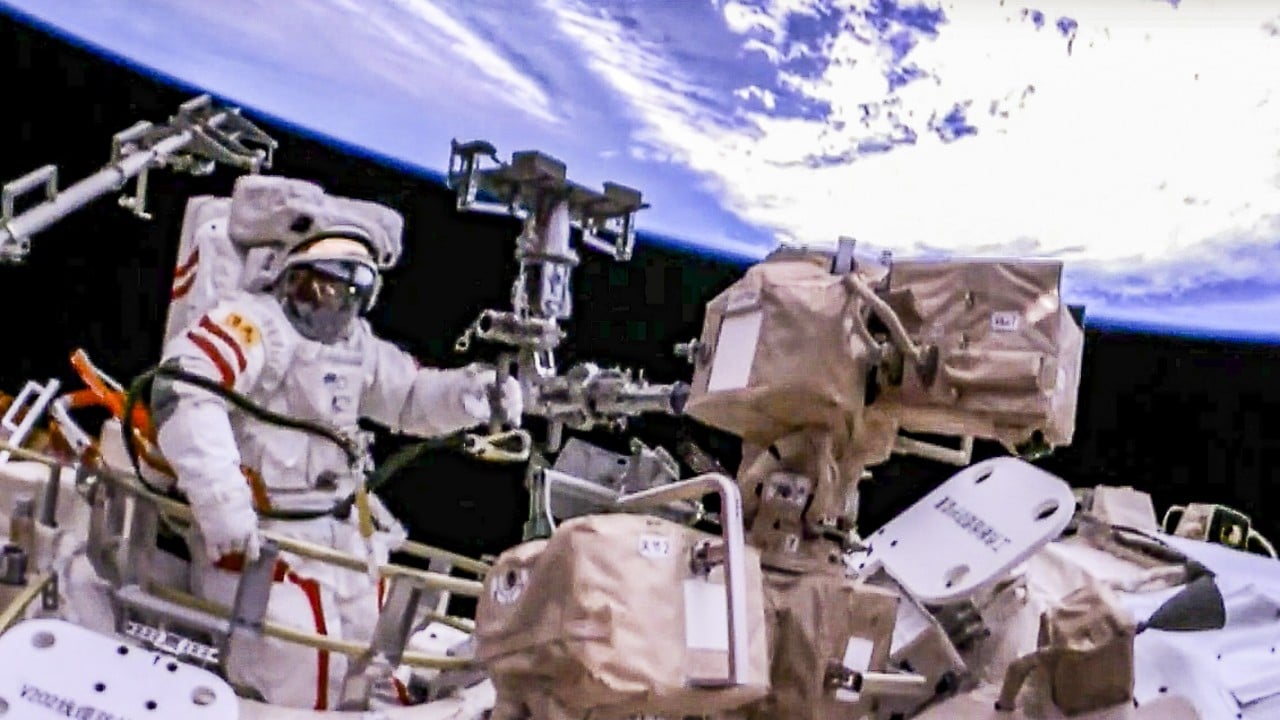
Scientists at the Shenyang Institute of Automation in northern China have demonstrated breakthrough technologies that could enable the assembly of massive structures directly in orbit, reviving concepts that NASA explored years ago through its SpiderFab initiative.
For over a decade, NASA invested in SpiderFab, an ambitious project envisioning spider-like robots that would traverse orbital space, constructing solar power installations and communications antennas by spinning carbon fibre materials—infrastructure too enormous for conventional rocket payloads. Though the program never reached fruition, the Chinese research team has now developed critical components to accomplish similar objectives.
Innovation in Manufacturing and Assembly
The Shenyang researchers' methodology centers on two primary challenges: efficient production of durable structural components and reliable connection systems. The team fabricated foundational elements using carbon-fibre composite materials, applying heat and pressure to form elongated hollow tubes. They subsequently integrated 3D-printed connectors, utilizing laser bonding to secure the tubes at joint points, creating robust yet lightweight assemblies without conventional fasteners or adhesives.
The research, detailed in the journal Space: Science & Technology on April 3, 2026, included construction of a reduced-scale antenna prototype that validated their approach in laboratory conditions.
Advantages of In-Orbit Construction
According to the institute, this methodology presents a lightweight, high-strength and dependable solution for constructing expansive space infrastructure. Rather than compressing pre-assembled systems into rocket cargo bays or constraining designs to launch vehicle dimensions, components could be manufactured, connected and integrated within space itself—a potentially foundational capability for future space exploration systems.
Current spacecraft manufacturing follows terrestrial production methods, with completed vessels transported via rocket into orbital trajectories. However, this approach imposes severe limitations. Rocket fairings accommodate only objects within specified dimensional parameters, while launch acceleration pressures restrict transportation of fragile configurations. These constraints make it prohibitively difficult to construct systems spanning hundreds of metres or greater distances.
The institute, added to the United States Entity List in 2022 amid concerns regarding alleged connections to Chinese military programs, faces restrictions on accessing American technological resources and capabilities.
Схожі новини
Japanese scientist accused of putting chemicals in co-worker’s water in U.S.
Бізнес на мільйон з капіталом у $1000: як знайти прямого імпортера та не переплачувати посередникам
Декодовано магічні ритуали стародавньої Сирії: вчені розшифрували 4000-літній архів екзорцизму та державної влади
