Can AI-assisted unmanned vessels be Beijing’s answer to South China Sea patrols?

Near-silent autonomous surveillance vessels that can keep going for months on end recommended for Chinese maritime enforcement
2-MIN READ2-MIN Listen
Writing in the latest issue of Naval and Merchant Ships, owned by China State Shipbuilding Corporation, Chen Xin and Chen Ruimiao said the self-powered vessels could be “of great value” to the sustainable management of distant waters.
By converting vertical wave motion into forward thrust using a submerged fin assembly attached below the boat, these small wave-powered autonomous vessels could be deployed long term in the far seas, they wrote.
AdvertisementUSVs could be used for routine Chinese patrols in distant waters and around islands and reefs, according to the article, which added that China could also use the technology for persistent monitoring of illegal activities as well as far-sea search and rescue operations.
Countries around the world still depend largely on traditional naval assets, including destroyers, patrol aircraft and submarines to support anti-submarine warfare and intelligence, surveillance and reconnaissance missions.
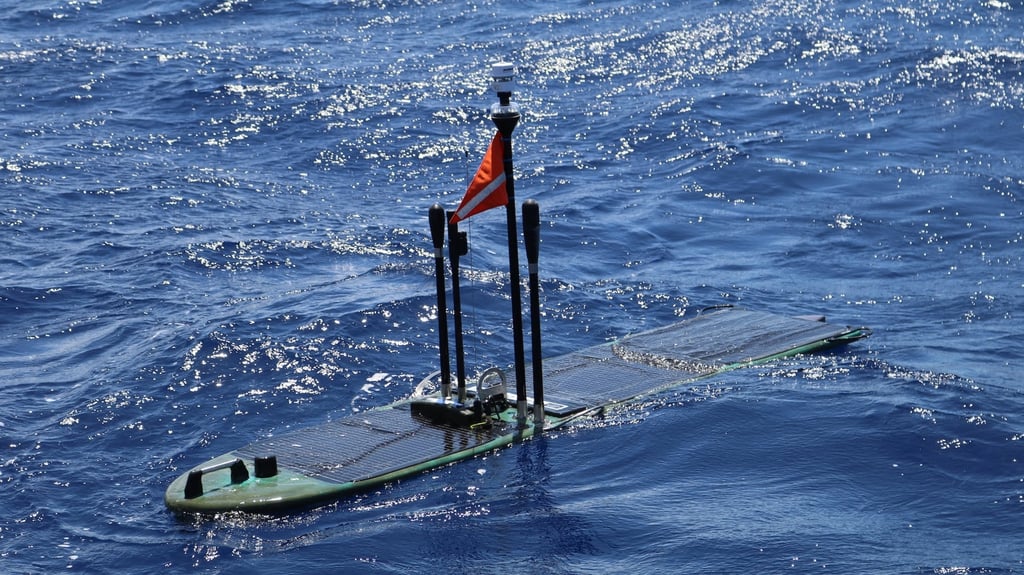
But with the development of artificial intelligence-enabled uncrewed platforms, many countries – including the United States and its allies – were shifting towards using these vessels as relatively low-cost sensors to continuously monitor large maritime areas without crews or regular refuelling, the article said.
AdvertisementAdvertisementSelect VoiceSelect Speed0.8x0.9x1.0x1.1x1.2x1.5x1.75x00:0000:001.00x