Boris Bondarev: Kremlin Elites Have No Way to Remove Putin, Even if They Wanted to
 By Boris Bondarev
May 14, 2026
By Boris Bondarev
May 14, 2026

The war against Ukraine initially came as a shock to Russia’s elites. No one anticipated the impact on their businesses and personal wealth, let alone their country’s place in the world.
Over time, however, the initial shock has been overcome. Russia’s system of power is structured in such a way that the overwhelming majority of its participants do not see themselves as independent political actors. Even if they did, they have no way to change Russia without jeopardizing their own privileged status.
The efforts of Western countries to force change in Russia proved contradictory. On the one hand, extremely serious sanctions were imposed on the economy, financial system, select industrial sectors and individual elites — although not all sectors of the economy were targeted to the same degree.
But this did little to affect Russia’s behavior, in large part because the West didn’t set out clear conditions that would allow sanctions to be lifted. Instead of splitting the elite, sanctions consolidated a significant part of Russia’s ruling class around President Vladimir Putin.
Many had hoped that after the presumed success of the war, some kind of fundamental agreement would be reached with Europe and the United States.
This initially appeared vindicated by the return of Donald Trump to Washington. Many believed that the re-elected president would force Ukraine into a compromise on terms acceptable to the Kremlin.
But these expectations are not being met either. Despite the contradictory rhetoric of the new U.S. administration, there is no quick exit from the war on terms comfortable for the Kremlin. Moreover, the war itself continues to drag on, along with sanctions and military-political confrontation between Russia and the West persist, with the prospect of further escalation.
For part of the Russian elite, this deadlock is becoming an additional source of irritation. The war is not delivering the expected victory, relations with the West are not normalizing, sanctions remain in place, and the prospects for exiting the conflict without serious political and economic costs are becoming ever less obvious.
The collapse of these expectations is proving especially painful. For many years, Kremlin elites thought conflict with the West would ultimately strengthen Russia. Today, however, it is becoming increasingly clear that the negative situation is taking on a much more long-term and systemic character than may have seemed at the beginning of the war.
Russia’s economic situation is deteriorating noticeably as the initial surge of wartime growth peters out. Moscow’s own data says that the economy is still growing, but more and more economists — including those loyal to the authorities — acknowledge that this growth is artificial.
Pouring colossal sums into the military-industrial complex as a model of growth has obvious limits. Military production in itself does not create sustainable long-term economic development and funnels resources away from the civilian sector, distorting the economic system even further. Moreover, Russia's economy is suffering from a chronic labor shortage, high inflation, the destruction of familiar logistics chains, technological dependence on imports, a shortage of investment and rising business costs.
The International Monetary Fund forecasts extremely weak growth for the Russian economy in the medium term, despite a windfall from oil prices. More and more experts are beginning to say that the Russian economy is entering a phase of prolonged weakening. Wartime overheating temporarily masked the accumulation of internal imbalances and is now making the problem worse.
Meanwhile, Western countries have not been coerced out of supporting Ukraine. Kyiv is developing its own advanced military capabilities, including long-range strikes as far as the Ural mountains and carrying out sabotage operations deep inside the country.
It has been obvious for a long time that Russia is incapable of achieving its objectives in a war against an opponent that was clearly weaker. In the fifth year of the war, this can no longer be hidden even within the system itself.
Naturally, this course of events is causing ever greater irritation and dissatisfaction within the Russian elite. Putin no longer looks like a man with a clear vision for his country. The legitimacy of personalist regimes is always based on belief in the leader’s competence, on his ability to ensure stability, security and predictability. When the system begins to show signs of strategic deadlock, that image inevitably starts to erode.
It is especially telling that signs of growing irritation are beginning to appear, even among loyalist circles.
Statements by the Kremlin and adjacent bodies that the authorities need to avoid excessive pressure on society are revealing. They may indicate an understanding within the apparatus that the endless tightening of the screws is beginning to create not only political risks, but also social and psychological risks for the stability of the system itself.
From time to time, publications also appear recording a fall in Vladimir Putin’s ratings — albeit a limited one for now. Of course, under an authoritarian system, polling numbers are difficult to interpret, especially during war and repression. But the very fact that such publications appear, including in relatively system-loyal sources, can also be seen as a symptom of instability. Therefore, even cautious signals about a possible decline in support begin to affect the internal mood of the system.
None of this yet means that an organized opposition exists within the elite. Moreover, such signals do not necessarily have to lead to any active steps against Putin. Russia’s system of power remains extremely centralized and repressive.
But these manifestations of irritation are important as indicators of the gradual accumulation of internal tension.
Personalist regimes can look absolutely monolithic for a long time. But a glance below the surface shows their stability depends largely on the belief of elites that the leader retains control. When doubts accumulate, even entirely loyal acolytes gradually start asking themselves where exactly the country is heading and how long the existing model can remain stable at all.
The key question, however, is whether this irritation can be consolidated into political action. That requires not only material causes, but also agency, political will, organizational mechanisms and a sense that an alternative exists. Russia’s elites lack all of these things.
The FSB has enormous powers and colossal capacities for control. All senior officials and business figures fear wiretapping and monitoring, regardless of whether they are actually being watched at any given moment.
Such an atmosphere virtually destroys trust within the elite itself, and without trust, it is impossible to form any serious conspiracy or coordinated action against the regime.
But even this is not the main problem. Crucially, no clear alternative exists. The war is a direct consequence of efforts to conserve the existing power structures in Russia. Abandoning the war would risk losing their own influence, which they wouldn’t dare risk.
The Russian elite therefore finds itself in a peculiar trap.
On the one hand, the regime is becoming harsher and harsher with intensifying repression, censorship, pressure on society and businesses, internet blocking and restrictions on freedoms while the powers of the security services expand. This destroys any prospect for normal economic development and goes against the interests of Russia’s elites, as well as ordinary people.
On the other, it is entirely unclear how these screws can be loosened while preserving the existing regime, which was built on tightening them.
At first glance, one solution might be to find some way to remove Putin without changing the rest of the existing order.
The fundamental problem with this is that Putin’s regime isn’t limited to one man, but the networks of agreements and patronage that span out from him. If such a figure is removed, it is impossible simply to replace them.
You can’t use the U.S.S.R. after Stalin or China after Mao as a precedent to argue for deposing Putin. Both the Soviet and Chinese Communist Parties had collective governance systems that preserved the integrity of the party. That is why neither of those regimes collapsed after the death of their figurehead.
In contemporary Russia, the situation is fundamentally different. The governing United Russia party only exists as an extension of Putin’s personal authority. It does not not determine the country’s development strategy and is incapable of functioning independently of the presidential power vertical.
In this sense, the Russian system more closely resembles fascist regimes like Nazi Germany, where the entire legitimacy of the political system stems from the leader. Remove that central node, and everything collapses.
That is why any potential transition of power in Russia inevitably turns out to be an extremely dangerous and unpredictable process, which, among other things, makes all discussion about a transition pointless.
Finally, maintaining the status quo, just without Putin, is obviously not an acceptable option either for Ukraine or for its allies. The problem lies not in Putin personally, but in the very logic of his regime’s existence and its goals — goals that are incompatible with the existence of a sovereign Ukraine, normal relations with the West and even the development of Russia itself.
Putin’s model of power requires the constant search for an external enemy. Simply replacing the figure at the top won’t change that. Without dismantling the system itself, Russia is highly likely to reproduce the very same crises, the same aggression abroad and degradation at home.
Instead of the West’s current passive approach to the question of Russia’s future, a proactive approach is needed. This does not mean attempting to govern Russia from the outside or directly interfere in its internal processes, but trying to influence a positive trajectory for Russia’s internal transformation.
This means the need to support those forces inside Russia that are interested in change. The West needs to identify groups that want to form an alternative model of the country’s development based not on mobilization, militarization and extractionism, but on institutional development and integration into the modern world.
This does not refer only to the opposition in the classic sense of the word. Some representatives of the Russian elite itself may be interested in transforming the system if they see a possibility of preserving at least part of their position and security as part of a departure from the Putin model.
But such a transformation is impossible without the defeat of the current regime.
That is why a strategy of controlled defeat for the Putin system is needed — not the chaotic collapse of a nuclear state, but the consistent and thorough dismantling of a regime that poses a threat not only to Ukraine and Europe, but to international security as a whole and to Russia itself.
The views expressed in opinion pieces do not necessarily reflect the position of The Moscow Times.Boris Bondarev
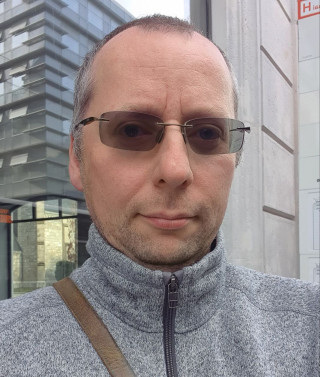 Boris Bondarev is a Russian diplomat who resigned in protest at the invasion of Ukraine in 2022.
@Vizlypuzly1
Boris Bondarev is a Russian diplomat who resigned in protest at the invasion of Ukraine in 2022.
@Vizlypuzly1
Boris Bondarev
Boris Bondarev is a Russian diplomat who resigned in protest at the invasion of Ukraine in 2022. @Vizlypuzly1 Read more about: Elites , KremlinSign up for our free weekly newsletter
Our weekly newsletter contains a hand-picked selection of news, features, analysis and more from The Moscow Times. You will receive it in your mailbox every Friday. Never miss the latest news from Russia. Preview Subscribe Subscribers agree to the Privacy Policy We sent a confirmation to your email. Please confirm your subscription.A Message from The Moscow Times:
Dear readers,
We are facing unprecedented challenges. Russia's Prosecutor General's Office has designated The Moscow Times as an "undesirable" organization, criminalizing our work and putting our staff at risk of prosecution. This follows our earlier unjust labeling as a "foreign agent."
These actions are direct attempts to silence independent journalism in Russia. The authorities claim our work "discredits the decisions of the Russian leadership." We see things differently: we strive to provide accurate, unbiased reporting on Russia.
We, the journalists of The Moscow Times, refuse to be silenced. But to continue our work, we need your help.
Your support, no matter how small, makes a world of difference. If you can, please support us monthly starting from just $2. It's quick to set up, and every contribution makes a significant impact.
By supporting The Moscow Times, you're defending open, independent journalism in the face of repression. Thank you for standing with us.
Once Monthly Annual Continue Not ready to support today?
 Remind me later. ×
Remind me next month
Схожі новини
Over 120 budget related criminal cases opened in Dnipropetrovsk region this year – Prosecutor’s Office
АМКУ знову оштрафував фармдистрибьютора "ОПТІМА-ФАРМ,ЛТД" на 7 млн грн
Україна на "Євробаченні" завжди проходила у фінал і жодного разу не займала останнє місце