Border politics - how similar jobs in the same firm deliver different tax bills

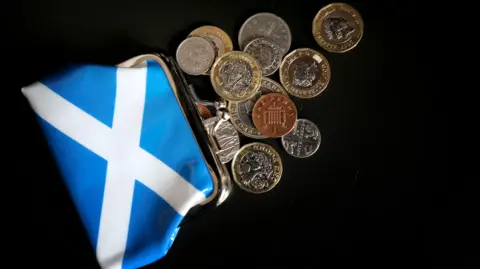 PA Media
On the eve of the Scottish parliament election, personal taxation will be one of many factors being weighed up by those heading to the polling stations on Thursday.
In the south of Scotland, the main political party taxation policies might come under slightly more scrutiny, as voters compare their salaries with their counterparts over the border.
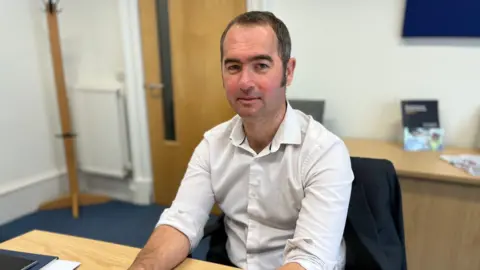
Scott McIver lives in Dumfries and is a senior tax manager with Carlisle-based accountancy firm, Armstrong Watson. His colleague, Graham Poles, is a tax partner with the same company, but lives in Cumbria.
These two men work in similar roles for the same firm - but they are taking home different amounts of money every month. It's not due to their salary, but their postcodes.
Since 2018, the Scottish government has operated what it says is a more "progressive" six-tier income tax system, which taxes lower earners a little less than contemporaries elsewhere in the UK, and higher earners quite a bit more.
 BBC News
It includes a 19% "starter" rate of tax - below the UK's 20% basic rate - a basic tax of 20%, an intermediate tax at 21% and a trio of higher rates at 42%, 45% and 48%.
At Armstrong Watson, the higher earners in the company are noticing the difference at the end of each month.
Poles explained: ''Being a Carlisle firm, we have people [who] live in Scotland and travel down into Carlisle and they're sitting next to colleagues of theirs who live in Carlisle but are subject to a different tax rate.
''I know of colleagues that are being paid at that kind of £45,000-£50,000 level and therefore they're now higher rate taxpayers in Scotland and subject to 42% tax.
"Their equivalent colleague sitting right next to them in England is still a basic rate taxpayer."
Someone living in Gretna earning £50,000 a year will pay £1,496 more in income tax annually than their colleagues living in Carlisle earning the same amount.
Most Scots are better off under the current tax system. The Scottish Fiscal Commission forecasts that 55% of Scots should end up paying less tax than they would if they lived elsewhere in the UK.
However, the saving for lower earners is at most £40 a year, while rates are much steeper for higher earners.
McIver, who works in the accountancy firm's Dumfries office, said the difference in take-home pay between himself and his colleague is not enough of an incentive for him to consider moving south of the border at this stage.
"I have family in Dumfries, so I wouldn't be looking to uproot them and move to Carlisle to take advantage of paying less tax at this amount," he said.
''The tax rate would have to be significant to uproot your whole lifestyle as it can't just be a paper exercise.
"Tax is just one thing to consider but there is general acceptance that if you're living in Scotland then you pay more tax."
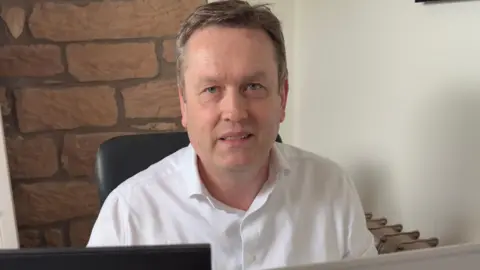 Graham Poles
The difference between the two tax systems is higher for people on the kind of wages paid to senior managers, partners and executives, Poles said.
"You get to a salary of around £100,000 and the difference is £4,000, which is not an insignificant sum of money," he said.
''I think at that point, it starts to put in people's minds, whether they would look again at being on one side of the border or the other.''
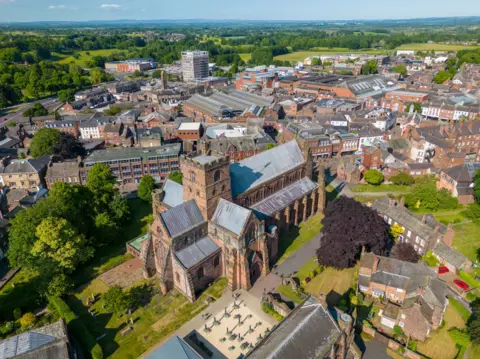 Getty Images
The Scottish government has devolved powers relating to public spending, with the income generated by the higher tax revenue used, in part, to fund public services.
In England, the maximum university tuition fee for the 2026/27 academic year is £9,790 for standard full-time courses. In Scotland, university tuition fees are free for Scottish residents.
Scottish residents do not pay for NHS medical prescriptions, whereas there is a £9.90 prescription charge in England for 2026/27.
However, the UK government says that, in practice, 89% of prescriptions given out south of the border are free of charge, due to exemptions for children, over-60s and those on low incomes or with specific medical conditions.
Water bill charges are included with council tax in Scotland, with an average of £532. Despite a rise of 8.7% in April, they remain among the lowest of any water company in the UK.
Both McIver and Poles say they have clients weighing up the financial pros and cons of living on either side of the border, and often talk about the implications of their own choices.
Poles said: ''Whenever Scott and I come together there is that discussion because we have sons of similar age. I can say, 'you get free tuition fees, you get free prescriptions', and in the end over the course of a lifetime a Scottish person is paying more tax.
''But are they getting everything? Is it fair? Is it equitable? Probably not, but there's swings and roundabouts with all of these things isn't there?
"When I go to the Glasgow office it is never discussed, but if I'm in the Carlisle or Dumfries offices, it's definitely more of a talking point."
Scottish election 2026: Who should I vote for? Compare party policies
Ahead of the Scottish elections, the six main political parties have included their plans for income tax within their manifestos.
The Scottish Conservatives want to raise the point at which you start paying income tax in Scotland in line with inflation.
They also pledge that the level at which the higher rate kicks in will be increased to £50,270, matching the UK tax system.
The SNP say Scotland's income tax system is the ''fairest and the most progressive in the UK'' and they will keep it that way.
They will not increase the number of bands or rates over the lifetime of the next parliament, and will aim to make the system simpler.
Scottish Labour say they will not increase the rates of income tax during the next parliament.
Its ambition is to lower the tax burden they say the SNP has placed on Scots as ''we get the economy growing once again''.
Tax thresholds
The Scottish Liberal Democrats say their priority will be to lift tax thresholds in line with inflation and begin to close the tax differential with England.
They will accept the offer from the Hunter Foundation to fund a specialist team to investigate both the impacts of the current system and to develop a new system that will increase the tax take.
Reform Party Scotland say they will restore income tax bands in Scotland to align with the three UK bands.
It will also implement a cut of 1p below each band, with a medium-term objective of being 3p below each band in the first five years.
The Scottish Greens say they want to retain a "progressive and redistributive" income tax system.
They also say they will set a higher rate for landlords' income from rental properties.

- Who should I vote for? Compare party policies
- A simple guide to the Scottish election
- Who are the candidates in my area?
- Tell us about the issues affecting you
- How to follow BBC Scotland's election coverage