Blow to Voting Rights Act as Supreme Court rules congressional map based on race is unconstitutional
Louisiana will once again have to redraw its congressional maps after the U.S. Supreme Court ruled Wednesday that the creation of a second Black-majority district was an “unconstitutional racial gerrymander,” a ruling that could potentially help Republicans in upcoming elections.
In a 6-3 decision, the conservative majority of the court said the state relied too heavily on race to redraw its congressional map in 2024, despite the lines initially being redrawn to comply with a previous ruling that said the 2020 congressional map was also unconstitutional – for different reasons.
However, justices declined to intervene in Section 2 of the Voting Rights Act, a landmark statute that prohibits racial discrimination in voting.
The decision may have implications in the midterm elections, as it could prompt other Republican-led states to draw new maps that follow a looser interpretation of Section 2 of the Voting Rights Act.
The three-justice liberal wing of the court sharply dissented from the majority, warning that Wednesday’s decision could open the door to eliminating protections of the Voting Rights Act anyway.
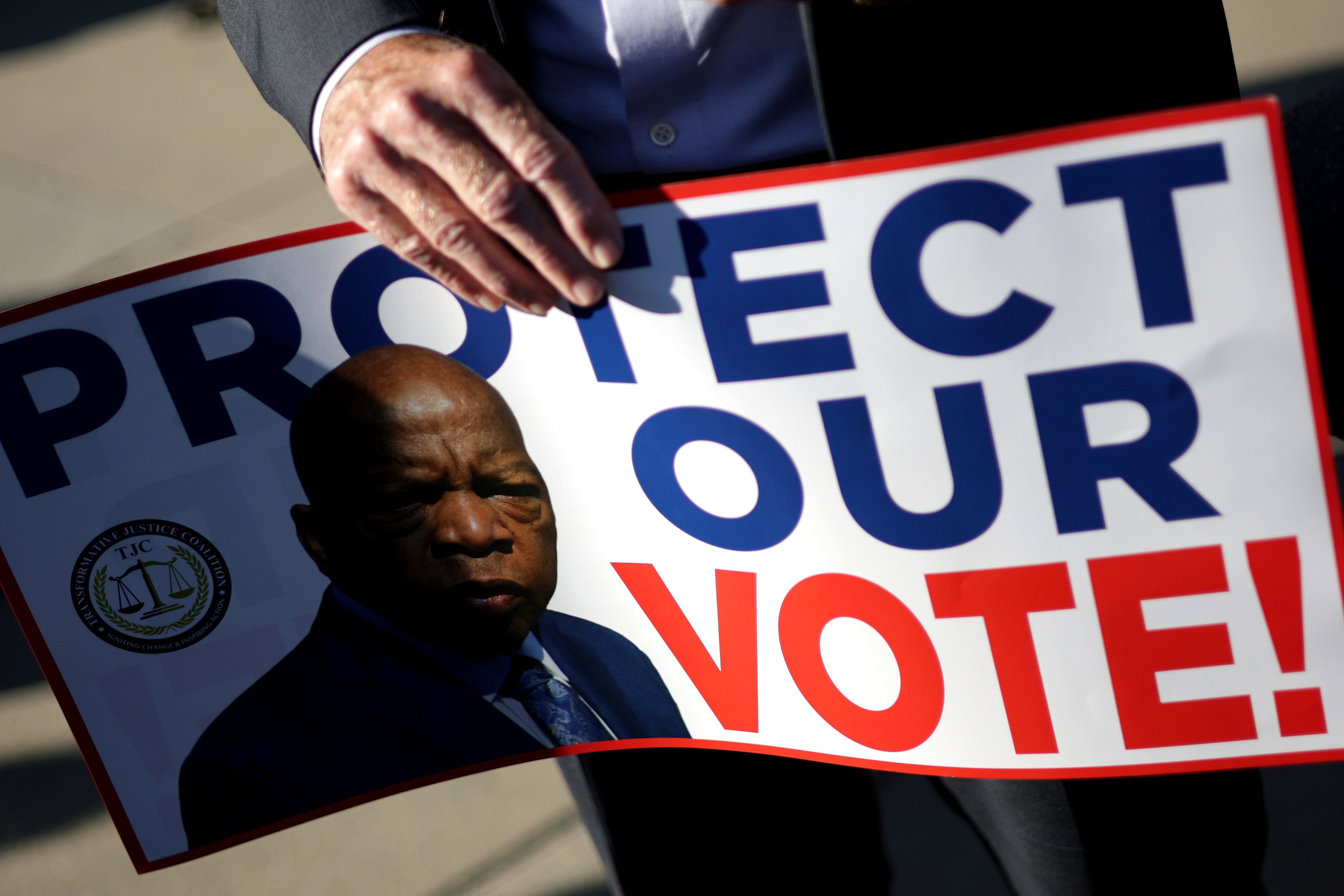 open image in gallery
“If other States follow Louisiana’s lead, the minority citizens residing there will no longer have an equal opportunity to elect candidates of their choice. And minority representation in government institutions will sharply decline,” Justice Elena Kagan wrote.
“I dissent because Congress elected otherwise. I dissent because the Court betrays its duty to faithfully implement the great statute Congress wrote. I dissent because the Court’s decision will set back the foundational right Congress granted of racial equality in electoral opportunity. I dissent,” Kagan wrote.
More than a decade after ruling against a critical component of the Voting Rights Act, the justices were once again asked to take aim at the decades-old civil rights law, which sought to release the grip of Jim Crow-era threats to the right to vote.
Section 2 of the Voting Rights Act bans voting rules that discriminate based on race. But if states don’t need to consider the racial impacts of how congressional districts are drawn, the consequences could be sweeping, opening the door for Republican lawmakers to eliminate Democratic-led districts across the South — and delivering a massive shot in the arm to the GOP’s gerrymandering arms race before midterm elections.
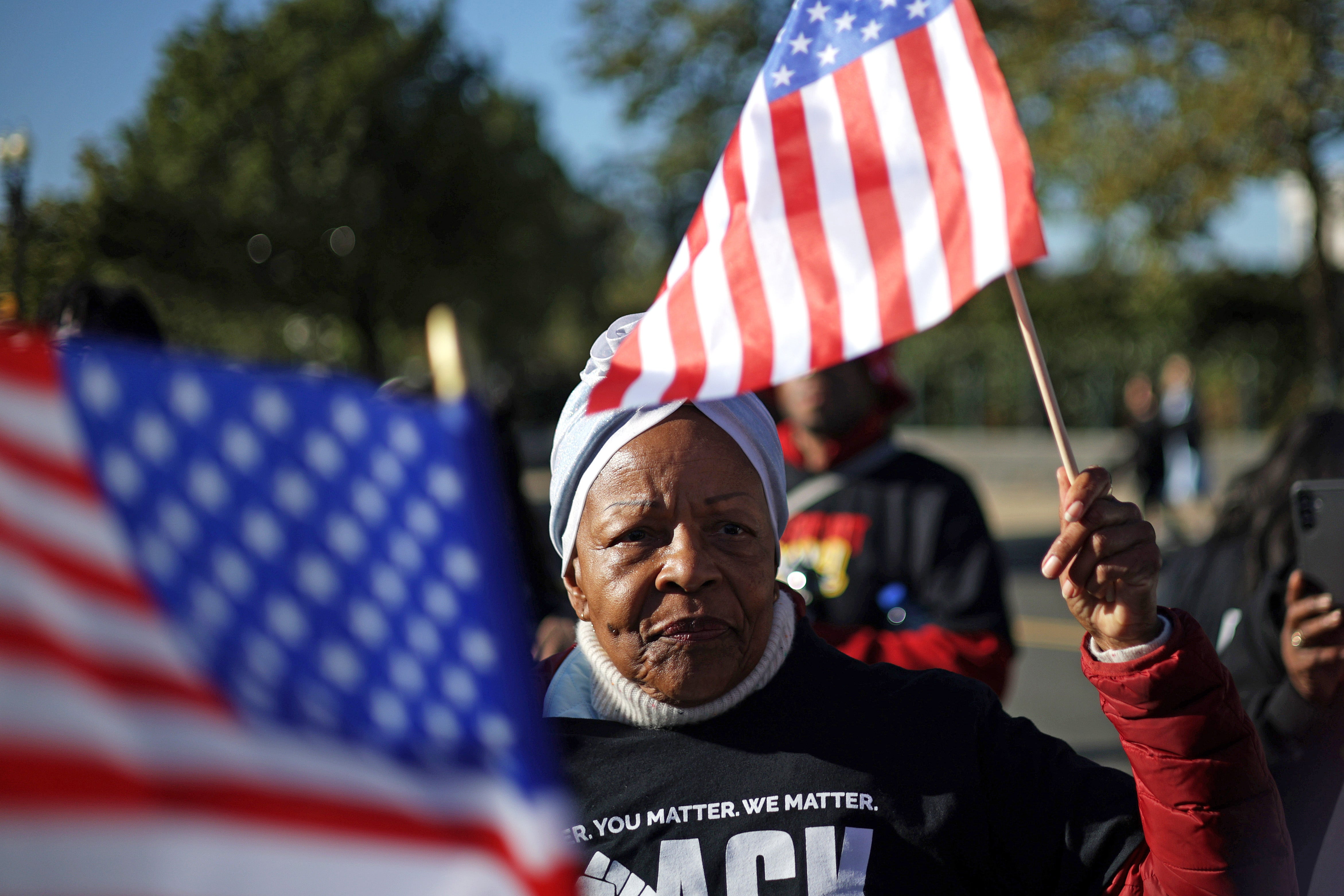 open image in gallery
Republican officials and lawyers for the Trump administration argued that racial discrimination that led to the passage of the landmark law in 1965 should no longer apply in modern times.
Justice Samuel Alito, who wrote the majority’s opinion, said that the state did not have a “compelling interest” to justify using race to create a new congressional map. He added that Section 2 only applies when “a strong interference” indicates there was “intentional discrimination” in redrawing congressional maps.
“Thus [Section 2] does not intrude on States’ prerogative to draw districts based on nonracial factors, including to achieve partisan advantage,” Alito wrote.
Justice Clarence Thomas, who has voiced opposition to the court intervening in racial gerrymandering cases, wrote in a concurring opinion Wednesday that he would have gone further and ruled that Section 2 of the Voting Rights Act has nothing to do with drawing congressional lines.
Black voters make up one-third of Louisiana’s population, but were largely “packed” into one majority-Black district and “cracked” across the other five after the state crafted a new map after the 2020 census. Most Black voters in the state have voted for Democratic candidates.
After a Voting Rights Act lawsuit against the state, Louisiana was required to redraw its congressional map to ensure a second majority-Black district.
In a rare move, the Supreme Court asked the parties to argue the case a second time — and expanded the scope of the case to tackle major constitutional questions that put Section 2 in jeopardy.
During oral arguments in October, several conservative justices asked whether there should be a time limit, or a cut-off point, when considering race as a factor in drawing congressional maps.
 open image in gallery
“What exactly do you think the end point should be?” Trump-appointed Justice Brett Kavanaugh asked.
Derrick Johnson, the President and CEO of the NAACP, said Wednesday’s decision was “a devastating blow to what remains of the Voting Rights Act” and gives “a license for corrupt politicians who want to rig the system by silencing entire communities.”
“The Supreme Court betrayed Black voters, they betrayed America, and they betrayed our democracy. This ruling is a major setback for our nation and threatens to erode the hard-won victories we’ve fought, bled, and died for,” Johnson said.
Johnson said the best defense was “the ballot box.”
“We’re going to turn out voters for the midterm elections to make sure we can elect representatives who look out for us. Our democracy is crying for help,” he added.
A redistricting war heading into midterm elections this fall follows a series of Supreme Court decisions that have gradually chipped away at the Voting Rights Act and constitutional guardrails to protect against racial gerrymandering, which is the carving up of electoral maps to prevent racial minorities from electing their preferred candidates.
In a landmark case in 2013, the Supreme Court gutted a key provision of the law that required states with a history of discrimination to seek approval from the federal government before changing their voting laws.
The Supreme Court’s ruling in Louisiana v. Calais comes as Florida is attempting to adopt a new congressional map that aggressively divides the state to give Republicans at least four more seats.
Join our commenting forum
Join thought-provoking conversations, follow other Independent readers and see their replies
CommentsСхожі новини
4,300-year-old gold-covered mummy found sealed in deep Egyptian shaft, shocks archaeologists

Ex-FBI chief James Comey surrenders in 'threat' case against Donald Trump; what was '86 47' post?

Putin, Trump hold 90-minute call on Iran, Ukraine war: Russia proposes Kyiv ceasefire for Victory Day