Beyond the Hollywood story - what are Wrexham really building?
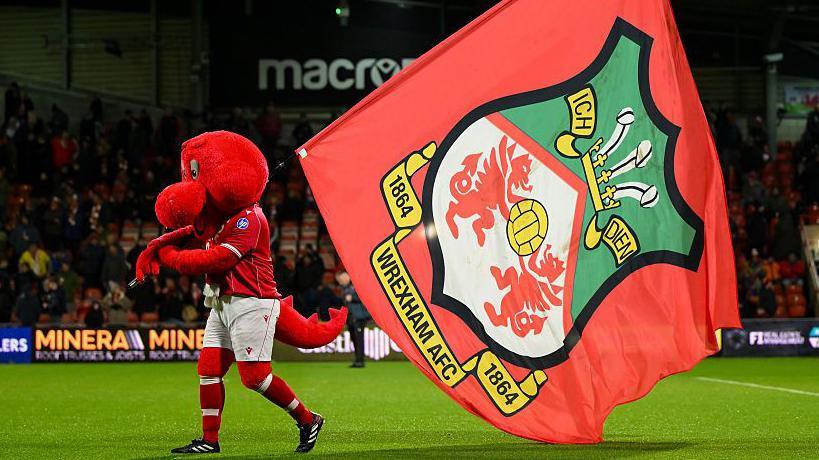 Image source, Getty Images
Wrexham, founded in 1864, are the third oldest professional football club in the world and the oldest in Wales
- Published27 minutes ago
For many football fans, Wrexham's rise might have been defined by the story and subsequent success of the men's first team.
The promotions, the documentary cameras and the celebrity ownership of Ryan Reynolds and Rob Mac have transformed the club into one of the most recognisable football narratives in the world.
But focusing only on the men's side misses the bigger story unfolding behind the scenes.
While back-to-back-to-back promotions generate the headlines, Wrexham's most important work may be happening away from the spotlight, through investment in the women's team, youth development and long-term infrastructure.
The club's rapid rise has created worldwide attention, but the decisions being made beneath the surface suggest Wrexham are trying to build something far more sustainable than a short-lived fairytale.
BBC Sport looks at why there is more to Wrexham than the quest for the Premier League.
Wrexham women
Co-chairmen Reynolds and Mac pledged investment into the women's programme when they took over in 2021.
Since then, the team have steadily evolved from a subsidiary part of the club into a serious project with long-term ambitions.
Like the overall profile of the club, the Welcome to Wrexham documentary has helped to enhance the profile of the women's side and grow their fanbase.
The start of that growth became evident when in 2023 a Welsh women's domestic record crowd of 9,511 watched Wrexham lift the Adran North title at the Racecourse Ground, with Reynolds, wife and Hollywood actress Blake Lively, and Mac in attendance.
Days later Wrexham secured their tier one domestic licence - a milestone that requires clubs to meet higher standards in coaching, administration, facilities and player development.
Then the team secured promotion to the Adran Premier, the top tier of Welsh women's football.
That summer, Reynolds and Mac continued to prove their investment as they rewarded the side with their first set of semi-professional contracts.
Another key milestone of their development came in 2024 when Wrexham were granted their first Uefa licence, allowing them to compete in European competitions should they qualify.
Those achievements matter because they show the women's side are being treated as part of the club's future rather than simply an extension of the men's success.
The purchase of The Rock stadium as a permanent home for Wrexham women in August 2025 reinforced that message.
In a football landscape where many women's teams still rely on temporary arrangements and borrowed facilities, Wrexham's investment signalled permanence. It suggested the club see women's football not as a branding exercise, but as a core part of their identity.
The real evidence of their upward trajectory came just last month when Wrexham beat defending champions Cardiff City to secure the Adran Premier - the first time the women's team have secured a top-flight title.
The win also secured their place in next season's Champions League qualifying phase - a feat that Wrexham could only have dreamed of 10 years ago when the club folded because of a lack of players, only to reform in 2018.
Off the pitch, there has been a deliberate effort to grow the women's team commercially and internationally.
Sponsorship deals with companies such as Lively's drinks brand, and overseas tours to the US, have helped create visibility for players and staff who historically would have received very little attention outside Wales.
This visibility appears to have been designed with a specific strategy to elevate the women's side alongside the men's rise, rather than behind it.
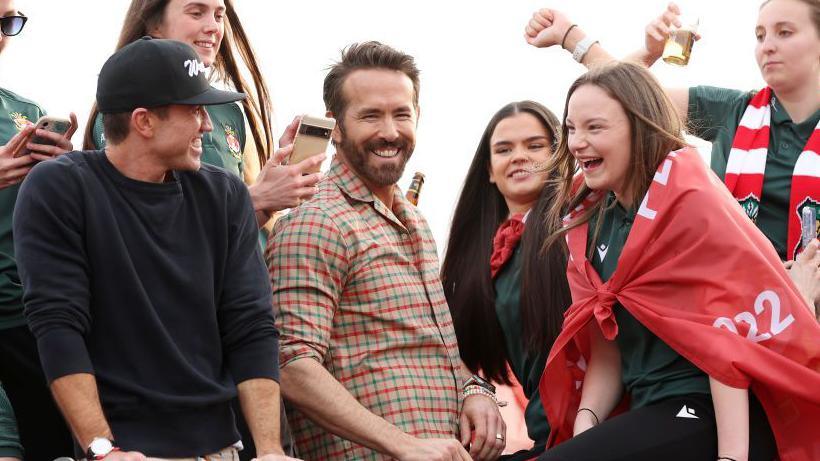 Image source, Getty Images
Rob Mac (left) and Ryan Reynolds (third left) celebrate with Wrexham players during a bus parade following their Adran North title-winning season in 2023
The pathway
That brings us to arguably the most important part of Wrexham's long-term strategy: the academy.
The men's first team may currently dominate the narrative, but academies define whether clubs can survive success.
Promotions can accelerate growth, but sustainable clubs build pathways that outlast individual owners, managers or players.
Wrexham's reputation in identifying and nurturing talent from the wider north Wales area goes back decades with players such as Joey Jones, Mickey Thomas and, more recently, Max Cleworth, who played the most minutes of any Wrexham player this season.
For years Wrexham's youth infrastructure struggled because of financial instability and the club's decline outside the Football League, meaning they missed out on signing local talent.
Wales internationals Harry Wilson and Neco Williams could be seen as prime examples of players who could have been captured by Wrexham's youth system.
The pair, both born in Wrexham, had to turn to the Liverpool academy instead, and have since forged careers in the Premier League.
Wrexham's return to the EFL in 2023 changed the potential for the club's academy structure. They have rebuilt it under the Elite Player Performance Plan system, securing category three status and expanding opportunities for younger age groups from under-nines to under-21s.
Additionally, Wrexham women have been granted a Football Association of Wales (FAW) National Girls Academi licence, meaning the club will be supported by the FAW to drive participation in women's football.
Gus Williams was appointed academy manager in October. He has been particularly impressed by the owners' commitment to youth development.
"Rob and Ryan view the academy with high respect and high expectations in terms of what it can deliver for the club," said Williams.
"The investment that they've already placed into the academy is between £2-3m in terms of infrastructure, and now further investments demonstrate the sincerity of the statements that they've made about the academy.
"It's our responsibility now to make sure that we acknowledge the past, we admire the present and we plan for the future."
The club plan to commit to the next generation via a multi-million-pound investment in the academy training facility to be built in partnership with Darland High School which includes new pitches and improved educational spaces.
The future
Wrexham's men may have narrowly missed out on the Championship play-offs and an opportunity to gain promotion to the Premier League this year, but a seventh-place finish in their first campaign in the second tier in 43 years is the highest in their history.
"There's more to come from us, and there's more to come from the club," said manager Phil Parkinson.
"The new stand is coming up, the academy is getting stronger, the women's team has done brilliantly - there's so much to be positive about for our supporters... because this is a club heading in the right direction and we'll continue to drive it with a real determination."
The global image of the club may still be shaped by Hollywood owners and dramatic promotions, but Wrexham's actions increasingly suggest something deeper.
Investment in women's football, academy systems, facilities and infrastructure may not create viral moments, but they are the decisions that build a lasting club.
The men's team created the attention, but what Wrexham do with it could define the club for decades.
Eventually, the Hollywood novelty will fade, the documentaries will end, promotion runs may slow.
What lasts is culture, investment and structure - and right now Wrexham appear to be building all three.
Related topics
Схожі новини

НОК України відзначив спортивних лауреатів березня та квітня

"Євробачення-2026": як змінились ставки букмекерів після першого півфіналу і кому пророкують перемогу

Cтартує Молодіжна баскетбольна ліга України серед чоловічих команд