Baltic drone incursions test EU security, von der Leyen warns, amid escalating hybrid threats

 Facebook
 Twitter
 Flipboard
 Send
Send
 Reddit
 Linkedin
 Messenger
 Telegram
 VK
VK
 Bluesky
 Threads
 Whatsapp
European Commission President Ursula von der Leyen said that recent drone incursions into EU airspace are “not isolated incidents”, as Baltic leaders and EU officials warn of escalating hybrid threats engineered by Russia along Europe’s eastern border.
European Commission President Ursula von der Leyen said that the spate of recent drone incursions into the airspace of European Union (EU) countries over the past few weeks are "not isolated incidents," as Baltic leaders and EU officials caution that hybrid threats along Europe’s eastern border are intensifying.
 ADVERTISEMENT
ADVERTISEMENT
ADVERTISEMENT
"This is a deliberate strategy from Russia trying to destabilise our democratic societies," she said, standing alongside Lithuanian, Latvian and Estonian heads of state at a press conference in the Vilnius on Tuesday. "When Baltic states are being tested, Europe as a whole is being tested," she said.
The EU chief was in the Baltic region to reaffirm the bloc's support for the trio of countries as they have been repeatedly impacted by incursions in recent weeks, with at least six recorded since the beginning of May.
"This is the reality on Europe's eastern border in 2026," von der Leyen said, adding, "Today it's here, tomorrow it will be elsewhere along the eastern border."
Speaking alongside the European Commission president at the press conference, Lithuanian President Gitanas Nausėda conceded the skies above the Baltic states "are not sufficiently secure".
The Estonian President, Alar Karis, said these airspace violations and other hybrid threats aim to intimidate Europe – but the response must be calm, coordinated and "firm".
The President of Latvia, Edgars Rinkēvičs, took a different tone, stating these hybrid attempts are clear: "Russia is failing" on the battlefield with Ukraine.
What happened?
One incident in Latvia – and the government’s failure to respond – resulted in the resignation of prime minister Evika Siliņa and defence minister Andris Sprūds.
Another, in the fragile skies above Finland's capital of Helsinki, resulted in the interior ministry updating public guidance. Citizens are now advised to go indoors, move to a room with solid walls in the centre of a building and wait for further instructions.
A major incident in Lithuania last week sent the country's president and prime minister underground to bunkers, while officials above ground attempted to gain a better understanding of the suspected incursion close to the country's border with Belarus.
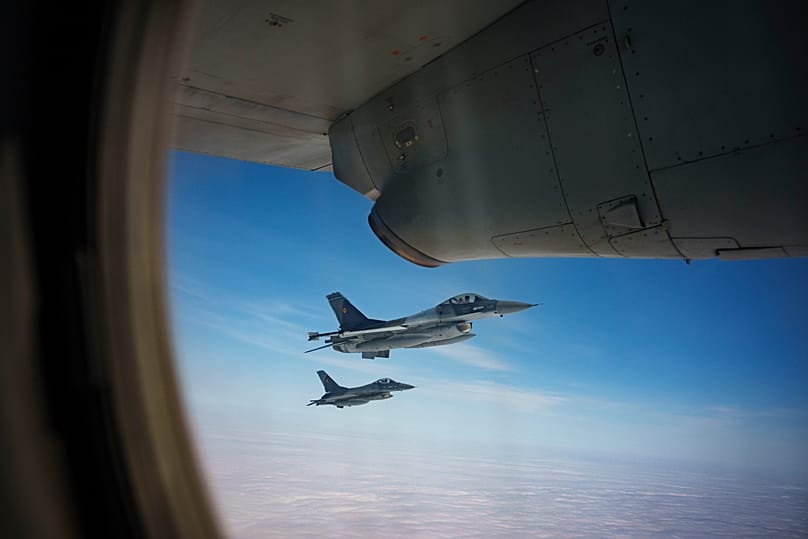
Romanian F-16 fighter jets also intercepted a Ukrainian drone over Estonian airspace last week. Following the incursion, Heorhii Tykhyi, the spokesperson for Ukraine’s foreign ministry, said: “We apologise to Estonia and all of our Baltic friends for such unintended incidents."
Asked whether Bucharest was put in an uncomfortable situation by shooting down the aircraft of one of its allies, Romania’s Foreign Minister Oana-Silvia Țoiu told Euronews on Tuesday that Russia is responsible for the incident of GPS jamming. She also added that many prior drone incursions have originated from Moscow – with some designed to be deadly.
“In two instances they were drones carrying explosives,” Țoiu said.
“It is totally unacceptable and that is why in coordination with the Baltic states and the rest of the eastern flank we are summoning ambassadors to convey that this is a limit that should be crossed either in the Baltics, in Romania, or anywhere else.”
The Bucharest official said it would be “unrealistic” to assume there is no risk, noting, “We’re bordering a war,” in reference to Romania’s 600-kilometre border with Ukraine.
Undermining support
The incident in Lithuania last week marked the first time a European Union or North Atlantic Treaty Organisation (NATO) member state ordered civilians to seek shelter because of a suspected drone incursion.
The Lithuanian Defence Minister Robertas Kaunas previously confirmed to Euronews that the right precautions were taken and the immediate "panic" dissipated. But what remains are questions about how and whether Europe can stay ahead of Moscow's manoeuvres – particularly if the drones are Ukrainian in origin – and whether this undermines support for the war-torn country.
One Lithuanian, a 24-year-old called Viktoria living in the capital, said she tries not to think about the drone incursions. “It really stresses me out,” she told Euronews. However, she does admit she sometimes daydreams about moving to a country with a less fraught relationship with Russia.

Lithuania, alongside Estonia and Latvia, continues to live with the legacy of Soviet occupation: a period many in the region view as decades of annexation and repression. According to Ondrej Ditrych, a political analyst at the EU’s Institute for Security Studies (ISS), this permeating anxiety is part of Moscow’s strategy.
“There is a component of mental or psychological warfare from Russia, of intentionally redirecting the Ukrainian drones, basically hijacking them, to spook the European population to sort of create a more immediate experience of the risk of war, and of course also undermining the support for Ukraine," he said.
Efforts to erode European backing for Kyiv, whether by weakening sanctions or reducing military and financial aid, have so far failed. Romania’s top diplomat Țoiu said the bloc’s 20 sanction packages have put pressure on Moscow’s war machine, and despite there being no breakthrough resulting in long-term peace, “We haven't seen Russia win the war either.”
Lies and disinformation
Aside from drone warfare, various Baltic leaders have accused Russia of spreading disinformation. Russia’s Ministry of Defence last week claimed Ukraine was planning “terrorist strikes” into its regions using Latvia and other Baltic states as launchpads.
Latvia's President Edgars Rinkēvičs has repeatedly refuted the idea, referring to it as "lies". On Tuesday he reiterated this: "I think that it is very important that we are prepared for further disinformation campaigns or further provocations, maybe also acts of sabotage," Rinkēvičs said.
NATO Secretary-General Mark Rutte has similarly described the campaign as “absolutely ridiculous, and Russia knows it.” Rutte also commended the alliance’s reaction to the drone incursions, saying they had been met with “a calm, decisive and proportionate response".
Ditrych said Russia was weaponizing uncertainty and chaos on both the drone and disinformation fronts, and Europe must shore-up its air defence systems and better promote civilian preparedness. "Hybrid threats cannot be accepted as a new normal," the EU's foreign policy chief Kaja Kallas warned in Germany last November.
"We must work together systematically to counter hybrid threats and restore deterrence."
An EU response
The European Commission has earmarked €800 billion for defence-related spending as part of its plan to rearm Europe by 2030. According to the EU’s top official, this reflects the view that “the era of the peace dividend is long gone.”
A large envelope of the cash will be used to fund defence projects along Europe eastern flank, such as the drone wall, set to be operational by the end of 2027. This is billed to include anti-drone defences such as 5G antennas as radars and AI-guided interceptors.
On top of this, EU member states have been able to apply for a defence loan as part of the bloc's Security Action for Europe (SAFE) programme. The Baltics will receive a cumulative €12 billion as part of the initiative, with the aim of boosting cross-border military infrastructure and stronger support for land forces, among other features.
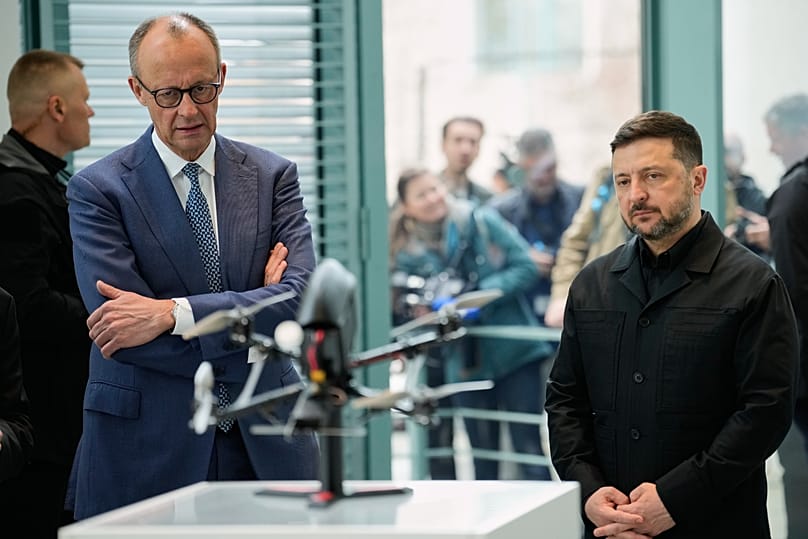
European Commission President Ursula von der Leyen said on Tuesday that one way to address capability gaps she described as “vulnerable” along Europe’s eastern border is through closer cooperation with NATO.
The aim is to assess “counter-drone and early warning systems across the region, so that we can identify critical gaps together and then accelerate support where it is most needed and fill these gaps,” she said.
There is also a significant amount of work to do when it comes to mitigating hybrid warfare, von der Leyen stressed.
'New forms' of pressure
At the beginning of May, when the drone incidents first shook the Baltic states, European Commissioner for Defence Andrius Kubilius said that as Russia applies “new forms” of pressure on countries along NATO’s eastern flank, its efforts are weakening on the battlefield.
The purpose of this, he said, is to “frighten” people in the region and weaken support for Ukraine.
An EU diplomat speaking to Euronews on condition of anonymity, echoed this view, saying that these hybrid warfare attempts reflect Russia’s setbacks elsewhere. They added that such incidents, particularly drone incursions, are likely to continue as Moscow struggles on other fronts.
"Russia is becoming more desperate, and to some extent Russia is also becoming more dangerous," Rinkēvičs said.
Nausėda said that cable-cuts, arson attempts, drone incursion and disinformation campaigns all form a part of Moscow's psychological warfare playbook. "They aim to sow fear, destabilise our societies, and test the resolve of Europe and NATO," he said.
"We appreciate the clear message of solidarity that the European Commission has sent to the Baltic states. However, words of solidarity alone are no longer enough. Europe must take swift and concrete action."
Go to accessibility shortcuts Share CommentsRead more
Russia launches nearly 300 drones at Ukraine as 528 bodies of Ukrainian soldiers are returned
EU now 'more assertive' in protecting candidate countries from foreign interference, Kos says
Poland charges suspect over parcel bomb plot amid Russia sabotage fears
Схожі новини

Відключення мобільного зв’язку під час тривоги: у ЦПД спростували фейк про ухвалення закону
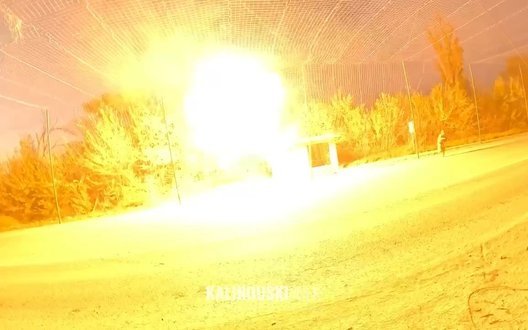
Боєць Полку Калиновського з автомата збив російський дрон під час атаки на екіпаж. ВIДЕО
Блогера з Вінниці засудили до 3 років ув’язнення за шахрайство й образи військових ТЦК