Balcony Solar Advances In Colorado As New Legislation Removes Barriers
 May 12, 20263 hours
Steve Hanley
0 Comments
Support CleanTechnica's work through a Substack subscription or on Stripe.
May 12, 20263 hours
Steve Hanley
0 Comments
Support CleanTechnica's work through a Substack subscription or on Stripe.
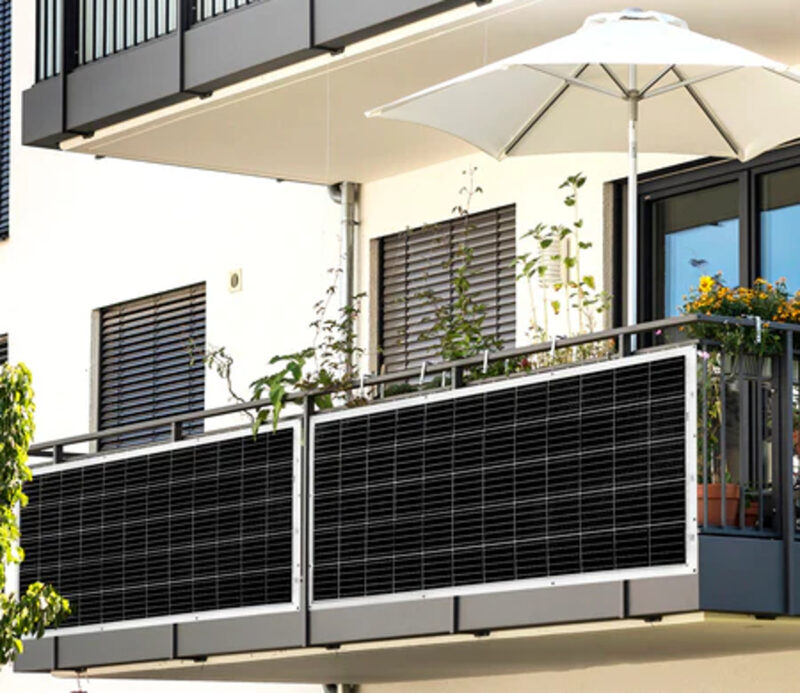
Colorado Governor Jared Polis this week signed new legislation — HB26-1007 — which removes many of the barriers to so-called balcony solar — solar panels that can be mounted on on the railings that surround many balconies, patios, and lanais typically found in many apartment and condominium buildings. In a press statement, Polis said: “Colorado is breaking down barriers to clean energy and saving people money on energy bills. Just because you live in an apartment or multi-family building doesn’t mean you shouldn’t be able to use solar panels to save money on your energy bill and this new law expands access and choice to money-saving clean energy solutions to more Coloradans. Thank you to the sponsors for expanding choices for more Coloradans to explore new technology that protects our environment, and saves Coloradans money.”
“Whether Coloradans own or rent their homes or apartments, allowing them to install balcony solar systems will expand consumer choice, make solar technology more accessible and affordable, and save people money on electricity costs,” said Will Toor, head of the Colorado Energy Office. “Widespread adoption of these smaller solar energy systems, especially when paired with battery storage, will also improve grid reliability at peak times and move us closer to achieving our ambitious clean energy goals. We look forward to Colorado’s continued leadership in reducing barriers in the clean energy market as the balcony solar industry expands nationwide.”
Effective January 1, 2027
The Coloradoan reports the new legislation will take effect on January 1, 2026. Specifically, the bill prevents a utility from prohibiting or charging fees for use of plug-in solar systems. It also bars homeowner associations or landlords from unreasonably prohibiting their use. Colorado is only the second US state to specifically approve balcony solar. Utah was the first. But many other states, including California, New York, and Virginia, are considering similar legislation.
The Colorado law specifies that a device must have a feature preventing it from energizing the grid during a power outage. It also encourages the use of meter collar adapters to connect the panels to the utility infrastructure without having to upgrade the home’s electrical panel. The utility companies must provide a list of approved meter collar adapters and have a process for approving any adapters not on that list within 90 days.
Senator Cathy Kipp, one of the sponsors of the new legislation, told the press: “Coloradans are interested in plug-in solar for a variety of reasons like reducing their carbon footprint, lowering their utility bills, or ensuring a reliable back-up source of energy in the case of a power outage. No matter their reasoning, Coloradans should be able to pursue this technology without unnecessary barriers.”
Balcony Solar Is A Baby Step Into The Future
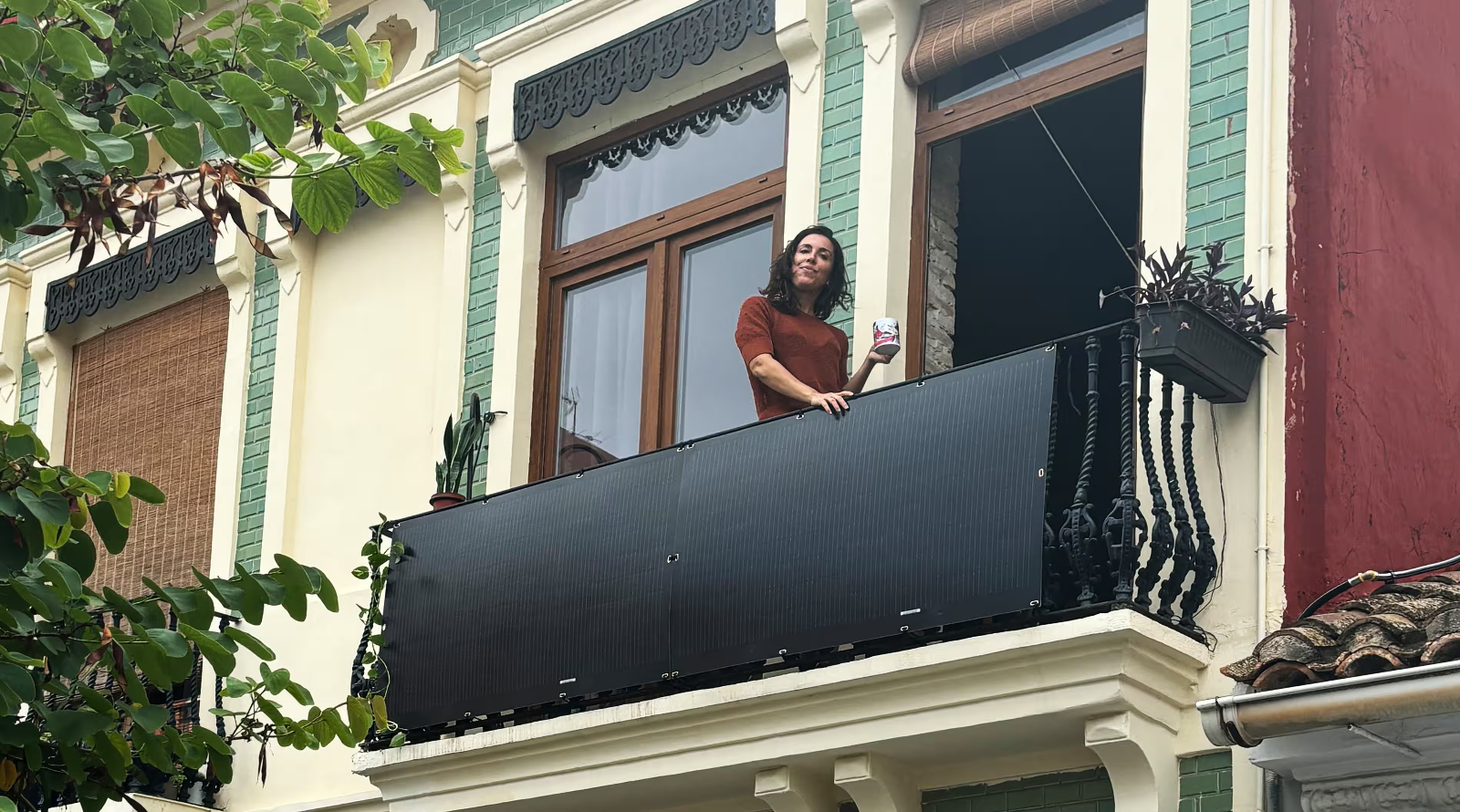
Balcony solar is not intended to replace regular rooftop solar installations. Instead, it is a way for consumers to obtain a portion of the electricity they use from the sun to reduce their utility bills. The law in Colorado limits the system size to less than 2 kilowatts. The average balcony solar panel can generate 350 to 400 watts under ideal conditions, which means customers would need five of them to reach the 1950 watt limit. Most balconies only have space for one or two panels.
According to The Independent, balcony solar could make solar power accessible to people who have traditionally been locked out of the market — renters, apartment owners, and homeowners whose roofs are unsuitable for conventional panels. However, “plug-in” does not mean risk-free or completely hands-off. The panels still need to be positioned properly, fixed securely, and connected safely.
A typical plug-in solar kit may include one or two solar panels, a micro-inverter that converts DC current to AC, mounting brackets or a frame, connecting cables, and a plug or connection unit. Some systems may also include a monitoring app, allowing users to see how much electricity the panels are generating, or a small battery for storing some excess power.
Once safely connected, the electricity can feed into the household circuit. If appliances are running at the same time, they can use the solar power first. In practical terms, this means the home will import less electricity from the grid while the panel is generating. The benefit depends on how much electricity the system produces and how much of that electricity you use at the time it is generated.
What you get if you buy a balcony solar kit varies by manufacturer, but typically it includes one to four solar panels. A micro-inverter is usually placed near the panel or panels. Mounting equipment — whether clamps for a balcony railing, brackets for a wall, or a frame for a patio, garden, or flat surface — holds the panel in place. Cables then connect the panel to the inverter and the system to the home.
Plug-in solar panels are typically used in places where rooftop solar is not practical. This could include apartments or condos with balconies, homes with small gardens, terraces, sheds, garages, outbuildings, or exterior walls that receive a good amount of sunlight. The best location is usually one with strong exposure to daylight for much of the day. A south-facing position will generally produce the most electricity, but east- and west-facing panels can still be useful.
Shading is one of the primary factors to be aware of when setting up a balcony solar system. Trees, neighboring buildings, balcony railings, walls, and even nearby objects can all reduce output. A panel that is easy to fit but shaded for much of the day may generate far less electricity than one that has more direct exposure to the sun.
The position also needs to be safe. A panel fixed to a balcony or wall must be secure enough to withstand wind and bad weather. Cables need to be routed carefully so they are not damaged, trapped in doors or windows, or left where someone could trip over them. After connection, many systems allow users to monitor generation through an app or display. This can help them understand when the panels are producing the most electricity and shift some usage into daylight hours.
Areas Of Concern
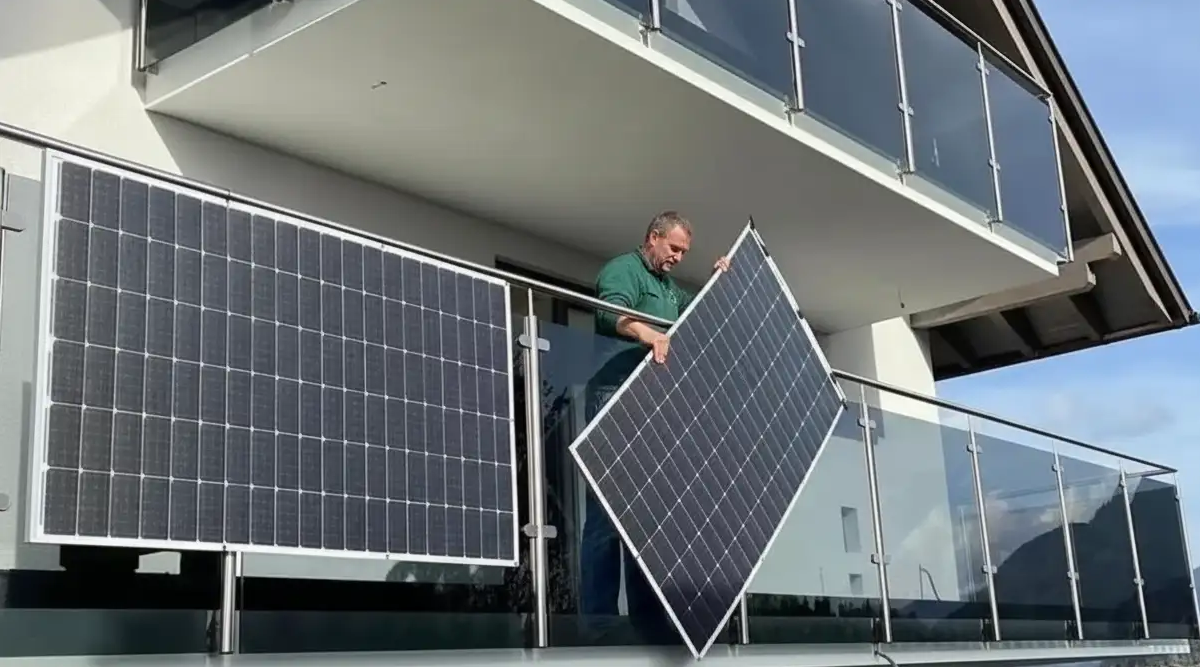
The Independent says most of the serious issues involving balcony solar result from poor mounting or unsafe connections. A panel that is not fixed securely could come loose in high winds, while damaged cables could create an electrical hazard. Running cables through windows, across walkways, or near water can also create risks if the system hasn’t been designed for that setup. It cautions that balcony solar “should be treated as a home energy product, not a casual gadget. It may be much simpler than rooftop solar, but it still needs to be installed with care.”
A plug-in system will not usually generate enough electricity to run a whole home, and it is unlikely to match the long term savings of a rooftop array. Its role is more modest — to reduce some daytime grid use and make solar accessible to more households. But “plug-in” should not be confused with “anything goes,” The Independent warns. “The panel still needs a sunny, secure location, the right permissions and a safe, approved connection method. For the right household, plug-in solar could be a practical first step into home-generated electricity, but getting the fitting right will be essential.”
A Half A Loaf Is Better Than None
The important thing to remember about balcony solar is that it is a “half a loaf” situation. It makes no pretense of being able to power an entire home all the time — although small portable battery storage devices can be charged by it during the day and give back some electricity after the sun sets. It is meant to give those who live in apartments and condos some ability to take advantage of the power of the sunlight right outside their windows. By so doing, they can reduce their utility bills somewhat.
But it’s more than that. It introduces people to the idea of making renewable energy part of their life, which can help demystify the whole renewable energy process and make them more interested in seeing renewables added to the grid. It’s the beginning of a virtuous circle, one that will pay dividends in the future. It’s also a way of giving the flying fickle finger of fate to the fossil fuel companies who bombard us daily with lies and disinformation about renewables.
No matter how you slice it, it’s a positive step for the individuals who install balcony solar in their homes and for the larger community as well. Aren’t those reasons enough to hope other states will adopt similar legislation to Colorado HB26-1007?
Sign up for CleanTechnica's Weekly Substack for Zach and Scott's in-depth analyses and high level summaries, sign up for our daily newsletter, and follow us on Google News! Advertisement Have a tip for CleanTechnica? Want to advertise? Want to suggest a guest for our CleanTech Talk podcast? Contact us here. Sign up for our daily newsletter for 15 new cleantech stories a day. Or sign up for our weekly one on top stories of the week if daily is too frequent. CleanTechnica uses affiliate links. See our policy here.CleanTechnica's Comment Policy