At four, her head was shaved and her clothes burned. Aunty Lorraine doesn’t want her trauma to be forgotten

The now 88-year-old is urging Australian governments to throw their support behind a new national plan for Stolen Generations survivors as they enter their final years
-
Get our breaking news email, free app or daily news podcast
Aunty Lorraine Peeters only remembers the metal gates opening as she was driven away from her home, at Brewarrina mission in north-west New South Wales. She was taken, along with her brothers and sisters, at just four years old.
Her home for the next six years would be the Cootamundra Aboriginal Girls Home, where she was separated from her siblings, trained as a domestic servant and systematically brainwashed to be white.
“On entry, all your clothes were burnt, and then you were doused, or what they call delousing, and this is back in the 1940s so it was sheep dip,” Aunty Lorraine told Guardian Australia. “And then your head was shaven, you were given a new identity and religion.”
“From four until I turned, I think I was 10 years. They had enough time to assimilate me into something I shouldn’t have been. Our mantra was:‘Be white, speak white, live white every day.’”
Her experience is just one of hundreds documented in the Bringing Them Home report, tabled nearly 30 years ago.
Today, survivors and advocates are still urging governments to do more to support those removed from their families, as outlined in a new national plan for Stolen Generations.
The Healing Foundation’s plan, From Sorry to Action: A plan to act on Bringing Them Home, has been released ahead of Sorry Day commemorations on Tuesday.
Aunty Lorraine has spent decades pushing for change and healing in her community. She testified at the national inquiry that led to the Bringing Them Home report, co-founded the Coota Girls Aboriginal Corporation 13 years ago, and helped establish trauma‑informed support for survivors and families like her own.
In 2008, she presented the then prime minister, Kevin Rudd, with a coolamon representing the lost babies and children, ahead of the national apology to survivors and their families.
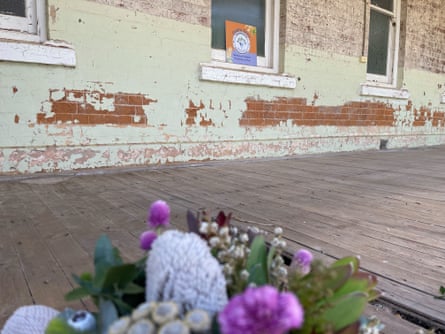
Now the 88-year-old is urging federal and state governments to throw their support behind Stolen Generations survivors as they enter their final years, with many still on the long search for connection and family reunification.
“Survivors are still suffering trauma, survivors with disability or that are mentally not right, given the trauma they’ve been through, and the organisation is still running on the smell of an oily rag with nothing.”
The Healing Foundation’s report urges comprehensive and practical support for thousands of survivors, many of whom are ageing, require culturally safe aged care, and are still waiting for access to records held by private institutions such as churches and government agencies.
The foundation’s chief executive, Shannon Dodson, said many survivors are desperate for increased support and real action after decades of waiting.
“Most survivors are now eligible for aged care, and from an overall health, social and emotional wellbeing perspective, it’s really looking at what kind of trauma‑informed and culturally safe approaches are needed to ensure that survivors are not re‑traumatised during their ageing,” Dodson said.
The report also recommends removing medical co‑payments for survivors and establishing a comprehensive redress scheme in all states and territories. Queensland remains the last jurisdiction without a targeted compensation scheme, after Western Australia announced its redress program last year.
It recommends governments work with survivors and Stolen Generations organisations to establish an access and priority card so survivors can access primary health and aged care services to assist with universal and equitable access to care and support.
Up until the 1970s, Aboriginal children were systematically removed from their families, communities and culture under assimilation laws and policies adopted by all Australian governments. Many never returned home.
Children were put into institutions, fostered or adopted out to non-Indigenous families. Many suffered harsh, degrading treatment and sexual abuse. It is estimated between one in 10 – though it may be as high as as one in three – Indigenous children were removed from their families between 1910 and 1970.
Shannon Dodson said that since the Bringing them Home report, and the apology in 2007, momentum has stalled, with piecemeal action from states and territories to support Stolen Generations survivors.
“We can’t go on another year of saying the same thing and calling for the same thing, Dodson said. “We’re coming up to 30 years – an entire generation where we’ve lost already thousands of survivors.
“I think that it is a real plight on the country and a real stain on the country that we have not dealt with our duty to Stolen Generation survivors in the way that it was intended through the national inquiry.
Aunty Lorraine says she has been able to build a “good life” for her children and grandchildren. While her parents died before they could meet again, she returned home to the place she was born – a tree – taking some earth with her.
“Some lovely things have happened to me. Going to that tree was like a rebirth. I took some of the dirt, some of the bark and gum leaves and it’s with me beside my bed. I’ve been very fortunate in creating what I had lost.”
“We’ve got to keep that legacy going.”
Explore more on these topicsShareReuse this contentСхожі новини

Ranveer Singh ban after Farhan Akhtar's Don 3 complaint: Tracing all that happened
Laos: Rescuers race to reach 7 trapped in flooded cave
Pope urges 'disarming' of AI in major manifesto
