Astrophotographer captures remarkable view of galactic 'Eyes' with backyard telescope
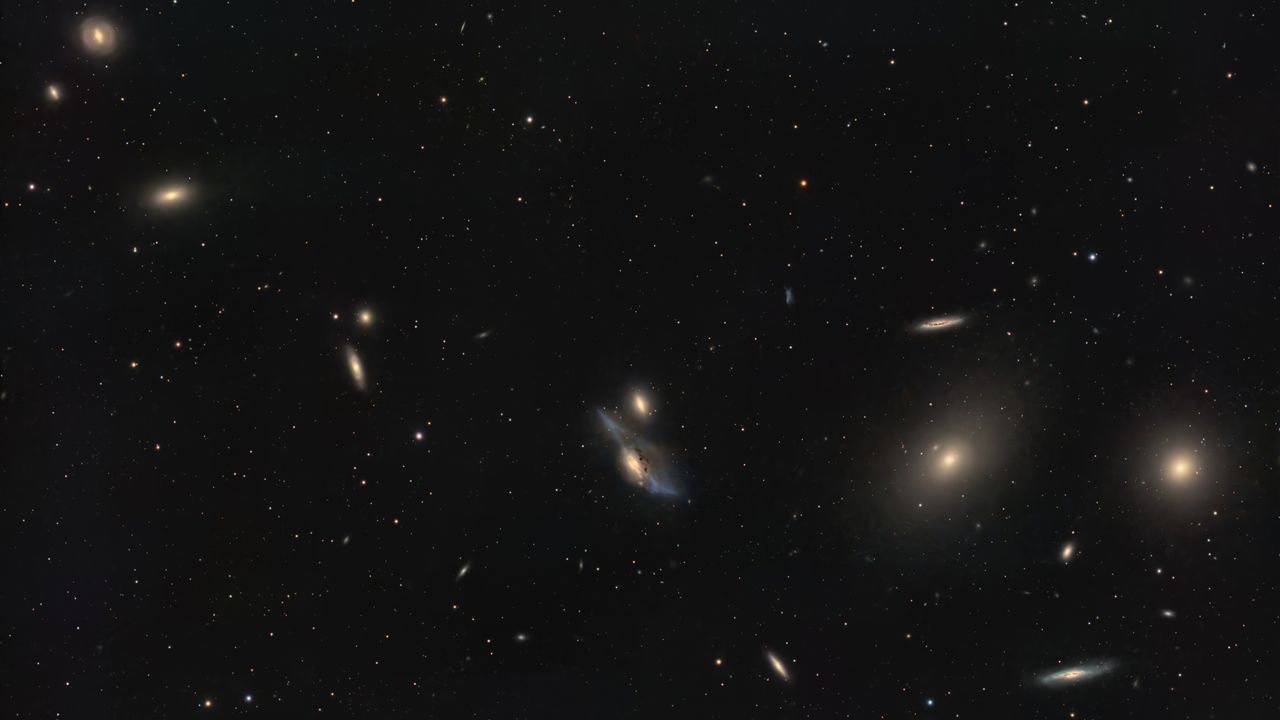
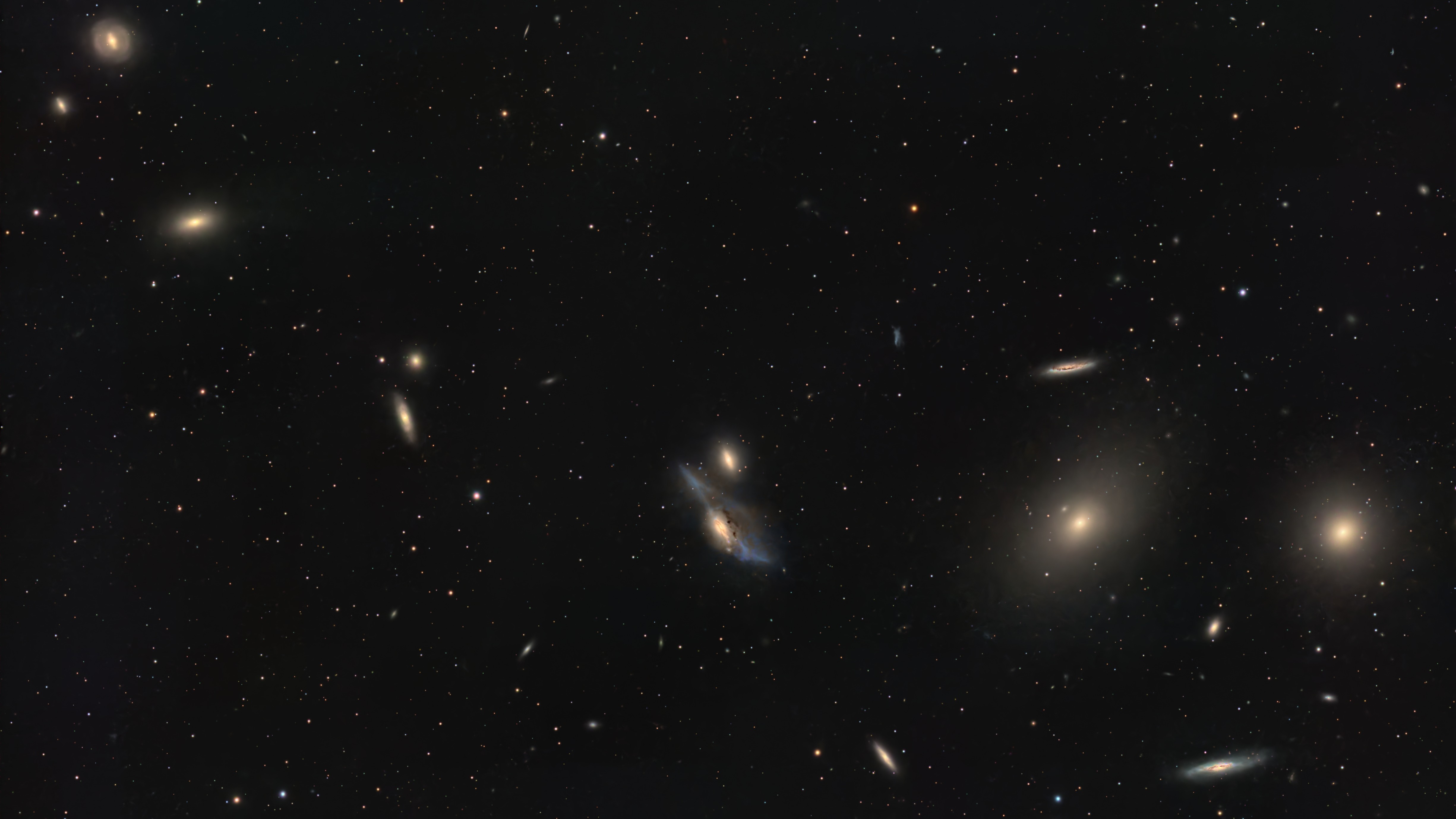
Astrophotographer Ronald Brecher has captured a breathtaking view of Markarian's Chain — a string of majestic galaxies glowing in the patch of sky between the constellations Leo and Virgo.
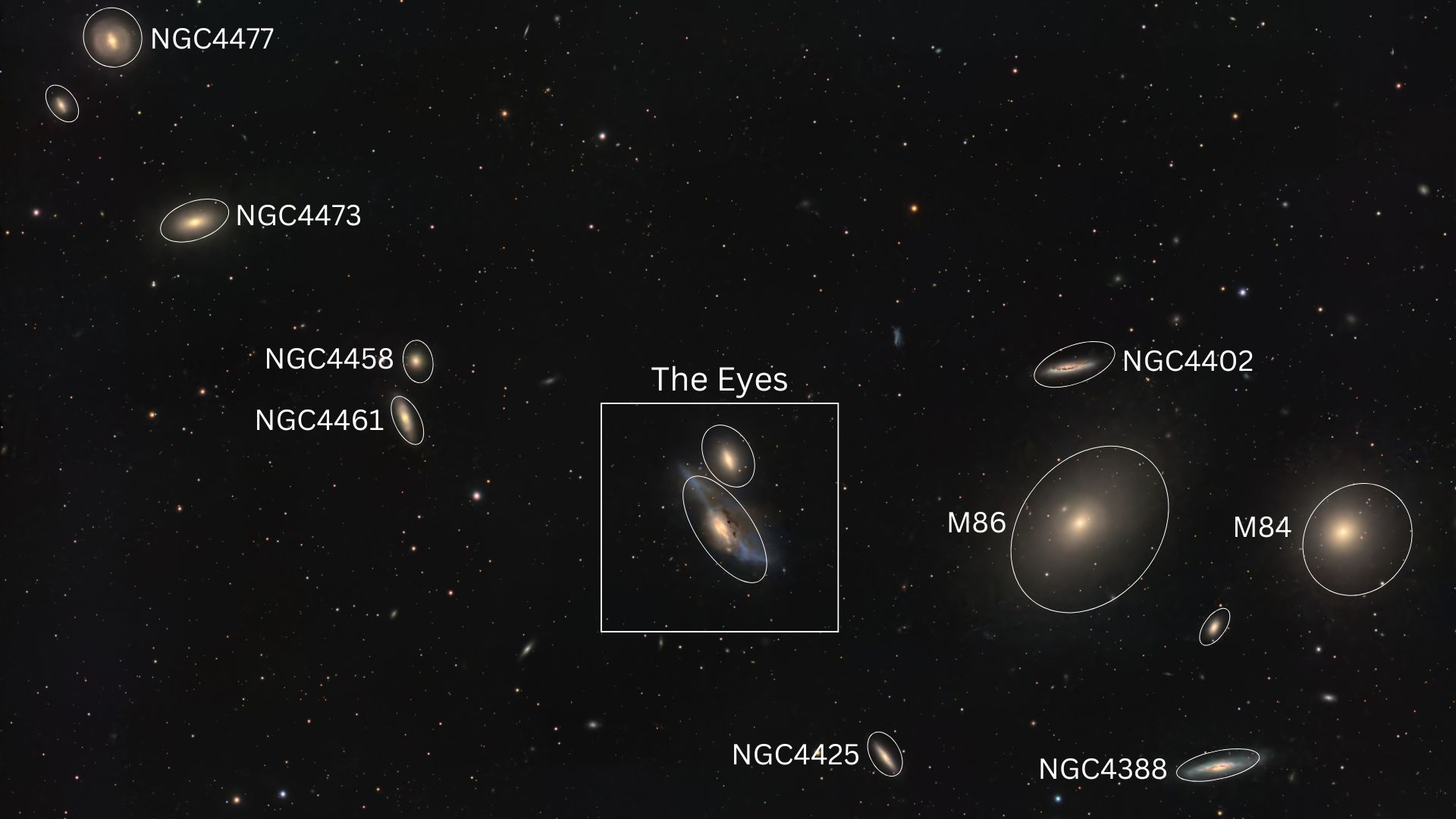
"Note the striking colour and detail in NGC 4438 and NGC 4435, which make a close pair of galaxies known as 'The Eyes', just below centre in this image", noted Brecher in a post on his website.
Great rivers of dust, gas and stars can be seen flowing around the galactic neighbors — which also go by the moniker of "Markarian's Eyes" — where their gravitational influences have disrupted one another's spiral structures.
To the right of Markarian's Eyes are the two bright elliptical galaxies M86 and M84, which were discovered by famed astronomer Charles Messier in 1781, according to NASA. The galactic duo are best viewed in May and can be spotted with the aid of binoculars, or a modest telescope from a dark sky location.
Brecher captured the galactic chain between April 17 and 27 using a Skywatcher Esprit 120 telescope paired with an astronomy camera and a range of filters and peripherals from his home in the city of Guelph, Canada. He then combined over nine and a half hours of light data to create his galactic vista.
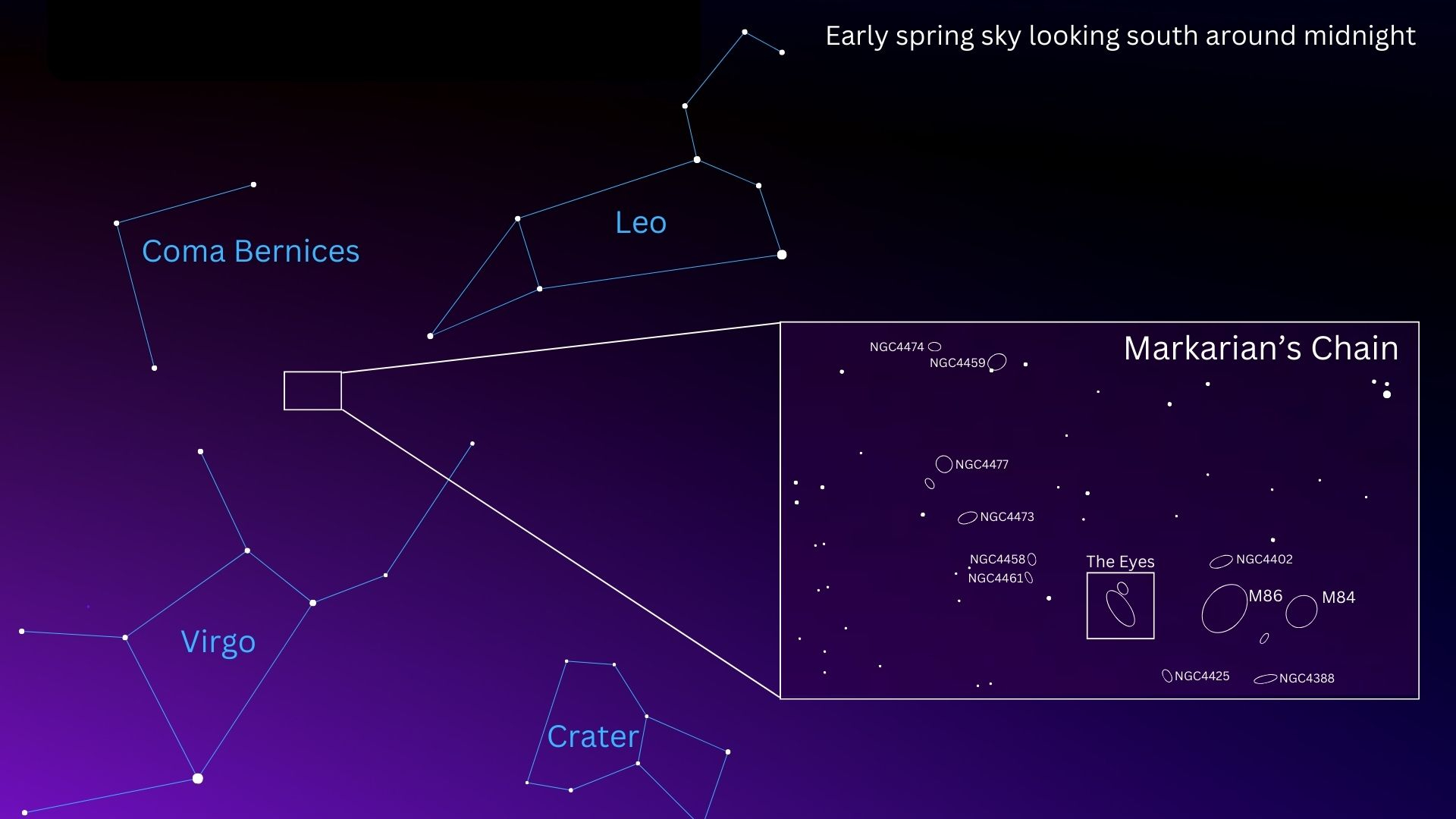
To find Markarian's chain in the spring sky, you first need to locate the constellation Leo, which shines high in the southwestern horizon in the hours following sunset in spring. Navigate to the bright star Denebola, which represents the tail of the mighty lion represented in the constellation and then find the star Vindemiatrix in the constellation Virgo to its lower left. Markarian's Chain can be found by sweeping a 6-inch telescope across the patch of sky halfway between the two.
Looking to upgrade your gear? Then why not check out our roundups of the best telescopes for exploring the night sky, along with our picks of the best cameras and lenses for astrophotography.
Editor's Note: If you want to share your astrophotography with Space.com's readers, then please send your photo(s), comments, name and location to spacephotos@space.com.
View MoreYou must confirm your public display name before commenting
Please logout and then login again, you will then be prompted to enter your display name.
Logout
Anthony Wood joined Space.com in April 2025 after contributing articles to outlets including IGN, New Atlas and Gizmodo. He has a passion for the night sky, science, Hideo Kojima, and human space exploration, and can’t wait for the day when astronauts once again set foot on the moon.
Схожі новини
Dried to survive: desiccated tardigrades tolerate high heat
Pristine Antarctic ice records the Solar System’s travels