Army Command: BMT program has evolved significantly over four years of war
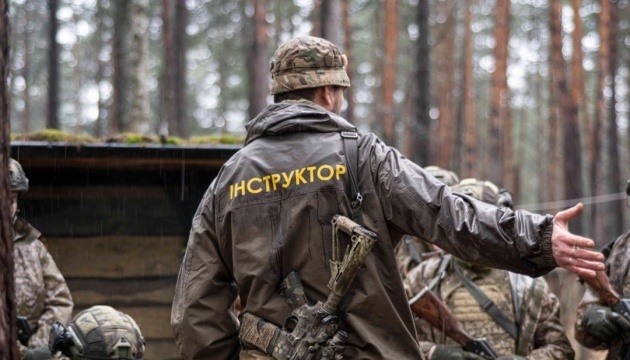
According to Ukrinform, Major General Dmytro Krasylnykov, Commander of Training for the Land Forces Command of the Armed Forces of Ukraine, spoke about this in an interview with NV.
“Now, given the enemy’s use of FPV drones, airstrikes, artillery, and chemical agents, the priority is the survival of personnel while simultaneously destroying the enemy, who, as before, attempts to conduct mechanized and infantry assaults, operates with large and medium-sized forces, and even infiltrates in small groups. Therefore, the main task of training now is, first, to teach servicemen to survive while carrying out combat missions, and second, to inflict damage and destroy the enemy. That is, first and foremost, this involves tactical medicine, setting up positions so that they provide real protection, and skills for moving in today’s complex conditions,” Krasylnykov said.
Dmytro Krasylnykov Photo: facebook.com/warmuseum.kyiv.ua
According to him, it is also important to prepare people for various scenarios—both good and bad. When a soldier sees that he is being told everything honestly and openly, with nothing hidden, he understands that he is valued and that he matters.
“There must be trust between the instructor and the recruit, and that can only be earned through honesty and openness,” the commander believes.
He recalled that at the start of Russia’s full-scale invasion, artillery was the primary weapon. Starting in 2023, and especially in 2024, FPV drones and attack drones became the main weapons. The enemy is also now intensifying the use of “suicide drones” along the front line and in the immediate rear of the Defense Forces.
“The enemy didn’t do this before; the Russians used Iranian drones deep inside the territory, targeting critical infrastructure and civilian facilities. Now they are using these weapons along the front line. And since 2024, we have also faced a serious problem with the enemy’s use of guided aerial bombs, which destroy key positions in the combat zone and in the immediate rear, thereby clearing the way for their infantry. That is precisely why the training center must prepare recruits for these challenging conditions,” Krasylnykov explained.
He added that over the course of four years of full-scale war, the skills that defenders must be taught during basic training have changed radically. Furthermore, the Army’s training centers have acquired the capabilities expected of them, although there are certain issues regarding living conditions and the training of instructors and teaching staff.
“We have good programs that teach from the simple to the complex, taking into account all the new tactics and methods of combat used by both us and the enemy. We have also begun training directly within the brigades. There, groups of instructors have been formed from the best servicemen—the most experienced and decorated with state awards. And they possess the most up-to-date knowledge regarding current combat conditions,” the commander said, adding that the experience within the brigades is now being combined with methodologies developed over the years in training centers.
“When we do this, we get the best results. In this way, we bring modern combat experience to the training centers and minimize paperwork, while bringing organization, programs, and methodologies from the training centers to the brigades. This significantly improves the quality of training,” emphasized Krasylnykov.
When asked how quickly the Basic Military Training (BMT) program is updated, he explained that minor changes are made to the program on an ongoing basis: “Minor changes are made constantly. When there are many of them, a comprehensive update of the Basic General Military Training program takes place. As a result, the BMT program is completely replaced approximately once a year.”
According to Krasylnykov, changes can be made at the level of the Army Command, as well as at the level of army corps, operational commands, brigades, training centers, and even individual training units.
As reported by Ukrinform, the Ministry of Defense explained what is studied during basic military training and why it is critically important in modern warfare.
Starting in July 2025, the updated, sixth edition of the basic military training program has been in effect at all training centers of the Armed Forces of Ukraine. From now on, the course duration has been extended to 51 days—the additional time is specifically allocated to intensify training in countering enemy drones.
Read also: General Syrotenko: Enemy suffers greatest losses from engineering obstacles after unmanned systemsThis decision is dictated by the realities of intense combat operations: modern warfare requires every servicemember to have deeper knowledge, a broader practical foundation, and readiness to face technological challenges on the battlefield.
The main goal of the Basic Military Training Program is not merely to provide a theoretical foundation, but to develop survival skills and the ability to perform effectively in combat under stressful conditions, the agency explained. Of the total 402 training hours, 367 are devoted exclusively to practical exercises under the guidance of instructors.
First photo: Ukrainian Ground Forces
Схожі новини
Russian 'shadow fleet' undeterred by Starmer's threat as nearly 100 ships cross U.K. waters
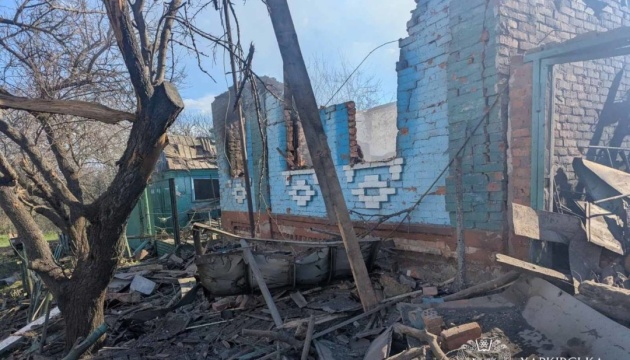
Enemy drones strike Kharkiv and suburbs overnight, injuring six people
