Ancient Egyptian stone monument depicting a Roman emperor as a pharaoh discovered in Luxor
Get the world’s most fascinating discoveries delivered straight to your inbox.
By submitting your information you agree to the Terms & Conditions and Privacy Policy and are aged 16 or over.You are now subscribed
Your newsletter sign-up was successful
Want to add more newsletters?
Join the club
Get full access to premium articles, exclusive features and a growing list of member rewards.
Explore An account already exists for this email address, please log in. Subscribe to our newsletterArchaeologists in Egypt have discovered a 2,000-year-old sandstone monument depicting a Roman emperor as a pharaoh.
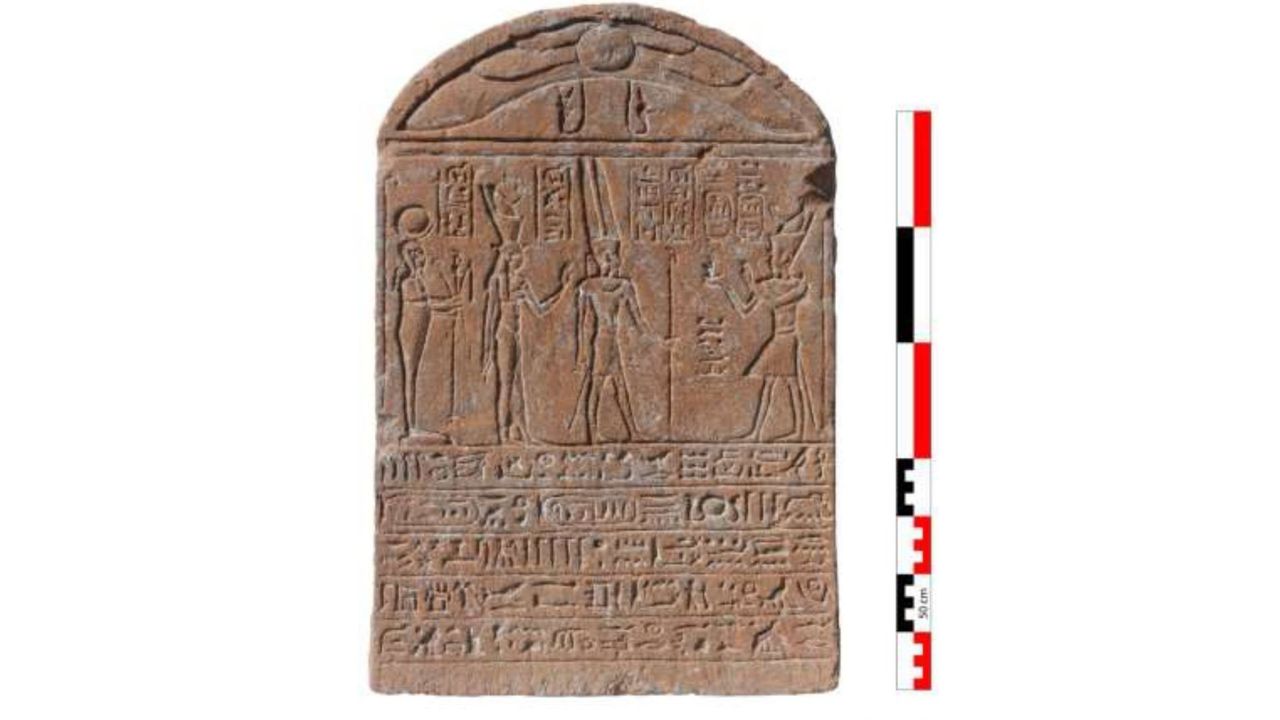
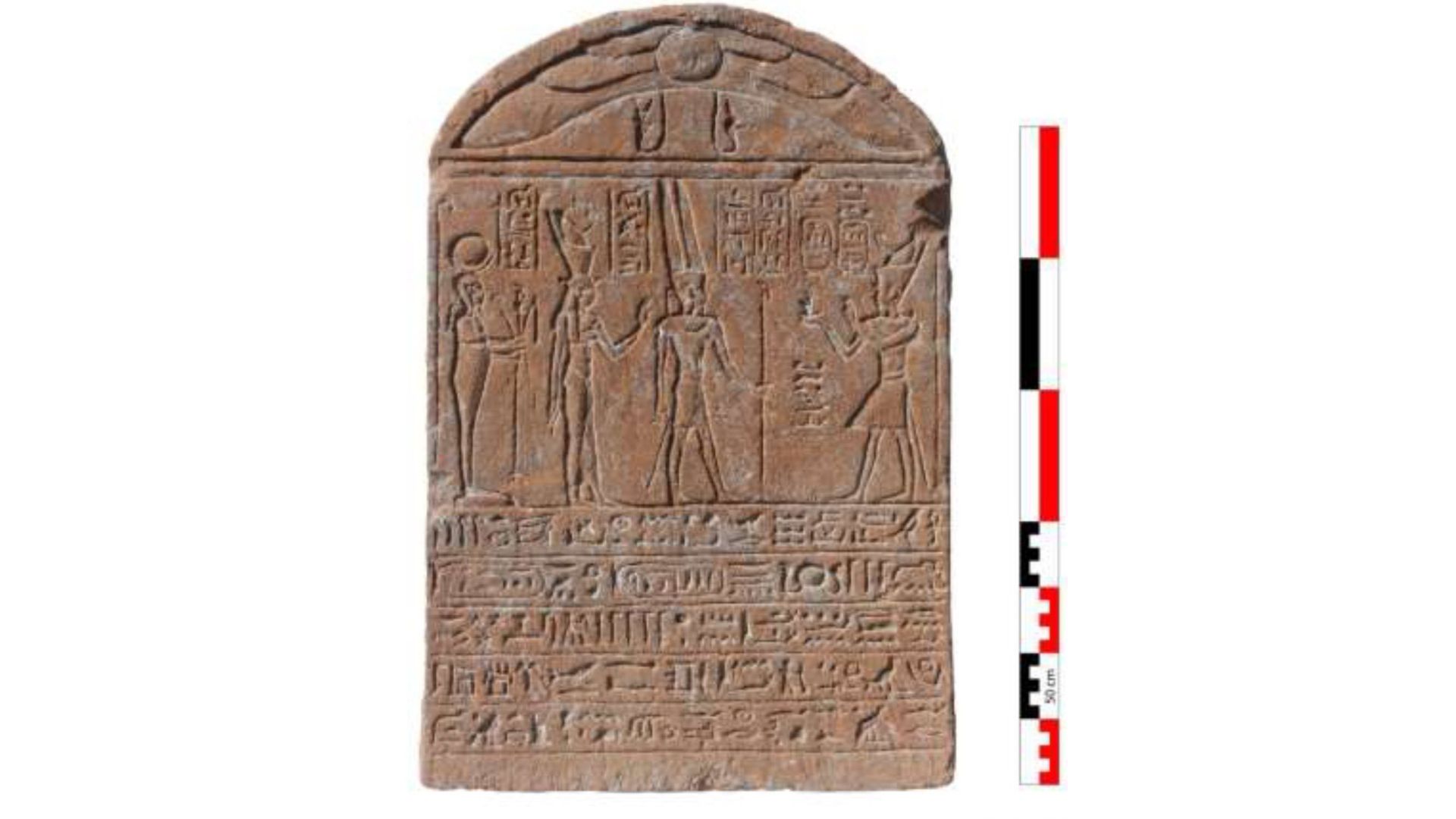
The small rectangular monument, called a stela or stele, was found during restoration work at Karnak temple complex in Luxor (ancient Thebes). The slab, measuring about 23.6 by 15.7 inches (60 by 40 centimeters), dates to Tiberius' rule (A.D. 14 to 37), indicating that it features the powerful emperor, according to a translated statement by Egypt's Ministry of Tourism and Antiquities.
"To fulfill this role, the ruler needed to be shown performing traditional rituals in a form that the gods would recognize — namely, as a pharaoh," Wagdy told Live Science in an email.
The image on the newly uncovered stela features Tiberius standing in front of Amun, Mut and Khonsu, gods worshipped in Luxor, whose presence alongside the Roman emperor is important. "By offering Maat to them, the emperor is shown fulfilling his duty toward the local divine order," Wagdy said. "The triad also represents a divine family (father, mother and son), which mirrors the structure of kingship itself and reinforces the emperor's legitimacy."
By presenting Tiberius as a pharaoh, the Egyptians enabled his incorporation into the province's religious system. Egyptian-style representation of Roman emperors was common in religious settings. But the emperors retained their Roman style in coins and official Roman statues, according to Wagdy.
The incorporation of Egypt into the Roman Empire has been closely tied to three famous figures: Augustus (formerly Octavian), Mark Antony and Cleopatra VII. After discarding the third member of their triumvirate, a general named Marcus Aemilius Lepidus, Augustus and Antony each aimed to take control of the entire empire. Anthony allied with Cleopatra, ancient Egypt's last pharaoh. Augustus, Rome's future first emperor, ultimately defeated the two lovers at the Battle of Actium near Greece in 31 B.C. Egypt became a Roman province the following year.
Sign up for the Live Science daily newsletter nowAugustus was succeeded by his stepson, Tiberius, who exerted authority in Egypt via envoys and never set foot in the province, a common practice for Roman emperors. Tiberius' name appears on Egyptian monuments associated with temples as a way of preserving the region's religious institutions, Wagdy explained.
The stela "reflects a standard ideological and administrative system, in which emperors were presented as pious builders and protectors of temples, regardless of their actual level of involvement," he said. "The monument expresses what a king should be in Egyptian terms, rather than documenting his personal achievements."
- 'Cikai Korran came here and saw': Visitors from India graffitied dozens of Egyptian tombs 2,000 years ago
- 'Major' ancient Egyptian town discovered — and it has a jug stamped with the name of Nefertiti's daughter
- Beadnet dress: A 4,500-year-old ancient Egyptian funeral 'gown' that was in vogue during the Old Kingdom
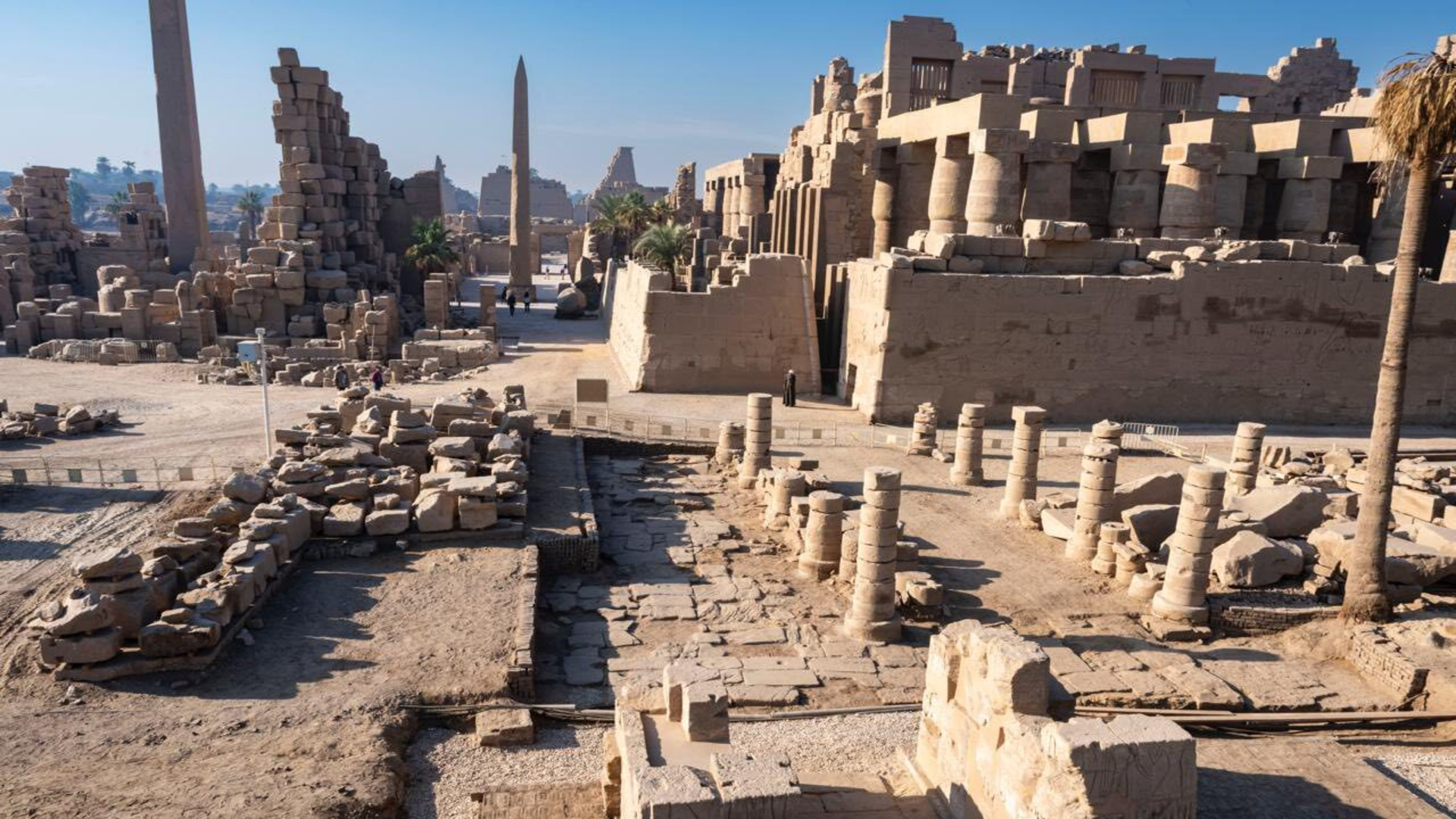
The stela was uncovered during a recent restoration of a gate north of the Karnak temple complex, which was constructed from about 4,000 years ago up until Roman times. Coincidentally, the stela also features five lines of hieroglyphics detailing the renovation of the Temple of Amun-Ra's wall, according to the statement.
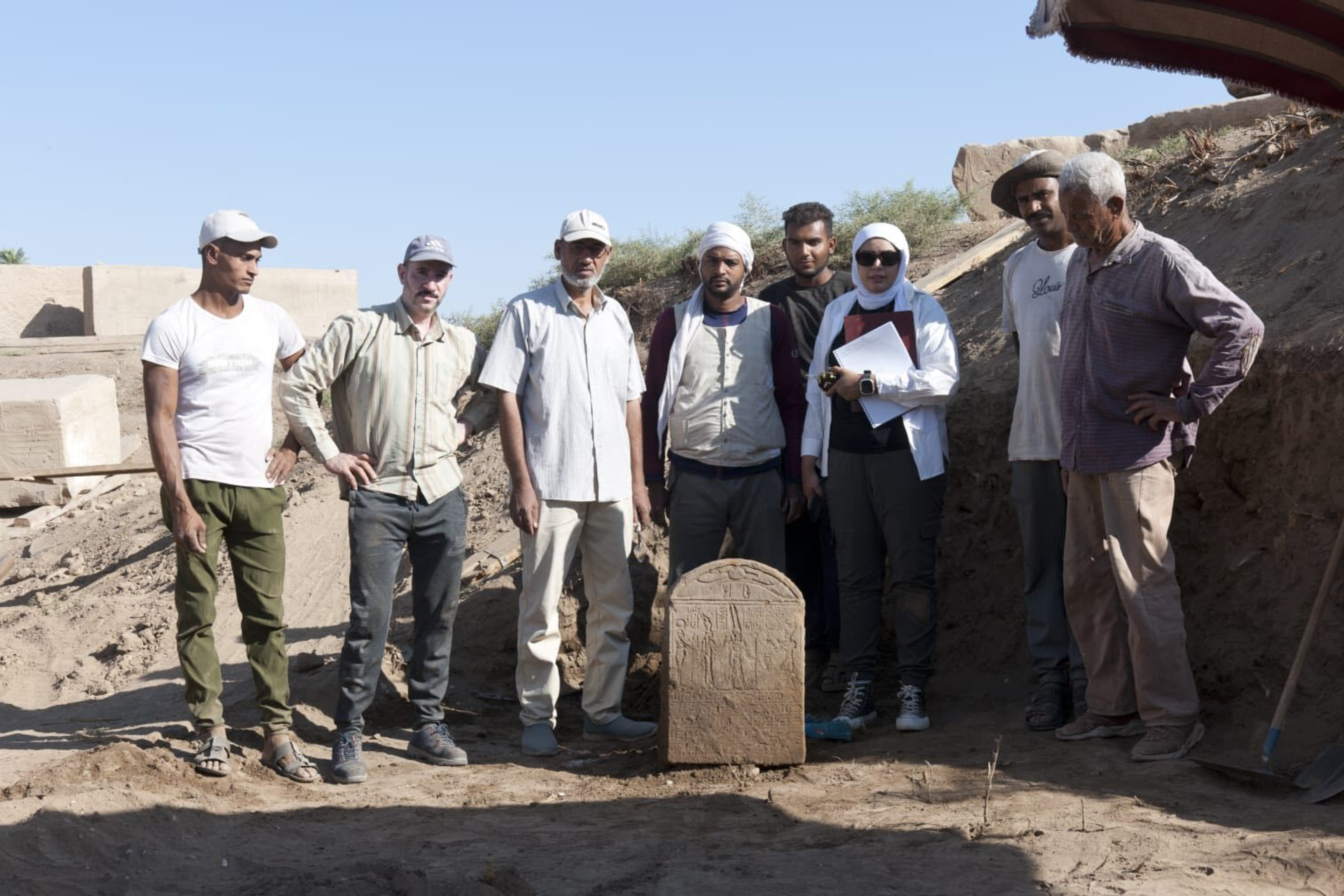
"It is highly likely that the stela originally functioned as a fixed architectural marker, embedded in the outer face of the enclosure wall, commemorating the restoration of that very section of the gateway," Wagdy said. Its days of public display aren't over, however. Two millennia later, the stela's new home will be in a museum, Wagdy said in the statement.
How much do you know about ancient Egypt? Test your knowledge with our ancient Egypt quiz!

Margherita is a trilingual freelance writer specializing in science and history writing with a particular interest in archaeology, palaeontology, astronomy and human behavior. She earned her BA from Boston College in English literature, ancient history and French, and her journalism MA from L'École Du Journalisme de Nice in International New Media Journalism. In addition to Live Science, her bylines include Smithsonian Magazine, Discovery Magazine, BBC Travel, Atlas Obscura and more.
View MoreYou must confirm your public display name before commenting
Please logout and then login again, you will then be prompted to enter your display name.
Logout LATEST ARTICLES 1'Oslo patient' likely cured of HIV after getting stem cell transplant from his brother, who is genetically resistant to the virus
- 2Antiseptic-tolerant germs spread through the air in hospitals, early study hints
- 3Homo erectus' tools include stunning geodes and fossils, possibly as a way to connect with the cosmos, study finds
- 4Physicists entangle two moving atoms for the first time, validating 'spooky' quantum theory
- 5'I have not processed what we just did': Artemis II astronauts share all in first news conference since splashdown