'An £8,000 debt pushed me to breaking point'

 Aisha Iqbal/BBC
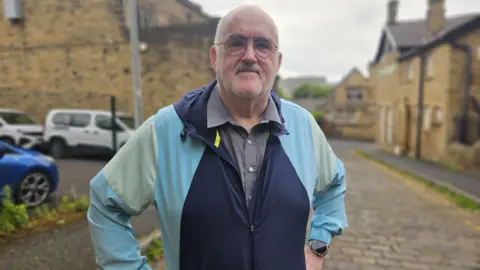
When Dean's debts spiralled to unmanageable levels, it was not one single event that had fuelled the crisis, but an accumulation.
Bereavement, redundancy, ill health and isolation all played their part and pushed him beyond breaking point.
The 58-year-old from Bradford had worked in what he described as a "really good job" for the council before complications during routine surgery left him unable to continue.
"I ended up losing a lot of money each month going onto benefits," he said.
"Bills were just growing. I didn't know which way to turn."
After the death of his mother and worsening health problems, the financial pressure became overwhelming.
"It was just essentials that I was buying," said Dean, who did not wish to give his surname.
"A new bed, new carpets, stuff that I needed, not what I just wanted."
As his debts mounted to about £8,000 through catalogues and online credit, Dean said the psychological impact became devastating.
"Things were that bad, I attempted suicide three times," he said.
Eventually, in desperation, he turned to Christians Against Poverty (CAP) for help.
"They were absolutely fantastic," he said.
"The phone calls, seeing people in person, they were 100% all the time."
Now working as a delivery driver for Bradford Central Food Bank, Dean said he had savings in the bank and had learned to live within his means.
But he said too many people were still suffering in silence.
"A lot of people are just too embarrassed to ask for help," he said.
"If I hadn't have come to CAP, I'd no longer be on this earth."
 Aisha Iqbal/BBC
A new report by CAP suggests Dean's experience reflects a growing crisis facing households across Yorkshire.
The charity said the average debt burden among people seeking help now stood at about £12,000, with repayments expected to take almost nine years on average.
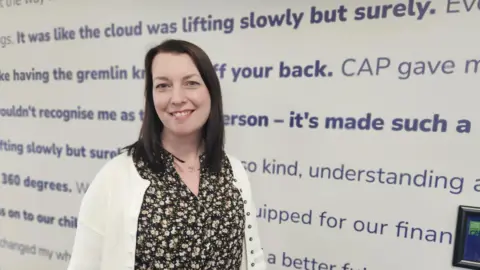
Claire Cowles, who authored the report, said the debts people faced were increasingly tied to basic survival rather than luxury spending.
"People are having to borrow to cover their food shop every week," she said.
"They're having to borrow for fuel, for transport, for school uniforms, just the basics of life."
She said worsening economic pressures were trapping many people in debt they had little realistic prospect of escaping.
"Fourteen years ago, 40% of our clients could repay their debts in a reasonable amount of time," she said.
"That's now dropped to just under a quarter."
Cowles also warned about the severe mental health consequences linked to debt.
"Around 46% of people who have been helped by Christians Against Poverty have either considered or attempted taking their own lives," she said.
"It shouldn't be that someone thinks their life is worth less than £12,000."
 Aisha Iqbal/BBC
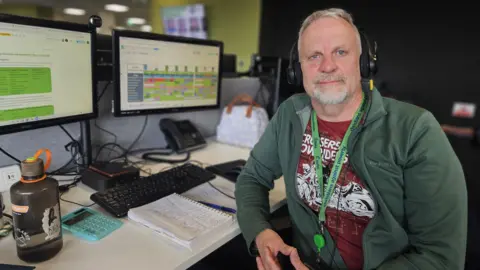
Jonathan Lees, a debt adviser with the charity, said its frontline workers who took up to 80 calls a day were increasingly encountering people in acute distress.
"We're seeing a lot more council tax debt, utilities debt and rent arrears," he said.
"People simply do not have the money for what we would consider essential costs."
He said some clients were left with only £200 a month after paying rent, leaving little for food, transport or social contact.
"Things we consider part of a normal decent life, like going out with friends for a coffee, they simply cannot afford," he said.
Lees said even debt advisers could feel powerless in the face of rising costs like fuel and shrinking budgets, with more and more people at risk of defaulting even on their debt plans and ultimately becoming insolvent.
"It's very difficult and you can feel a bit helpless," he admitted.
"But [at least] someone is standing alongside these people and trying to get them debt-free."
Campaigners are now calling on policymakers to bring in stronger safety nets, faster access to financial support and greater recognition of debt as both an economic and mental health issue.
For Dean, meanwhile, speaking publicly about his experience was ultimately about encouraging others to seek help before reaching crisis point.
"It's just making that first step and doing it," he said.
If you have been affected by any of the issues raised in this story, information and support can be found at the BBC's Action Line.
Listen to highlights from West Yorkshire on BBC Sounds, catch up with the latest episode of Look North.
More stories like this'People in debt shouldn't have to suffer alone'
'Unprecedented' numbers seeking debt help post-Christmas, say charities
'Being in debt is a really lonely place'
'Credit-score company encouraged me to borrow again when I was nearly debt-free'
'Getting financial help through my GP has improved my health'
Related internet linksChristians Against Poverty
National Debtline
Step Change Debt Charity
Mental healthSocial isolationBradfordBereavementHealthCost of Living LonelinessСхожі новини
Lower House approves bill to revise personal information protection law
Наближення до стандартів ЄС: Україна переходить на розподіл газових потужностей в енергетичних одиницях
В Україні планують створити Міністерство людського капіталу: чим займатиметься нове відомство?
