America is falling apart: It will cost $1 trillion to fix the nation’s potholes and crumbling infrastructure
American cities are falling apart — and it will likely cost over $1 trillion to repair the crumbling infrastructure across 2,000 metros, according to a new study.
Researchers have been seeking to determine the cost of the wear and tear on the nation’s deteriorating roads, bridges and buildings, according to The Wall Street Journal, which received an early copy of the study.
Municipal researcher Richard Ciccarone estimates that figure could be $1.03 trillion. Some of the nation’s oldest cities, Philadelphia, Baltimore and Milwaukee, face the biggest potential burdens for fixing their decaying infrastructure, the study found.
The gap in funding for projects, according to the report, is partially the result of a 2014 rule from the Governmental Accounting Standards Board that defined pensions as a liability, causing many cities to have to add hundreds of millions of dollars of debt to their balance sheets. The change resulted in taxes being raised, services cut and the price of municipal bonds to drop, according to the report.
Municipal bonds, or debt securities issued by government entities to fund day-to-day obligations, allow cities to finance bigger infrastructure projects, such as improvements to schools, roads and water systems, without raising taxes.
 open image in gallery
“You’re hiding an obligation or a commitment that’s got to be made sooner or later,” Ciccarone told the Journal. “And it’s usually more expensive at that point.”
Many structures remain in use despite being well past their prime, Ciccarone said.
Cities often put off improvements to their roads, bridges and other structures to close gaps in their budget and avoid tax hikes. Pension and debt payments also often take priority over repairs to keep cities functional, according to the report.
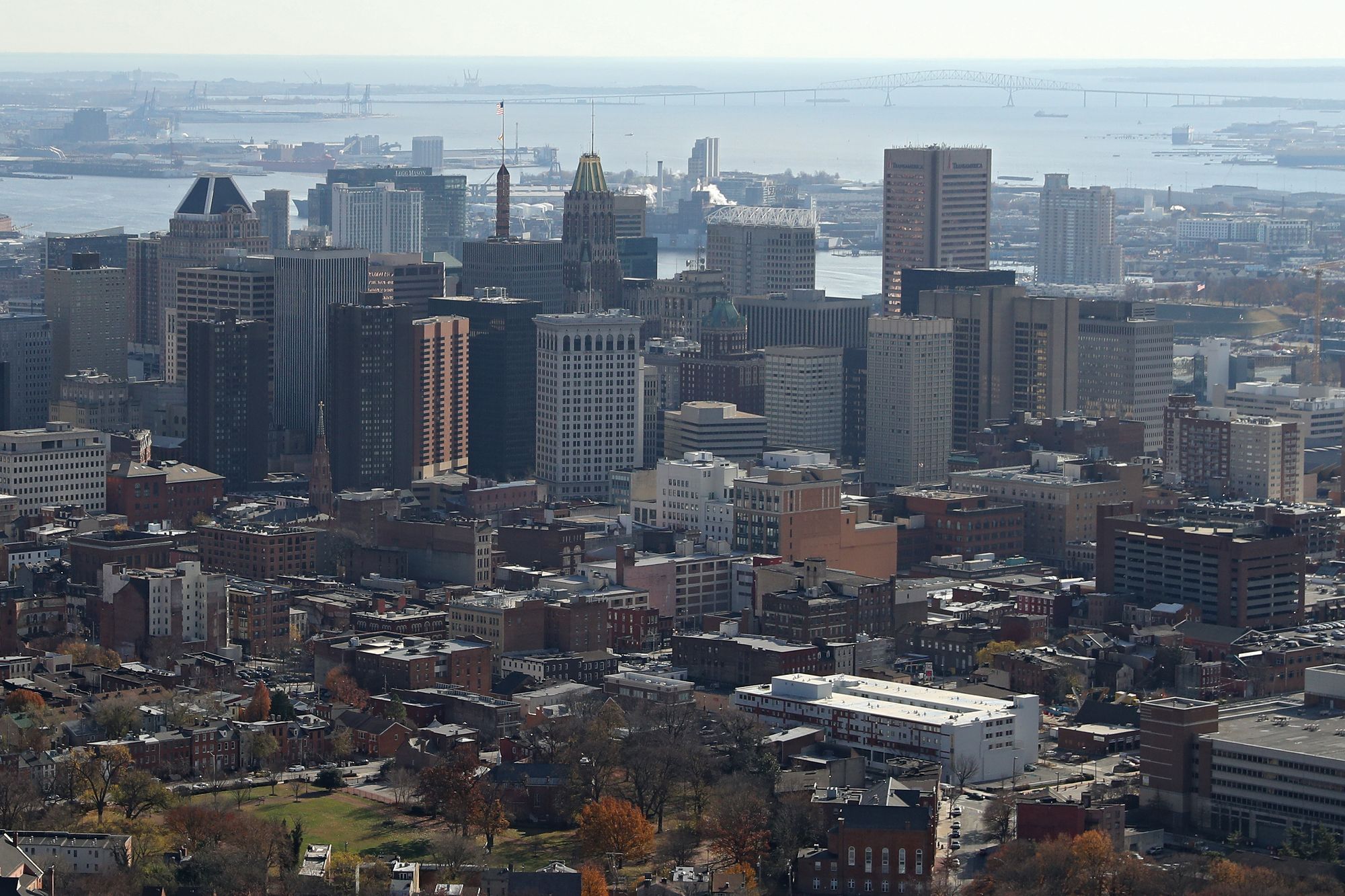
Philadelphia and Baltimore, two cities the study found need some of the most extensive repairs, are both looking to make a change. Philly is thinking about spending $1.5 billion over the next six years to improve its infrastructure, Rob Dubow, the city’s finance director, said. The city also expects to receive an extra $20 billion from the state and federal governments.
Meanwhile, Baltimore is in the middle of a 10-year spending plan that includes significant infrastructure repairs, a city spokesperson told the Journal.
For the study, Ciccarone used data from 2,000 U.S. cities about the age and intended life of their buildings and infrastructure. To arrive at the $1.03 trillion figure, he looked at a structure’s original cost and their “useful life,” or the number of years a city estimates a road, bridge or vehicle will last.
 open image in gallery
According to Ciccarone’s calculations, a $100 million tunnel halfway through its life would have the wear and tear worth $50 million, plus inflation. To get that number, he multipled the cost of an insfrastructure asset by how much of its “useful life” had passed, and then adjusted for inflation, according to the report.
However, in practice, that $100 million tunnel could be repaired for less than $50 million — or even last past its expected life. The estimates don’t always account for how well the structure continues to perform, even if its past its peak, the report notes.
The Independent has contacted Ciccarone for more information.
The issue of crumbling infrastructure in America stretches well beyond just 2,000 cities. South Carolina lawmakers remain at an impasse on measures to improve the state’s pothole-filled roads. Similarly, the massive amount of potholes in Waterford Township, Michigan, has left local residents begging for officials to “please fix the roads.”
A recent Consumer Affairs report detailed the states with the worst road conditions, with New Mexico taking home the title of worst. Mississippi, Rhode Island, Hawaii and Oklahoma followed, having only slightly better roads.
America’s infrastructure earned a C in the American Society of Civil Engineer’s 2025 Report Card for America’s Infrastructure. While the grade is up from 2021’s C minus, it’s still indicative of the country’s needs for more long-term investments into improvements.
“America’s infrastructure is the foundation on which our national economy, global competitiveness and quality of life depend,” said Darren Olson, chair of ASCE’s Committee on America’s Infrastructure. “While infrastructure is often out of sight, out of mind, when there are deficiencies, we all feel the impact.”
The improved score was largely due to repairs made under former President Joe Biden’s administration. Biden’s 2021 Infrastructure Investment and Jobs Act provided $550 billion in new infrastructure investments, while another $30 billion came from the 2022 Inflation Reduction Act, which was for projects focused on clean energy and climate change.
The changes made from 2021 to 2025 are just a fraction of the estimated $9.1 trillion in repairs needed to bring the nation’s infrastructure up to date, according to the American Society of Civil Engineers.
Join our commenting forum
Join thought-provoking conversations, follow other Independent readers and see their replies
CommentsСхожі новини

Quote of the day by Amelia Earhart: “Some of us have great runways already built for us. If you have one, take off. But if you don't have one, realize it is your responsibility to grab a shovel and build one for yourself and for those who will follow after you.”