AMD Ryzen 9 9950X3D2 Dual Edition review
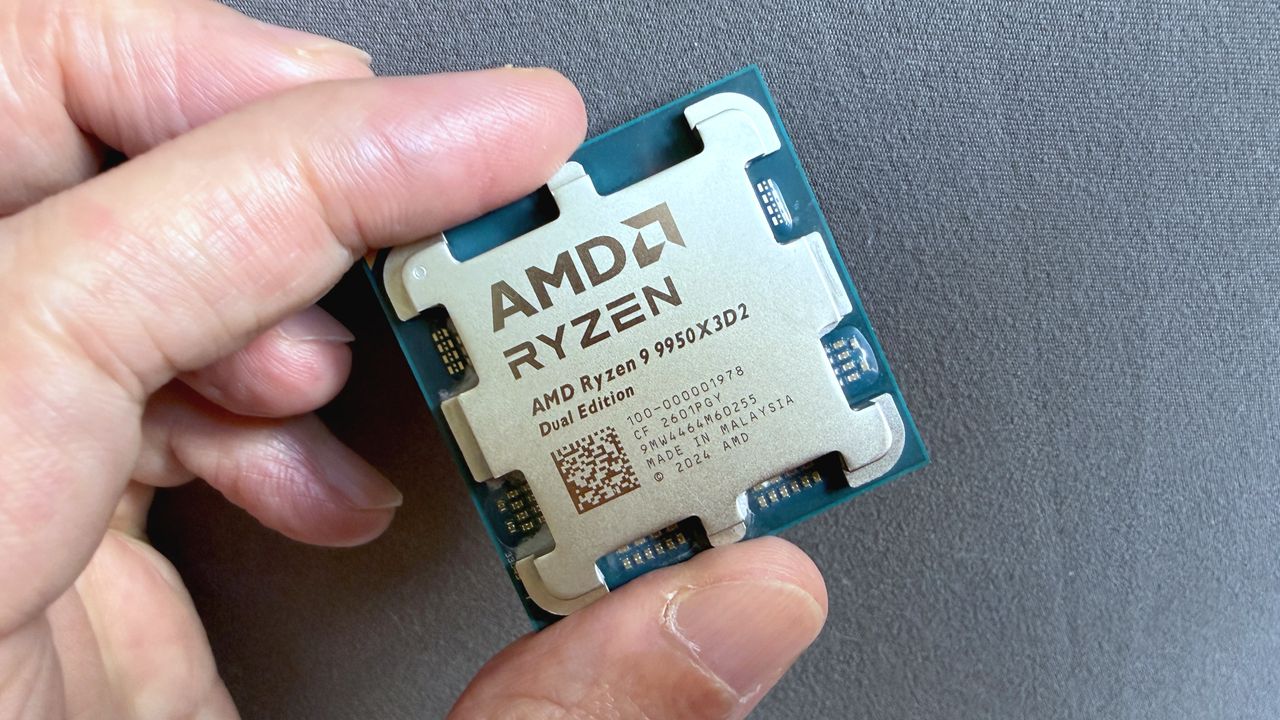
AMD said it would "simply be too expensive" and that "games would not benefit." It was, of course, talking about why it had never launched a dual CCD Ryzen desktop processor with 3D V-Cache on both chiplets. There was no technical barrier, just a matter of pointlessness. And yet here we are, with the Ryzen 9 9950X3D2 Dual Edition. Yours for a mere $899.
For that princely sum of money, you're basically getting a Ryzen 9 9950X3D with 192 MB of L3 cache instead of 128 MB, a tiny 100 MHz knocked off the peak boost clock, and an extra 30 W slapped on to the TDP. The 9950X3D launched at $699, though you can often pick one up these days for around $60 less.
Is it worth spending $200 to $260 more for the Dual Edition? Taken at face value, the answer would appear to be an emphatic 'no'. AMD not only warned that it would be pointless for PC gaming, but it also avoided the topic entirely for the official launch of the chip.
Ryzen 9 9950X3D2 Dual Edition specs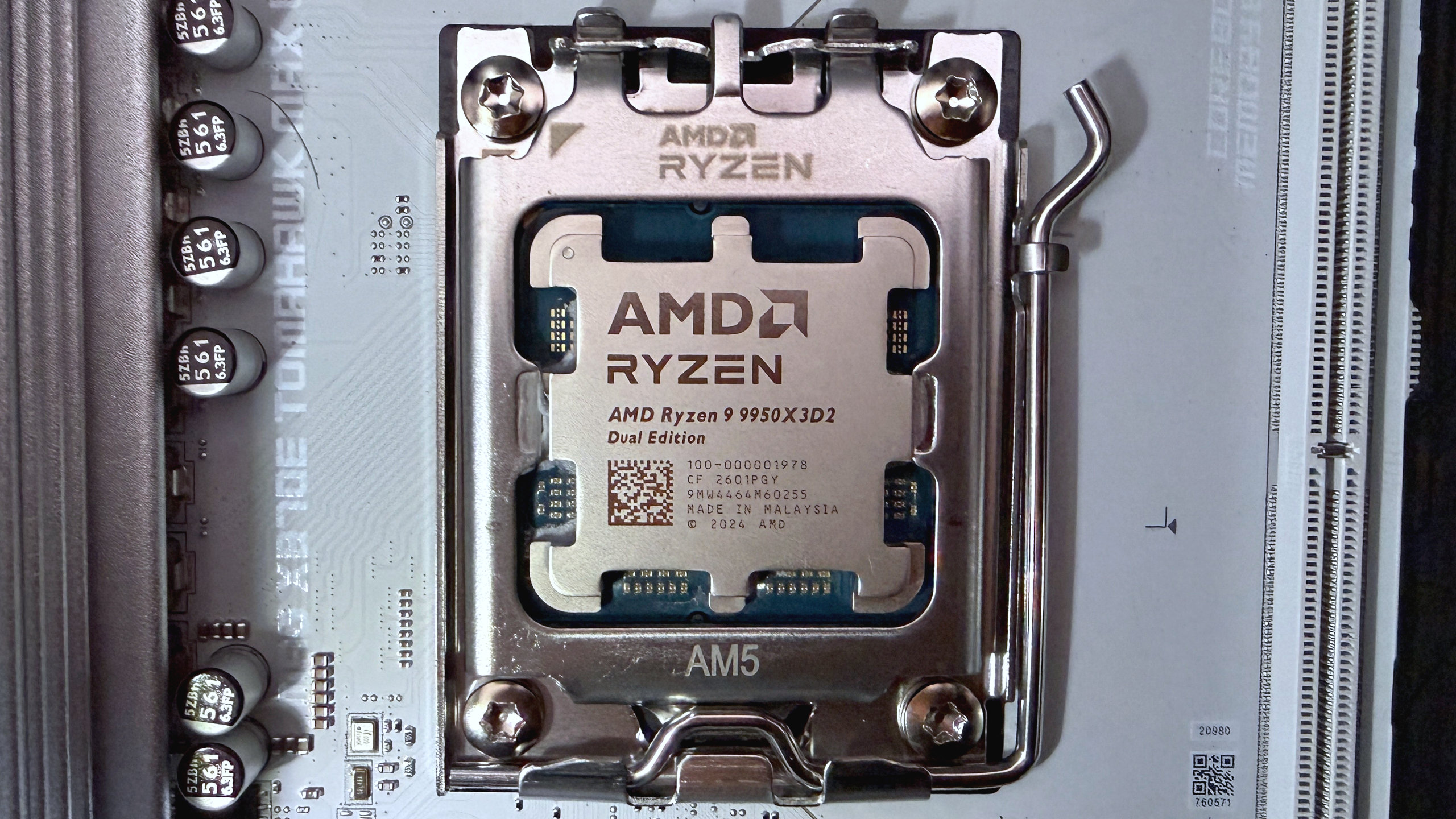
Cores: 16
Threads: 32
Base clock: 4.3 GHz
Boost clock: 5.6 GHz
L3 Cache: 192 MB (Total)
L2 Cache: 16 MB (Total)
Unlocked: Yes
Max usable PCIe lanes: 24
Graphics: Radeon Graphics (2 compute units)
Memory support (up to): DDR5-5600
Processor Base Power (W): 200
Maximum Package Power (W): 250
Recommended customer price: $899/£829
This isn't to say it's a bad processor—far from it, in fact—nor am I suggesting that all that extra cache is useless (check out some of the benefits the Dual Edition can offer scientific workloads and developers in Phoronix's tests). It's just that for high-end PC gamers or modest content creators, buying a Ryzen 9 9950X3D2 Dual Edition would seem to be just throwing money away for no reason whatsoever.
That said, the dual cache nature of the 9950X3D2 does help to avoid one issue that has plagued all of AMD's X3D processors that have twin CCDs. The likes of the 7950X3D, 9900X3D, and 9950X3D rely on drivers to handle thread scheduling in games, so that all of the crucial threads get processed on the core chiplet that has the extra cache.
It didn't work all that well for the Ryzen 7000-series chips, though it was mostly solved for the 9000-series. Since the Dual Edition has extra cache on both CCDs, thread scheduling becomes less of an issue (though it's still important).
Plus, the CCD clocks are no longer asymmetrical. For example, with the Ryzen 9 9950X3D, CCD0 peaks at 5.4 GHz, whereas CCD1 (without the cache) can hit 5.7 GHz. The 9950X3D2, on the other hand, can reach 5.6 GHz with either chiplet.
Does that actually make any difference in our battery of CPU benchmarks? Let's find out.
PC Gamer test PC specs
MSI MEG X870E Godlike X Edition | 32 GB Lexar Thor OC DDR5-6000 CL32 | Asus ROG Strix LC III 360 ARGB | Zotac GeForce RTX 4070 | Corsair MP700 2 TB | Gigabyte Aorus Elite 1000 W Platinum | Thermal Grizzly Der8enchtable
Gaming performance
Starting with our usual Cyberpunk 2077 benchmark, the Ryzen 9 9950X3D2 Dual Edition drops a surprise right off the bat. Thanks to its 5.6 GHz boost clock, it nips ahead of the 9950X3D and 9800X3D by around 8% on average, but the real shock is just how much better the 1% low frame rates are.
That's possibly down to thread scheduling messing things up for the other chips, but whatever the reason is, it's an encouraging start for the hugely expensive processor. Things fall more in line with expectations with Baldur's Gate 3, but with Homeworld 3, it pulls another rabbit out of the hat.
Our Metro test has reached the end of its usefulness for separating high-end CPUs, as they're all pretty much the same, but repeated tests confirmed that the 9950X3D2 Dual Edition was indeed marginally faster than anything else we've tested of late.
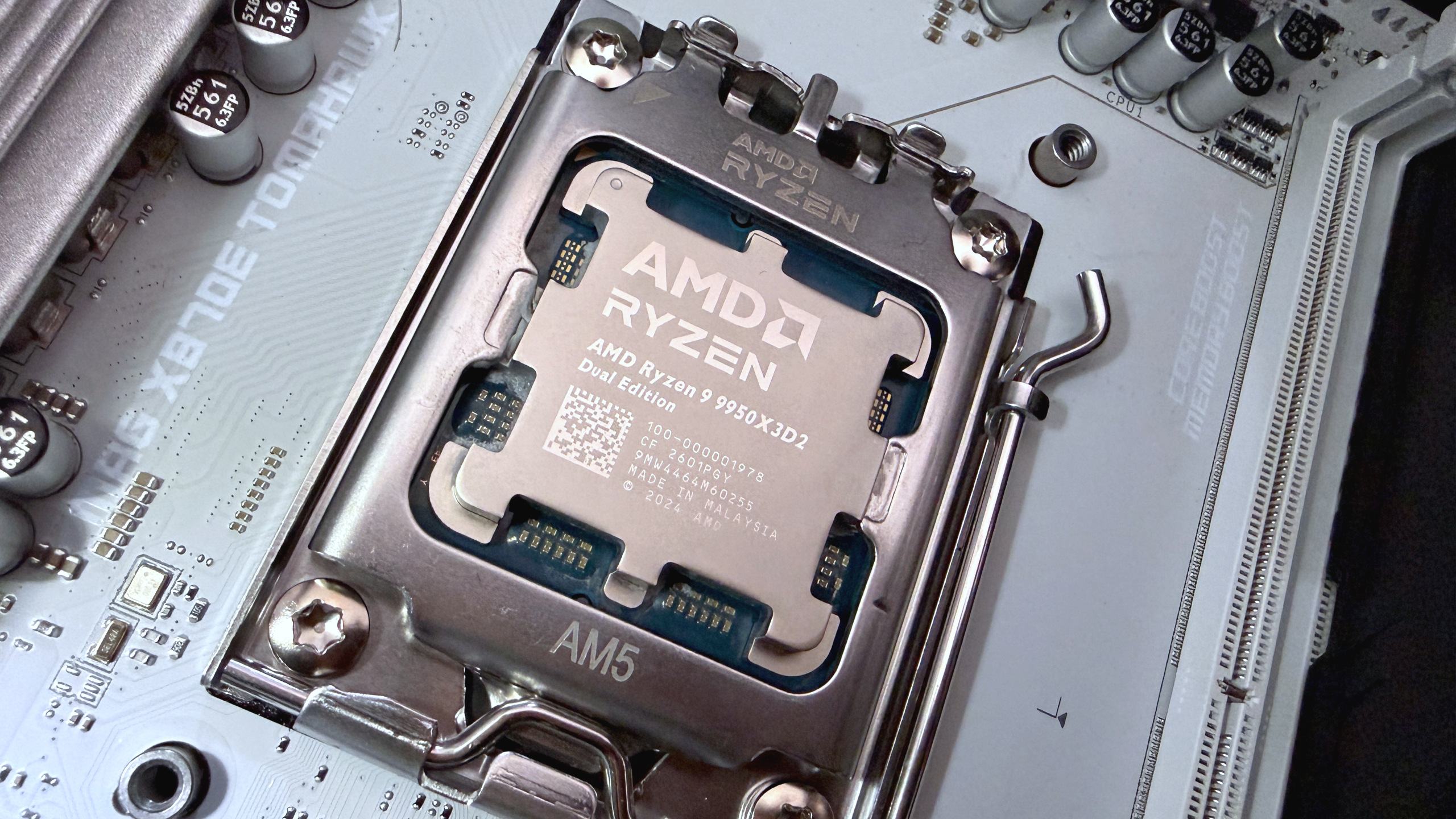
Separately, I did some performance tests with Factorio and got identical results to those for the 9950X3D; the figures aren't shown because it's a new version of our old Factorio benchmark, and it will take some time to go through all of the old chips and retest them.
There's one last surprise in the form of the CPU result in the 3DMark Time Spy benchmark. Traditionally, this is a test that has never particularly favoured AMD processors, but the 9950X3D2 Dual Edition counters that quite remarkably.
So it would seem that having both CCDs identical in terms of clock speeds and cache levels, thus avoiding any thread scheduling headaches, is of some benefit in PC gaming.
Content creation performance
Alas, the same cannot be said for our standard content creation benchmarks. While the 9950X3D2 does take a small lead over the 9950X3D, it's unlikely to be due to the extra cache. Instead, it's a case of the symmetrical and higher boost clocks that are helping out here, over the two other X3D chips shown.
But even small gains could be worth taking advantage of to some users, with the time saved accumulating over months of work offsetting the higher cost of the processor. However, countering that argument is the fact that there is an extra cost to using the Ryzen 9 9950X3D2 Dual Edition, and it's all about power.
Power and thermals
For the 9950X3D2, AMD increased the thermal design power limit (TDP) to 200 W, compared to 170 W for the 9950X and 9950X3D. Interestingly, the PPT (package power tracking) limit is 250 W, which is only 20 W more than those other processors.
As you can see in our Baldur's Gate 3 benchmark, the Dual Edition chip doesn't come anywhere near to using that amount of power, but it's still a good deal more than the Ryzen 7 9800X3D, which gets by with a mere 67 W. AMD's full-spec dual-CCD models demand a fair bit more juice, but that's to be expected having twice as many core chiplets.
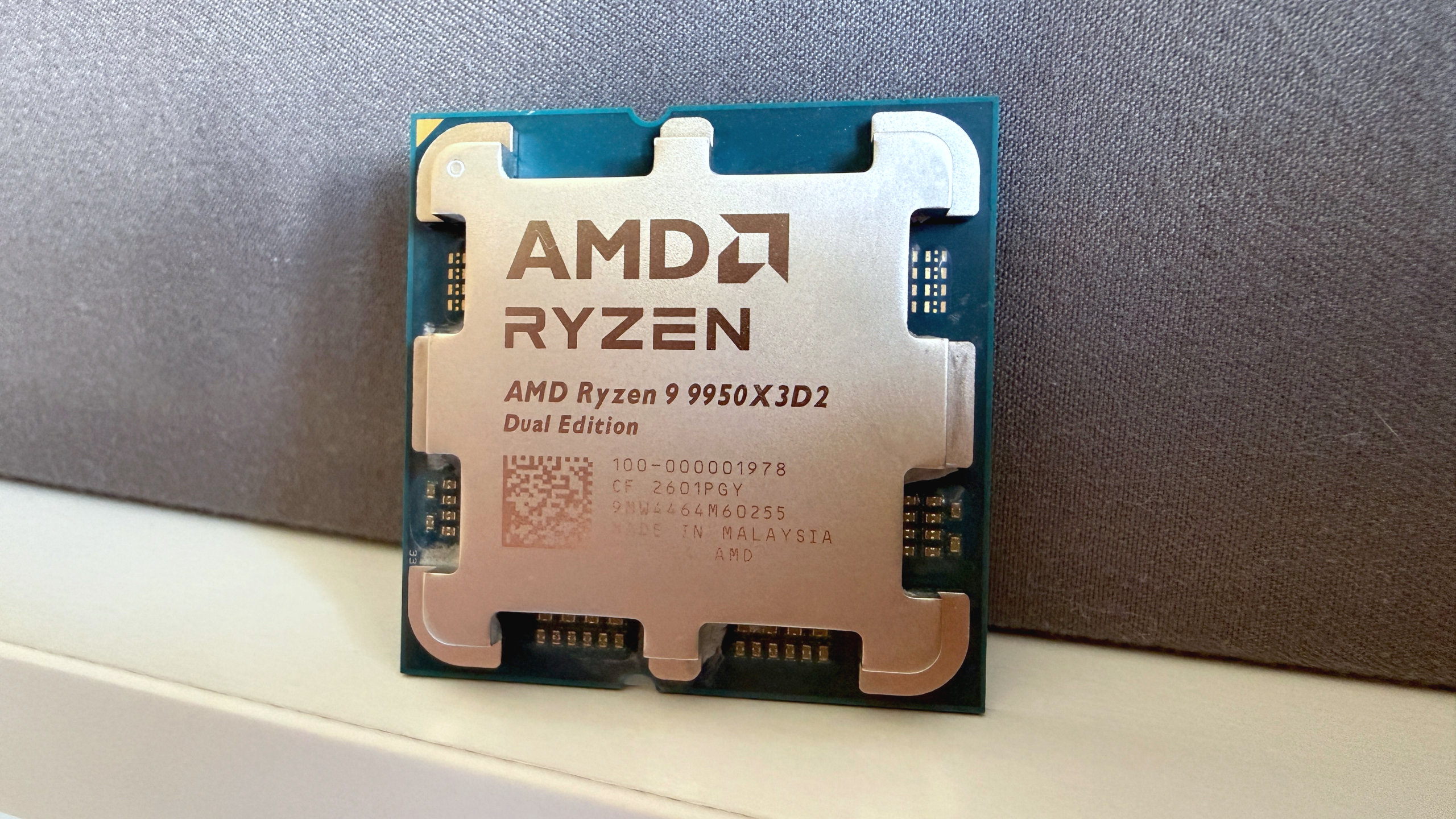
The downside to having all those cores and cache is that the Ryzen 9 9950X3D2 is quite a hot little chip. In games, it's not so bad, but when fully loaded up in Cinebench 2024, consuming over 240 W of power in the process, the CPU temperature reached 94 °C.
In fact, the cores frequently bounced off their thermal limits in that benchmark, and I suspect a more substantial cooling system than the Asus ROG Strix LC III 360 ARGB would help the processor to achieve an even better score. It doesn't do the chip any harm running at that temperature, and Ryzen 7000-series users will know exactly what I mean by that.
But if those kinds of numbers leave you uncomfortable, you're perhaps going to need a 420 mm AIO cooler or even a dedicated water loop to keep the chip's temperatures right down.
Overall verdict
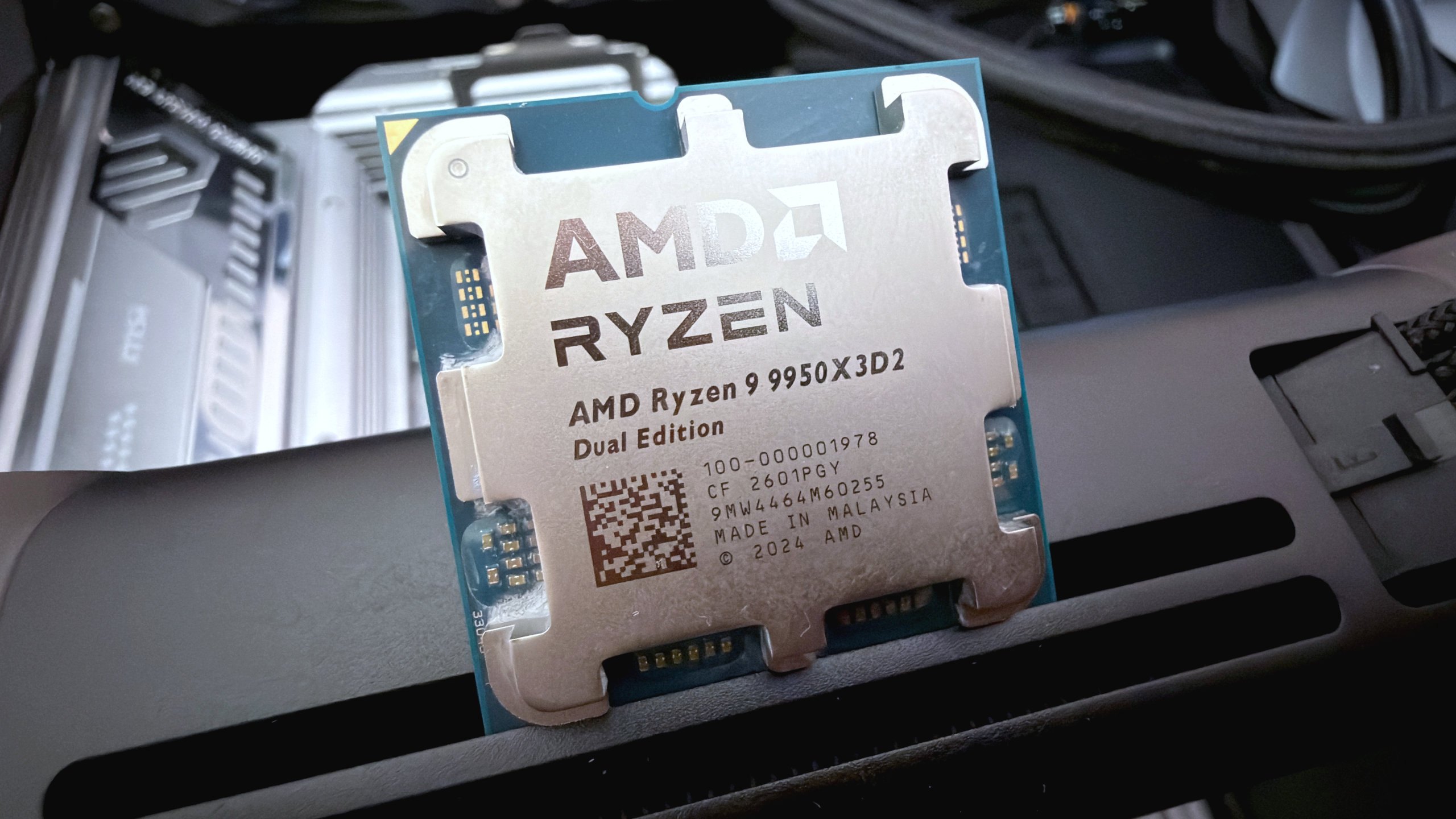
With my brief time with the Ryzen 9 9550X3D2 Dual Edition, I've come to the conclusion that AMD wasn't entirely right by saying dual 3D V-Cache is of no benefit to PC gaming. There are some scenarios where it does help, though it might be due to the symmetrical nature of the chip rather than the extra cache, and naturally, your gaming experience will only improve if it's currently limited by CPU, rather than GPU, performance.
That said, AMD was absolutely right when it said that it would be too expensive. While $899 isn't the priciest processor that Team Red has ever released for desktop PCs (the Athlon FX-62 from 2006 was over $1,000), it's arguably too much of a price hike over the 9950X3D to be worth it for a gaming PC.
Not that this will put off some gamers from forking out a huge sum of money just to have the most powerful gaming CPU in their rigs. Everyone else should just stick with the Ryzen 7 9800X3D or, if content creation is more important to you, just go with the Ryzen 9 9950X. Just think of all the DRAM you could buy with that extra cash. Hmm, maybe not.
Схожі новини

Warhammer 40,000: Mechanicus 2 locks in release date, and it’s almost here already

Ubisoft announces real-life treasure hunt to celebrate Black Flag Resynced with $500,000 on the line

You Can Pay To Join A Assassin’s Creed Black Flag Resynced Treasure Hunt And Find A $500,000 Chest Ubisoft Had Buried In The Caribbean