Alsym Partners With Juniper For 500 MWh Of Sodium-Ion Grid-Scale Battery Storage
 May 13, 20263 hours
Steve Hanley
0 Comments
Support CleanTechnica's work through a Substack subscription or on Stripe.
May 13, 20263 hours
Steve Hanley
0 Comments
Support CleanTechnica's work through a Substack subscription or on Stripe.
It wasn’t that long ago that sodium-ion batteries were little more than a curiosity — an interesting experiment to play around with in the lab. But while we weren’t looking, they have suddenly leaped from the lab to large scale production, offering lower prices, better performance in both high and low temperature operation, and something less obvious but just as important — virtually no risk of fires.
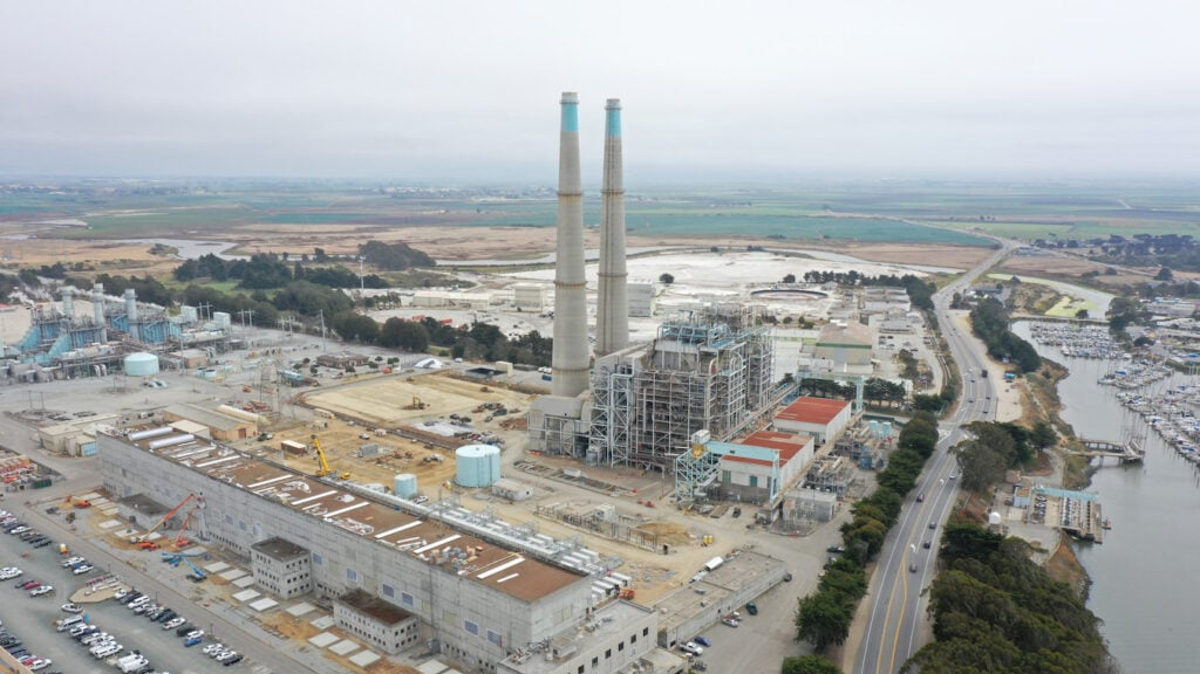
A year ago, a battery energy storage facility located at Moss Landing in California caught fire. The news sent shock waves through the energy storage industry and sparked (no pun intended) a wave of panic in communities where BESS facilities were located and where new installations were planned.
Not to diminish the danger of fires; they are to be avoided if at all possible. But the batteries that caught fire at Moss Landing used NMC chemistry, which is more prone to fires than other batteries. Elaborate cooling strategies are required to keep them from overheating and the evidence suggests those cooling systems are what failed at Moss Landing, which allowed the batteries to overheat and ignite.
From NMC To LFP To Na
Since Moss Landing was completed, the energy storage industry has switched almost exclusively to LFP batteries, which have a much lower risk of fires. They do not have quite the energy density of NMC batteries, which means the storage systems need to be somewhat larger than an NMC system, but space is seldom an issue for grid scale energy storage.
The latest sodium batteries go LFP batteries one better — they are virtually immune to fires. In a press release by Alsym Energy this week, CEO and co-founder Mukesh Chatter said, “[Sodium ion] can comfortably operate at ambient temperatures up to 50 degrees Celsius. In hot climates like California or Texas, once temperatures reach around 43 degrees Celsius, you need to shut lithium iron phosphate (LFP) systems down because it’s too hot. Since it’s based on LFP technology, during the times you need it most, such as in extreme heat, you’ll actually have the least performance.”
And here is the important part. “We will also have the UL9540A certification at the cell level, which LFP cannot achieve. This underscores the focus on non-flammability, non-toxicity, cost competitiveness, and an extended temperature range.” Here is how UL describes that certification:
UL 9540A, the Standard for Test Method for Evaluating Thermal Runaway Fire Propagation in Battery Energy Storage Systems, is the American and Canadian national standard for assessing fire propagation related to thermal runaway events in battery energy storage systems. Testing to these national standard requirements is an essential element of due diligence.
UL 9540A provides a methodology for testing a system’s safety related behavior when the design or installation conditions of an ESS exceed the limits set by the National Fire Protection Association (NFPA) 855, NFPA 1, the International Fire Code (IFC), or the International Residential Code (IRC).
UL 9540A is the only consensus standard explicitly cited in NFPA 855 for large-scale fire testing and the only national standard in the U.S. and Canada for fire safety testing methods for battery ESS. We offer testing that aligns with both the 5th and 6th editions of UL 9540A, giving customers the flexibility to choose the edition that best matches their project and compliance strategy.
Alsym Partnering With Juniper Energy
Does that make you feel more comfortable about using sodium-ion batteries? It should. In a press release dated May 12, 2026, Alsym announced a partnership with Juniper Energy, that will deploy 500 MWh of sodium-ion BESS facilities in California and other nearby states. “The collaboration marks a significant shift away from fire-prone lithium-ion dependencies, prioritizing safety, domestic production, and operational efficiency in some of the United States’ most demanding climates,” the company said.
As California continues to lead the nation’s energy transition, the need for safe, long duration storage that can withstand extreme ambient thermal conditions is paramount. By integrating Alsym’s Na-Series technology, Juniper Energy will deploy storage assets that eliminate the fire risks associated with traditional chemistries while significantly reducing the levelized cost of storage (LCOS), Alsym claims.
The focus of the partnership will be the deployment of Alsym batteries in the Mojave Desert and other high temperature regions. Unlike lithium-ion systems that require energy intensive active cooling to prevent thermal runaway and consequential damages from fire and toxic gases, Alsym’s sodium-ion chemistry is designed to avoid thermal runaway and operates efficiently without active cooling — a huge cost saving when designing and constructing a BESS facility.
This “passive cooling” capability lowers upfront capital expenditures and greatly reduces ongoing operations & maintenance costs. Furthermore, the high charge and discharge rates mean operators have the flexibility to do multiple cycles per day and use them for revenue generation as well as load shifting. The long cycle life ensures these benefits will be available without premature degradation or requiring augmentation, Alsym said.
The partnership is strategically designed to maximize the financial attractiveness of renewable projects. By utilizing Alsym’s domestically sourced and manufactured battery cells, Juniper Energy will be able to maximize One Big Beautiful Bill tax credits and Department of Energy incentives. Because Alsym uses a domestic supply chain, Juniper will have a “lithium-free” hedge against global supply chain volatility and environmental concerns related to rare metal mining.
The Premier Solution For Energy Storage
“After several years of evaluating the non-lithium landscape, it became clear that sodium-ion — and specifically Alsym’s Na-Series — is the premier solution for the next generation of California’s grid,” said Keith McDaniels, founder of Juniper Energy. “Alsym’s ability to provide a safe, US-produced battery allows us to maximize tax credits and improve project IRRs while providing our off-takers with a more flexible, reliable, and cost-effective storage asset.”
“Juniper Energy is a forward thinking developer that recognizes the inherent limitations of lithium in warmer environments,” Chatter added. “Our Na-Series technology was built for exactly this — providing high performance, fast charging storage that doesn’t require complex cooling or risk community safety. By manufacturing here in the US, we are ensuring that partners like Juniper can deploy projects faster and more profitably.”
Alsym believes this new partnership will lead to the use of its sodium-ion batteries throughout the entire Jupiter development pipeline. The 30-minute fast charging capability of the Na-Series will enable Juniper to capitalize on a wide range of revenue generating use cases — from daily solar shifting to frequency regulation, and potentially even multiple cycles per day — ensuring a resilient and sustainable California grid.
In that press release, Alsym says it is making a safer, scalable energy future possible by rethinking battery chemistry. Its sodium-ion batteries are non-flammable, high performance, and low cost. “They are designed using a proprietary, physics-informed AI platform that enables the discovery of materials and commercially viable chemistries 10 times faster than traditional, trial and error, experiment-only methods. By combining DeepTech expertise in batteries with physics-informed AI, the platform is a closed-loop system that accelerates the entire battery development process, from ideation to manufacturing.”
Thermal Runaway Eliminated
“Alysm’s Na-Series technology eliminates thermal runaway and allows energy storage to be deployed safely, and at scale, anywhere energy storage is needed — from data centers and industrial facilities to residential buildings, commercial real estate, mining, military installations or utility grids. Its wide operating temperature range avoids the need for HVAC systems for safety or performance, and fast charge and discharge rates allow multiple cycles per day, creating a powerful economic model for energy storage systems.”
According to Energy Storage News, “This announcement builds on the 30 April announcement that iron flow battery company ESS Tech has signed a letter of intent for a strategic partnership with Alsym.” That partnership will see ESS Tech add 8.5 GWh of Alsym sodium-ion cells and modules to its portfolio, and allow ESS, which focuses on long duration energy storage, to also offer short and medium duration BESS systems.
The speed at which sodium-ion batteries are coming to market, both in electric cars and battery storage — including residential systems — is frankly a little startling. Just last month, CATL announced it plans to manufacture 60 GWh of sodium energy storage batteries over the next five years.
In the past two years, sodium-ion batteries have gone from a laboratory curiosity to mainstream acceptance. In an odd sort of twist, they may actually make solid-state batteries — which have been the Holy Grail for battery proponents for decades — no longer relevant except for certain high end automotive applications where high energy density is of paramount importance. Imagine that!
Hat tip to Dan Allard.
Sign up for CleanTechnica's Weekly Substack for Zach and Scott's in-depth analyses and high level summaries, sign up for our daily newsletter, and follow us on Google News! Advertisement Have a tip for CleanTechnica? Want to advertise? Want to suggest a guest for our CleanTech Talk podcast? Contact us here. Sign up for our daily newsletter for 15 new cleantech stories a day. Or sign up for our weekly one on top stories of the week if daily is too frequent. CleanTechnica uses affiliate links. See our policy here.CleanTechnica's Comment Policy