'Almost tragicomical': Coins minted to protect the English from the Vikings ended up as Viking jewelry, experts discover
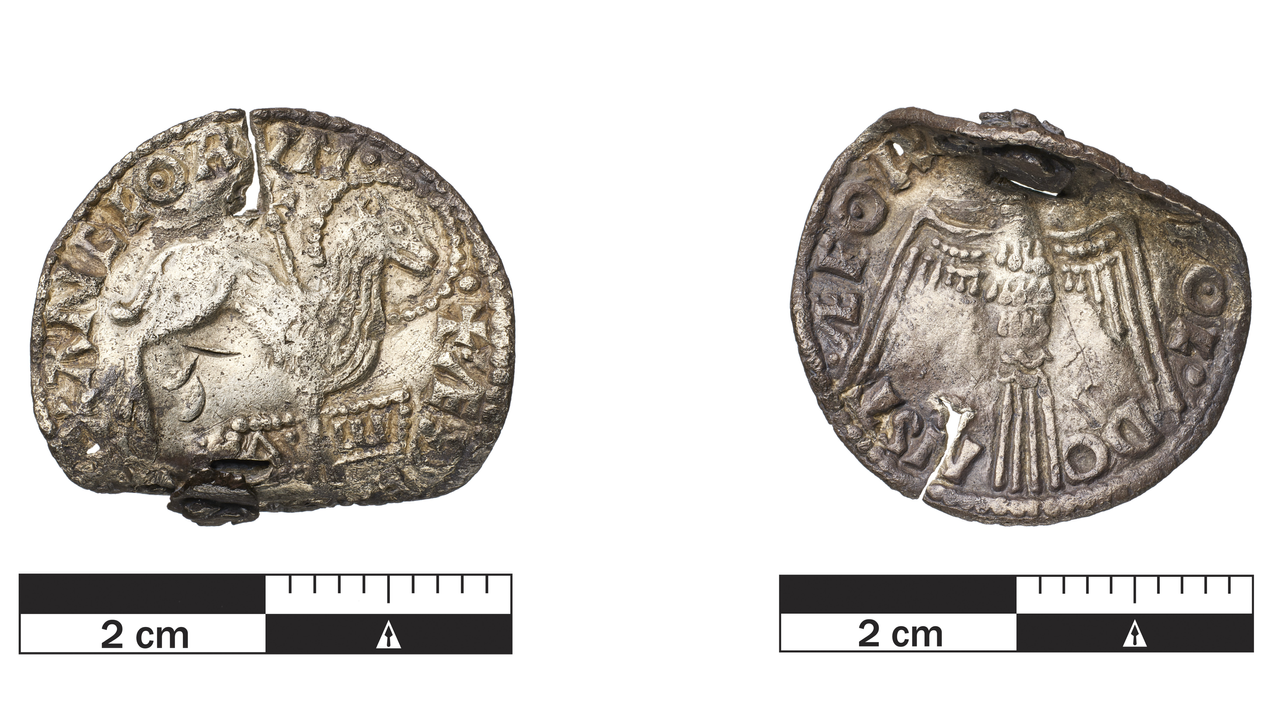
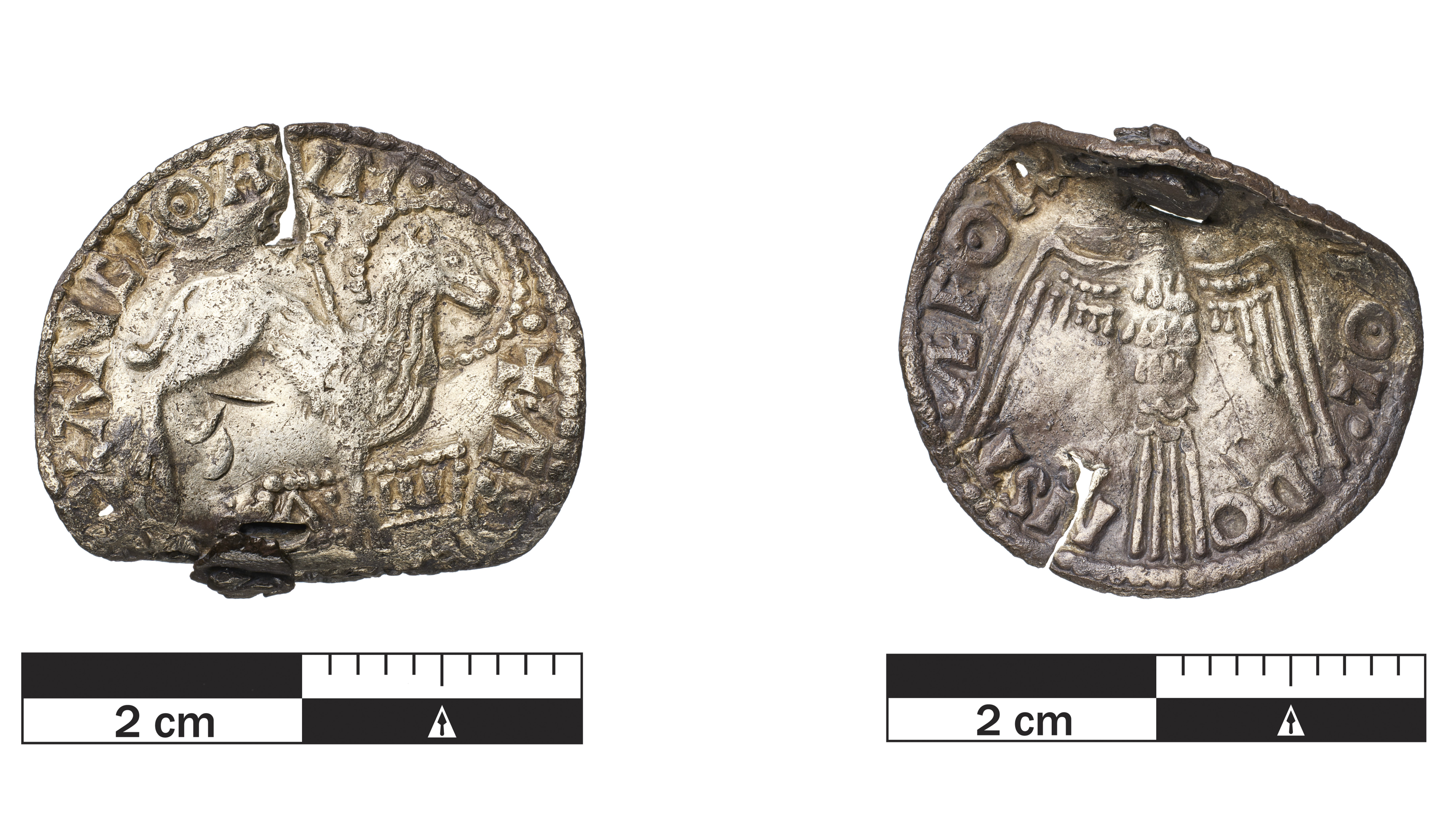
Two rare silver coins discovered by metal detectorists in Denmark reveal that the Vikings made jewelry out of Christian coins that were originally designed to prevent Viking raids, according to experts at the National Museum of Denmark.
The coins were minted around 1009, during the reign of English king Æthelred II, nicknamed "Æthelred the Unready," and featured religious motifs that he hoped would protect his people from the Viking scourge. But he didn't count on the Vikings' appreciation of the coins' aesthetics.
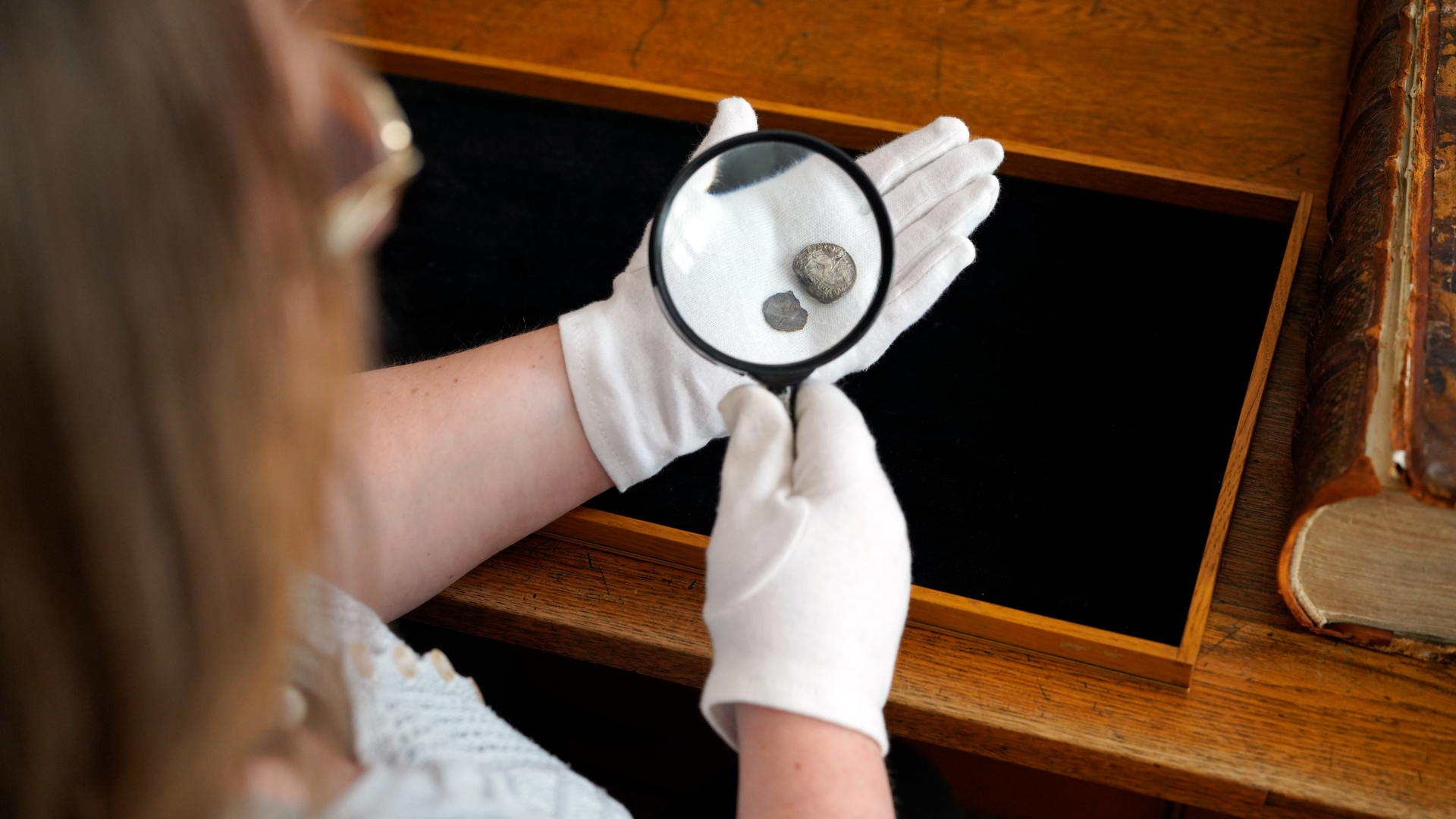
Gitte Ingvardson looks at the two coins using a magnifying glass.
Experts have dubbed this style of anti-Viking coin "Agnus Dei," or "Lamb of God," because the front of the coin features a lamb pierced by a cross, which is a symbol of Christ's sacrifice. Alpha and omega — the first and last letters of the Greek alphabet — also appear on the coin's front side, symbolizing that God is the beginning and end. On the back of the coin, a dove symbolizing the Holy Spirit takes flight.
Contemporary English coins also feature a cross on the back but lack the imagery of the lamb, and the fronts of those coins typically include a profile of the king.
RELATED STORIES
- 'The detectors never stopped beeping!' Nearly 3,000 coins discovered in field are Norway's largest Viking hoard on record
- Viking Age woman found buried with scallop shells on her mouth, and archaeologists are mystified
- 1,000-year-old Viking Age hoard has a pendant that may be a cross or Thor's hammer
Only 30 such "Lamb of God" coins have been found to date, and most were discovered in Scandinavia; they were likely plundered by Vikings who were not actually warded off by the religious symbols. Most of the Scandinavian examples feature metal loops that had been soldered on, presumably so the Vikings could wear the coins on necklaces or as amulets.
"The Vikings soon realized that it was far more practical to use coins than to hack the silver into pieces for trading purposes," Ingvardson said. The rare coins are important artifacts linking English kings, Danish kings, Christianity and the Vikings.
Sign up for the Live Science daily newsletter nowThe Viking Age ended in 1066, and people in what is now Denmark began converting to Christianity around then as Norse paganism declined. For example, archaeologists previously found more than 70 burials dating to the 1100s in a medieval Danish cemetery, and it's likely that these Norse people were Christians, although some may have retained some Norse pagan beliefs.
See how much you know about ancient Norsemen with our Viking quiz!

Kristina Killgrove is a staff writer at Live Science with a focus on archaeology and paleoanthropology news. Her articles have also appeared in venues such as Forbes, Smithsonian, and Mental Floss. Kristina holds a Ph.D. in biological anthropology and an M.A. in classical archaeology from the University of North Carolina, as well as a B.A. in Latin from the University of Virginia, and she was formerly a university professor and researcher. She has received awards from the Society for American Archaeology and the American Anthropological Association for her science writing.
View MoreYou must confirm your public display name before commenting
Please logout and then login again, you will then be prompted to enter your display name.
LogoutСхожі новини
There is no vaccine for deadly hantavirus: what that means for future outbreaks
Author Correction: Proteasome-guided haem signalling axis contributes to T cell exhaustion

Що насправді чує людина за мить до смерті: науковці шокували відкриттям