Afghanistan: Shiite and other minorities living in fear
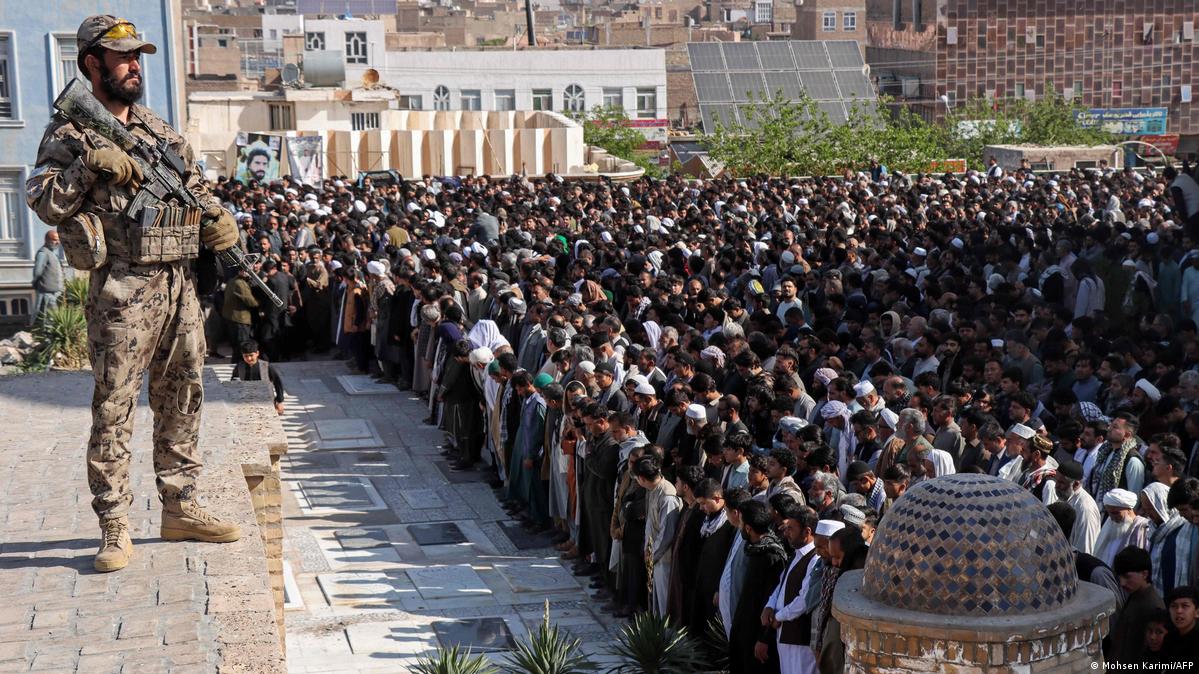
In early April, an attack on a Shiite place of worship in Herat, western Afghanistan, killed at least 11 people, according to AFP news agency, with local sources reporting higher casualty figures.
To date, no group has claimed responsibility for the attack. Taliban authorities announced an investigation and promised to hold those responsible to account. However, no results have been reported so far.
In the past, the so-called "Islamic State in Khorasan" (ISKP) has regularly claimed responsibility for attacks on Shiite facilities. The silence in the Herat case has raised questions about possible perpetrators, the security situation, and the authorities' ability to provide protection.
Observers view the situation of the Shiite community as a barometer of the Taliban's ability to institutionally safeguard religious diversity. Security is defined not solely by military presence, but by political recognition, legal equality, and reliable protection.
Taliban security promises under pressure
Since returning to power in August 2021, the Taliban have emphasized that they have restored stability across Afghanistan. Taliban spokespeople regularly assure the public that all citizens, regardless of ethnic or religious affiliation, are protected.
The attack in Herat has shaken this promise, and for many members of the Shiite community, the question of safety remains fundamental.
"Unfortunately, Afghanistan is generally not a safe place for Shiites, and it wasn't before either. Whether under this government or the previous one," said Herat resident R. Jaafari, who wishes to remain anonymous and whose name has been changed for security reasons.
"This is the first attack on the Shiite community since the Taliban took power, but it certainly won't be the last," he told DW.
'We are afraid'
For a woman from Herat who witnessed the attack firsthand and whose son was killed, the debate over security measures is peripheral. Wishing to remain anonymous, she told DW about living in constant fear.
"We are afraid and we can't sleep," she said. "Every day we expect the atrocity to happen again."
On the day of the attack, she was in the park — which also serves as a place of worship — with her family to pray and have a picnic.
"I had just finished praying when I saw them separating the men and women. At first, we thought they just wanted to check us and look at our phones. When they started killing them, I felt sick to my stomach and went into shock. I didn't really take in what happened after that," she said.
A total of 14 people were buried, she said. The injured were taken to nearby Iran for treatment. Her son's wife was also injured in the attack, and now she is taking care of her grandchildren.
"The children are crying and afraid. They don't want to go to school because they're afraid of the guards outside the school. The weapons the guards carry remind them of the incident and scare them."
She said there has been no support from the authorities. "On the day of the funeral, they assured us that they would find the perpetrators, but so far, nothing has happened."
She is thinking about leaving the country. "We want to get out of here, but where should we go? We can't go to Iran. There we are refugees and have no place there. If we could, we would leave."
"I'm afraid, and I don't know what will happen. But we don't feel safe here," she said.
Ethnic minorities vulnerable in Afghanistan
Niala Mohammad of the Center for the Study of Organized Hate, a Washington-based advocacy group, sees the attack as a manifestation of a deeper-rooted problem.
"The recent attack in Herat underscores the ongoing vulnerability of the Shiite community in Afghanistan," she said.
"The Taliban's ultra-conservative Sunni interpretation of Islam labels Shiite Muslims as heretics. This characterization contributes to their vulnerability and increases their exposure to communal violence," Mohammad told DW.
Shiites constitute a minority in Afghanistan, predominantly members of the Hazara ethnic group. Their share of the population is estimated at about 10%-20%. However, these are only estimates. There has not been a census since the 1970s.
Attacks on Shiite mosques, educational centers, and civilian facilities happened during the rule of previous governments, often carried out by ISKP. The attack in Herat, however, shows that the risk persists even under a de facto Taliban government that frames nationwide security as its central claim to legitimacy.
However, experts consider this claim far-fetched. According to human rights organizations, the Taliban have been responsible for several massacres targeting the Shiite community over the past decades. At the same time, they are continuing to systematically discriminate against Shiites during their current rule.
Since the Taliban took power, international organizations have been documenting measures that particularly affect Shiite communities.
'Don't send us back': Afghan women in India fear deportation
To view this video please enable JavaScript, and consider upgrading to a web browser that supports HTML5 video
In July 2025, Human Rights Watch reported on the violent expulsion of 25 Hazara families from Bamiyan Province. Additionally, in Badakhshan, approximately 50 members of the Ismaili community were forced to convert to Sunni Islam under threat of violence.
The teaching of Shiite jurisprudence has been banned in all schools across Afghanistan — including private schools. The Shiite legal system has been abolished, Shiite literature has been restricted, Persian holidays such as Nowruz, which marks the beginning of spring and a new year have been banned, and Hazara people have been excluded from public service.
These developments affect both religious practice and institutional participation, with the attack in Herat taking place against a backdrop of these documented structural restrictions.
How does the Taliban view Shiite Muslims?
Besmillah Taban, former head of the Afghan Criminal Investigation Department and now a doctoral candidate at Jagiellonian University in Krakow, Poland, told DW that violence against the Shiite minority is driven by ideological prejudice.
"The ideology of the Taliban and the governor of Herat holds a misanthropic view and regards Shiites as heretics. If a fatwa is issued to this group declaring that Shiite are infidels, then the regime does not need to issue a direct order to kill Shiite. The fighters will carry out these acts themselves," he said.
At the same time, he emphasizes that interfaith solidarity among the population remains strong. "Whenever Shiite people have been victims, Sunni fellow citizens have donated blood and shown their sympathy," Taban said.
Mashkur Kabuli, a Shiite cleric living in exile in Germany, recalled earlier promises of protection made by the Taliban.
"The Taliban have repeatedly assured us that they would protect the Shiites. If they truly intend to protect the Shiites, they have not yet proven it," he told DW.
"The Taliban do not accept any religious denomination other than the Sunni Hanafi school and expect everyone else to convert," he said.
Kabuli sees this as a structural exclusivity that makes it difficult to build trust between the authorities and the Shiite community. At the same time, he emphasizes that the Taliban will not succeed in destroying relations between Sunnis and Shiites in Afghanistan.
Hopes for safety in Germany are fading for Afghan refugees
To view this video please enable JavaScript, and consider upgrading to a web browser that supports HTML5 video
This article was translated from German
AdvertisementСхожі новини

Без батарей. В США испытывают беспроводной имплант мозга для лечения депрессии

Трамп сделал заявление о своем разговоре с Путиным

Кабмин продлил программу топливного кэшбэка до конца мая
