‘A tsunami of harm’: views on tackling online safety for under-16s in the UK

Campaigners, teenagers, legislators and experts give their opinions on the government’s social media consultation
Change is coming for social media platforms. The UK government’s consultation on improving online safety for children will result in some form of action being taken against big tech. Even before the deadline for submissions has passed, ministers have pledged to introduce an Australia-style social media ban for under-16s or restrictions on “addictive” features such as infinite scrolling.
There is overwhelming pressure from safety campaigners and MPs for a further crackdown on social media platforms, despite the introduction of the Online Safety Act, which requires tech firms to shield children from harmful content. The deadline for contributions is Tuesday night and the government has promised to act swiftly.
Here is what some key contributors to the debate think should happen.
Ian Russell, 62, father of Molly Russell

Russell, a prominent online safety campaigner, wants action that “turns the tide on the tsunami of unacceptable and avoidable harm”. Russell’s 14-year-old daughter Molly took her own life after watching harmful content on Instagram and Pinterest.
He is not in favour of a blanket under-16s ban for major platforms, as in Australia, believing it would form a “cliff edge” that would expose teenagers to harmful content on unreformed platforms as soon as they are old enough. Last week he came out in support of a more nuanced approach where platforms that do not meet strict safety standards would be blocked to under-16s, with teenagers allowed to access “safe” apps.
Currently, most major platforms have a minimum age of 13 in the UK, a limit set, in effect, by the General Data Protection Regulation. There is no formal limit for social media.
Russell, the chair of the Molly Rose Foundation charity, has been critical of the pace of implementation of the Online Safety Act and wants it to be rebooted. On top of that, he wants a ban on aggressive algorithms that serve harmful content to teens, and targeting of app features such as infinite scrolling, push notifications and autoplay.
“This is an opportunity to go much further than a blanket ban, which would offer a false sense of safety to parents and quickly unravel,” he says.
Esther Ghey, 39, mother of Brianna Ghey
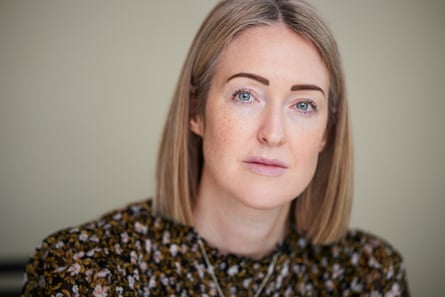
Ghey is in favour of a ban. Her daughter, Brianna, was murdered in 2023 and she believes social media addiction contributed to her daughter’s mental health issues, leading to her taking risks with her personal safety. Brianna, who was transgender, became isolated through heavy use of social media, and suffered from anxiety and body dysmorphia.
“I support raising the age of social media. At the moment, as it stands, social media represents a serious risk to under-16s,” she says.
Ghey, the founder of the Brianna Ghey Legacy Project, which promotes online safety education, also wants curbs on addictive features and more help for teens in navigating an online world.
“We cannot just take something away. So we need to make sure that we educate children in digital literacy so that when they enter the world of social media they have the emotional maturity to deal with it,” she says.
Fin, 17, sixth-form student
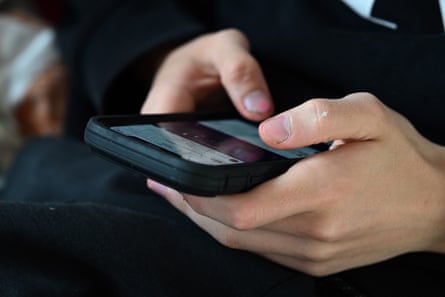
Fin finds the government’s proposals to restrict social media for under-16s “incredibly harsh”, particularly for young people who use those platforms to follow the news and stay connected with friends. “There’s a lot of ways they could have gone around it instead of just a complete blanket ban. There should be different levels of restrictions, but maybe that’s too complicated,” he says.
However, he believes the government should step in to regulate addictive designs such as infinite scrolling or autoplay. “People should be free to do what they want, but it also comes down to safety. You can’t just let someone drink themselves to death.”
While the government has “good intentions”, Fin feels many measures have not been properly considered. For example, he says the announcement of a statutory smartphone ban in schools in England does not consider how integrated phones and technology are into classrooms. “Nowadays, teachers are setting work to do online: Google Classroom, Microsoft Teams. I just feel there’s so much more nuance to the debate than what’s currently being put in.”
The consultation includes a survey for 10- to 21-year-olds. However, Fin says the online safety debate as a whole has been skewed towards adults’ desires. “I don’t blame them. It’s hard to interview kids. But I wish there was more of an acknowledgment that ‘we’ve only really spoken to adults’.”
British teenagers interviewed by NSPCC, 11-18
The NSPCC has run a series of focus groups about the consultation around the UK. One widely held view was that adults do not grasp the complexities and nuances of social media and smartphone use. One girl said: “I use my phone mainly for research and revision.”
Some focus group members felt that a ban would be punishing them instead of the social media companies that fail to enforce their own safety measures. Against that background, some called for a more “layered approach” to online safety where apps adopt safety measures that reflected users’ ages. As one said, they wanted gradual exposure to social media so that they can “have freedom and make mistakes”.
There was a lot of discussion about the behaviour of others, with some saying the blame should lie with users, not with platforms. Cyberbullying, catfishing, trolling and grooming were topics that appeared regularly in the groups. “Being chronically online can affect your mental and physical wellbeing,” said one.
There was also support for being able to control your own online experience, such as selecting the sort of content you want and who you interact with. “I quite like the environment I have on social media because I’ve made it safe for me and also my algorithm does feed me things that I really engage with,” said one girl.
Chi Onwurah, 61, MP
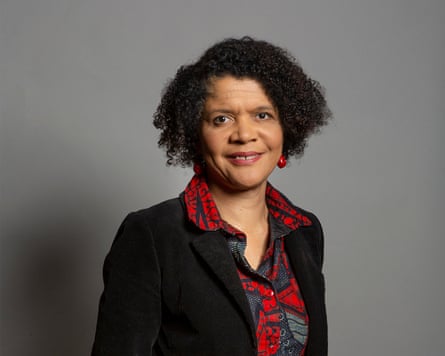
Onwurah is chair of the science, innovation and technology committee, which said last week that the “status quo is not acceptable” for online safety. Onwurah says the committee was not convinced by an Australia-style ban. Her own concerns about a ban, she says, were how to define what gets blocked and the “cliff edge” situation.
In Australia, where access to apps including Instagram and TikTok is restricted for under-16s, the criteria for age limitation of a service include if a service enables social interaction between two or more users and if it allows users to post material.
“I am not advocating for a ban personally but the committee is strongly of the view that the status quo is unacceptable,” Onwurah says. She would like to see restrictions on addictive features, tougher enforcement of the OSA and better provision of tech platform data to researchers so that the level of harm to teenagers can be gauged properly.
The committee is also calling for stricter age verification, so that fewer under-13s slip through the net, and regulation of digital advertising to prevent platforms from encouraging addictive behaviour.
Colm Gannon, 48, chief executive of the International Centre for Missing and Exploited Children Australia (ICMEC)
Gannon was on the advisory board for the trial of age assurance technology that was completed prior to Australia introducing the social media ban at the end of last year. He has more than 20 years of expertise in digital safety and child protection, and says the UK had started on a good footing with age checks on iPhones.
He says the UK government should not impose an outright ban on social media for under-16s as Australia has done. He says teens under 16 have been able to circumvent the ban in Australia and it has pushed them into an unmoderated environment without the parental controls and other limits on teen accounts that the platforms have put in place.
“Young people in this generation, the persons under the age of 16, have this ambition and the right to connect,” he says. “We need to set up safety parameters around that, so that we actually bring in a high level of trust and safety and to treat vulnerability as a high priority, create environments where they can safely engage in community practices that are moderated.”
As it stands with the ban, he says, Australia has created an environment where young people are still engaged on social media but they’re not talking to their parents about it, owing to fears that they are not supposed to be on those platforms.
“I don’t think it’s working in Australia and I’m continuing to talk to other governments and say to them: ‘This is not the golden recipe, this is not the template you should follow,’” he says.
Doniya Soni-Clark, 33, TechUK
Soni-Clark, an associate director at the UK tech industry trade group, which represents the major social media firms, says there is a “broad consensus” against a ban within TechUK’s membership, which includes platforms such as Spotify and Google. A key reason is defining what should be banned, with members concerned that just banning platforms because they operate in social media would be too punitive. Instead, the government should focus on features that are deemed unsafe.
“We are calling for universal standards for all platforms accessed by children, so if a particular feature is found to cause alarm, that is regulated across all platforms,” she says.
Meta, a big player in the sector as the owner of Facebook and Instagram, would like users’ ages to be confirmed when they set up their smartphone or buy an app, with Mark Zuckerberg’s company providing further age assurance once users open an account. Social media platforms can provide an age-appropriate experience, Meta argues.
Arturo Béjar, 55, Meta whistleblower
Béjar, a former senior engineer and consultant at the Instagram and Facebook owner, was a witness at recent trials in the US that ruled Meta was liable for deliberately designing addictive products and had misled consumers about the safety of its platforms.
He argues that social media companies have “squandered all the trust we have given them”. He supports an under-16s ban for platforms that are unsafe and, similar to other campaigners, wants a set of standards introduced that apps must meet.
“My dream would be to say: ‘This is what safety means and if you don’t comply by this date, teens will not have access until you do,’” he says.
Explore more on these topicsShareReuse this contentСхожі новини
Live: Siddaramaiah holds breakfast huddle with ministers before key Congress meet
Частина Сумщини залишилася без електропостачання через збройну агресію РФ

ДСНС: На Полтавщині внаслідок російської атаки зруйновано житловий будинок, постраждала літня жінка