A Quieter Victory Day in St. Petersburg Hints at the Strains of Russia’s Long War
 By Moscow Times Reporter
May 10, 2026
By Moscow Times Reporter
May 10, 2026

St. Petersburg, RUSSIA — Eighty-five-year-old Lyudmila Vasilyeva survived the siege and famine that devastated St. Petersburg, then known as Leningrad, during World War II.
Today, she is one of the few residents of the city who still openly protests against Russia’s war in Ukraine.
On Saturday, as Russia marked the anniversary of the Soviet victory over the Nazis, one of its most important public holidays, Vasilyeva staged a solo protest near the Solovetsky Stone, a monument to the victims of Stalinist repression.
Her placard bore an appeal to the authorities: “Do not use the people’s Victory to cover up your crimes.”
She was soon arrested by the police. Vasilyeva had previously been fined for “discrediting the army,” a crime under Russian law that can lead to prison time for repeat violations.
But this time, she was lucky. The police released her without pressing charges. Little explanation was given other than that the police chose to give her a kind of unofficial reprieve for the holiday.
To persecute a living witness to the Siege of Leningrad on Victory Day would have risked public outrage at a particularly tense moment for the country.
As internet blackouts, wartime restrictions and fatigue over the prolonged invasion of Ukraine fuel growing frustration, Victory Day celebrations remain politically important for the Kremlin.
Unprecedented security measures
Ahead of the Victory Day parade in Russia’s second-largest city, Nevsky Prospekt, the city’s main thoroughfare, was unusually quiet on Saturday morning, with the streets cordoned off and police officers appearing to outnumber civilians.
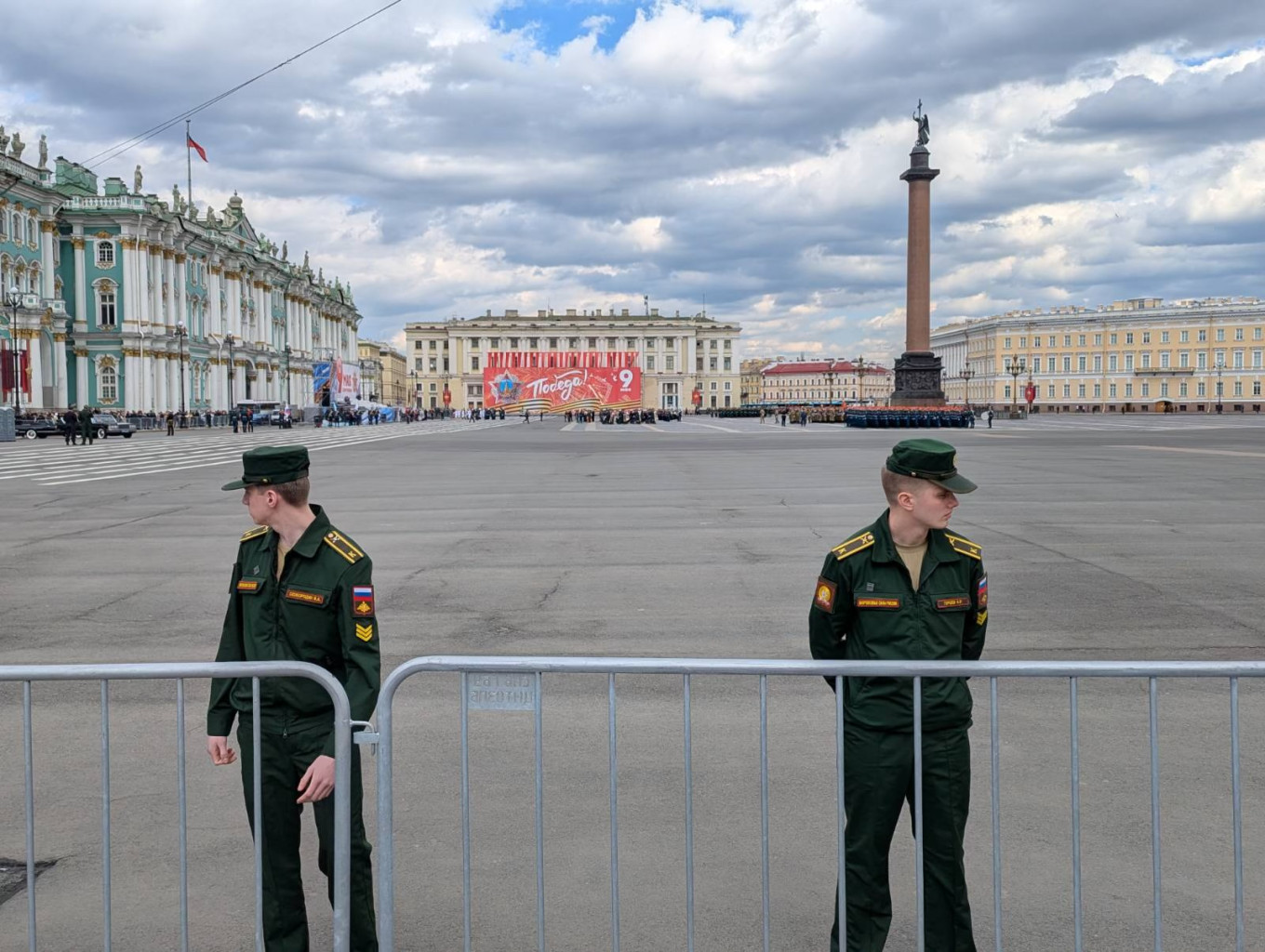
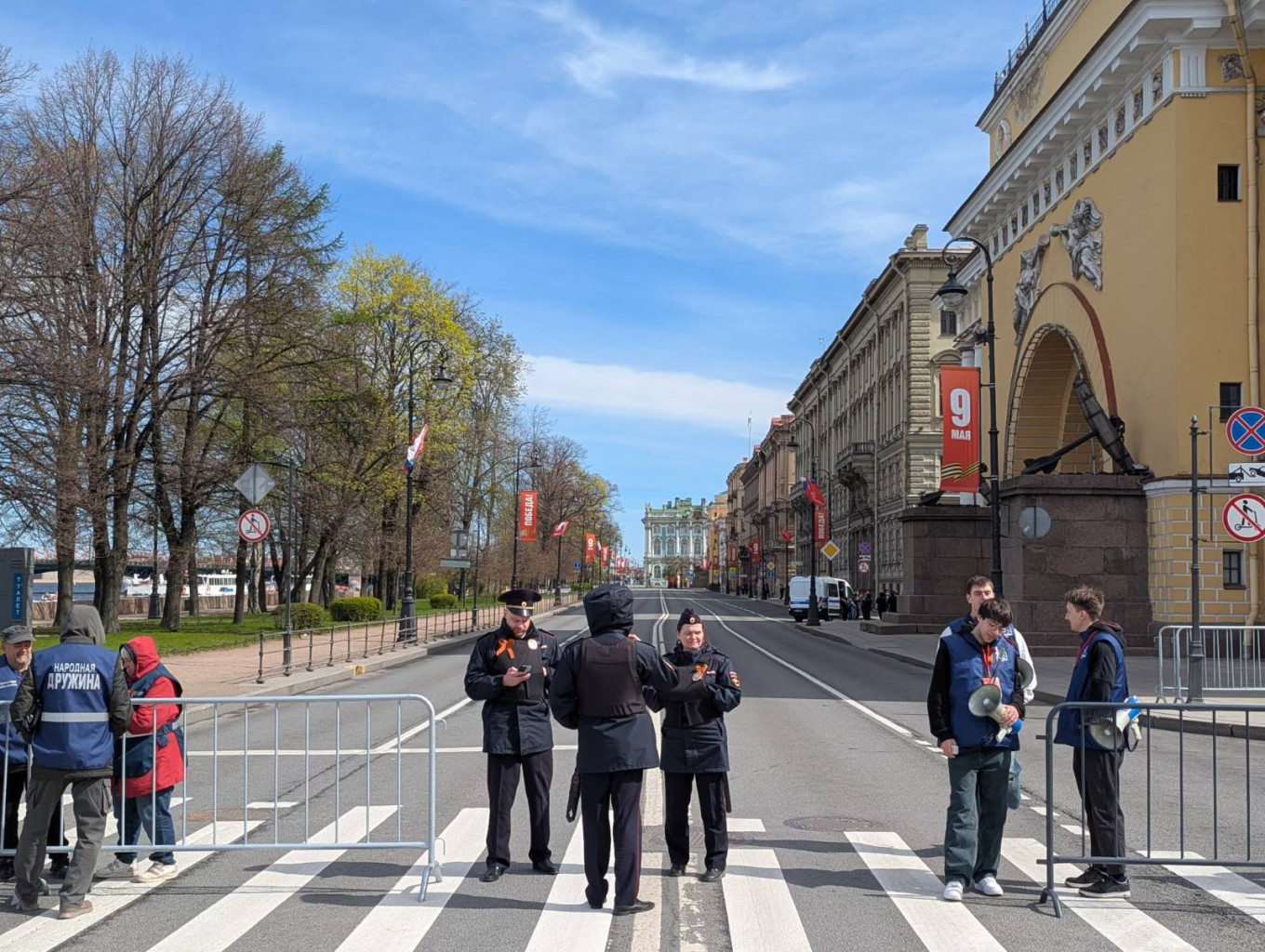
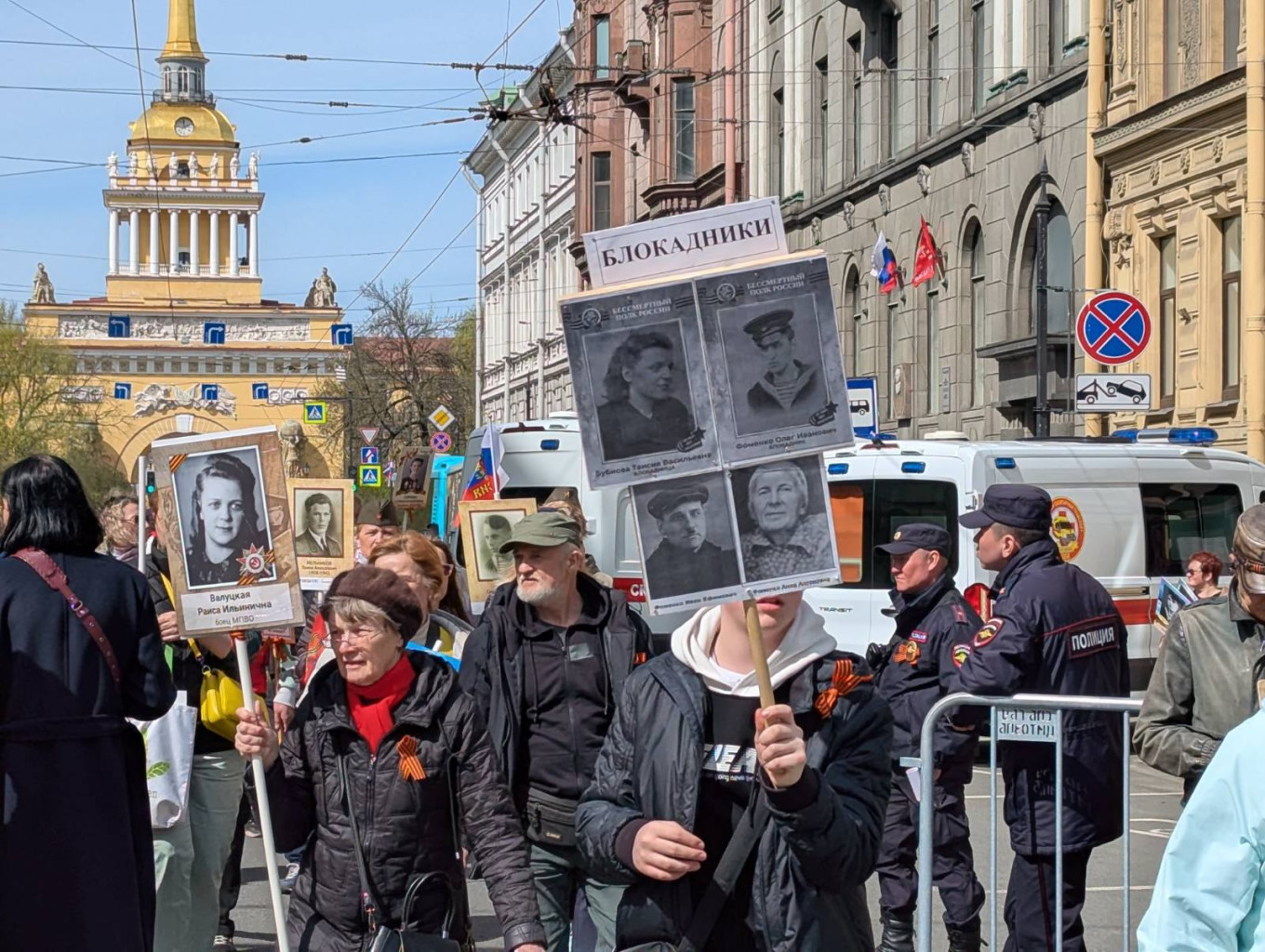
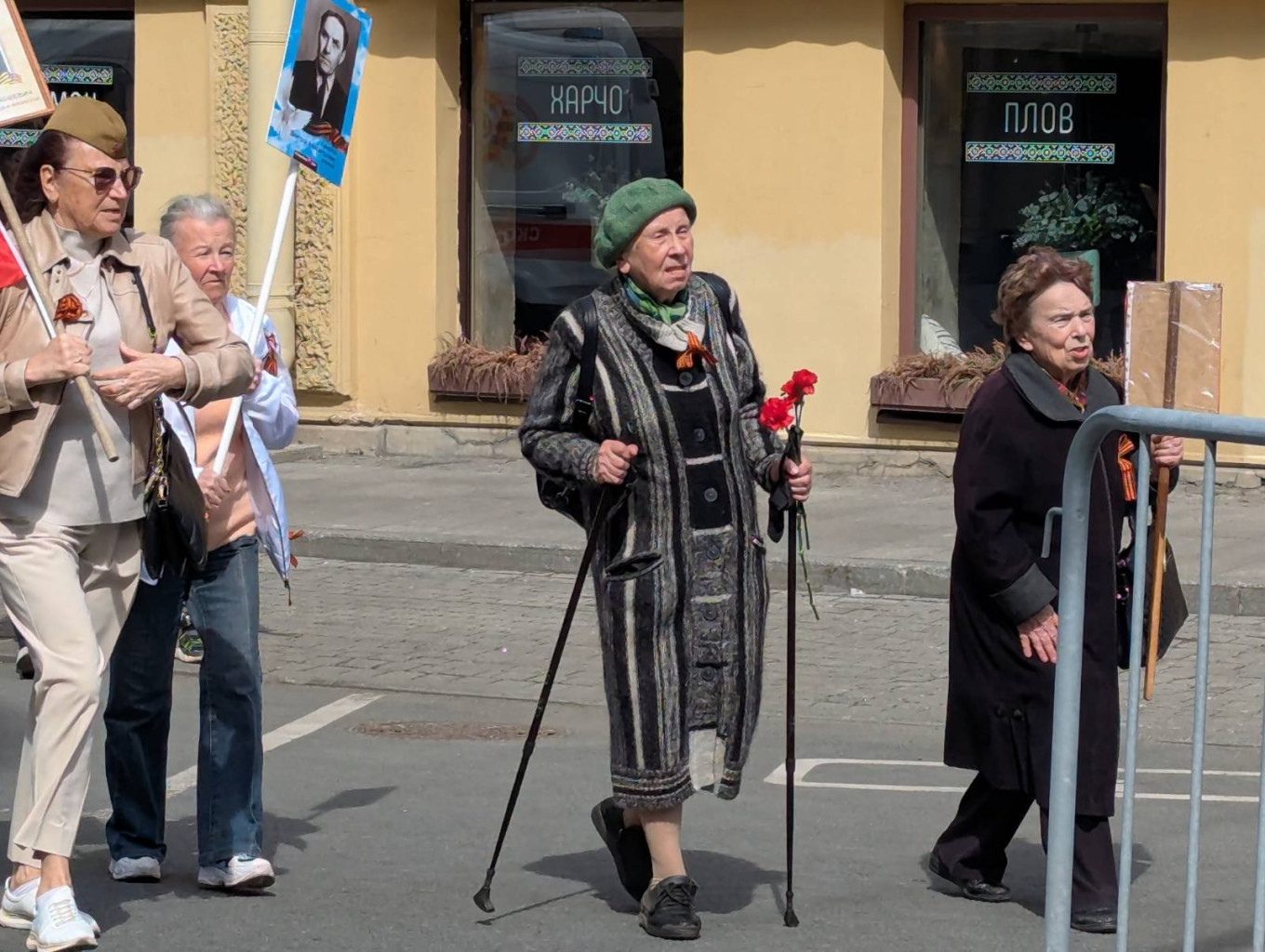
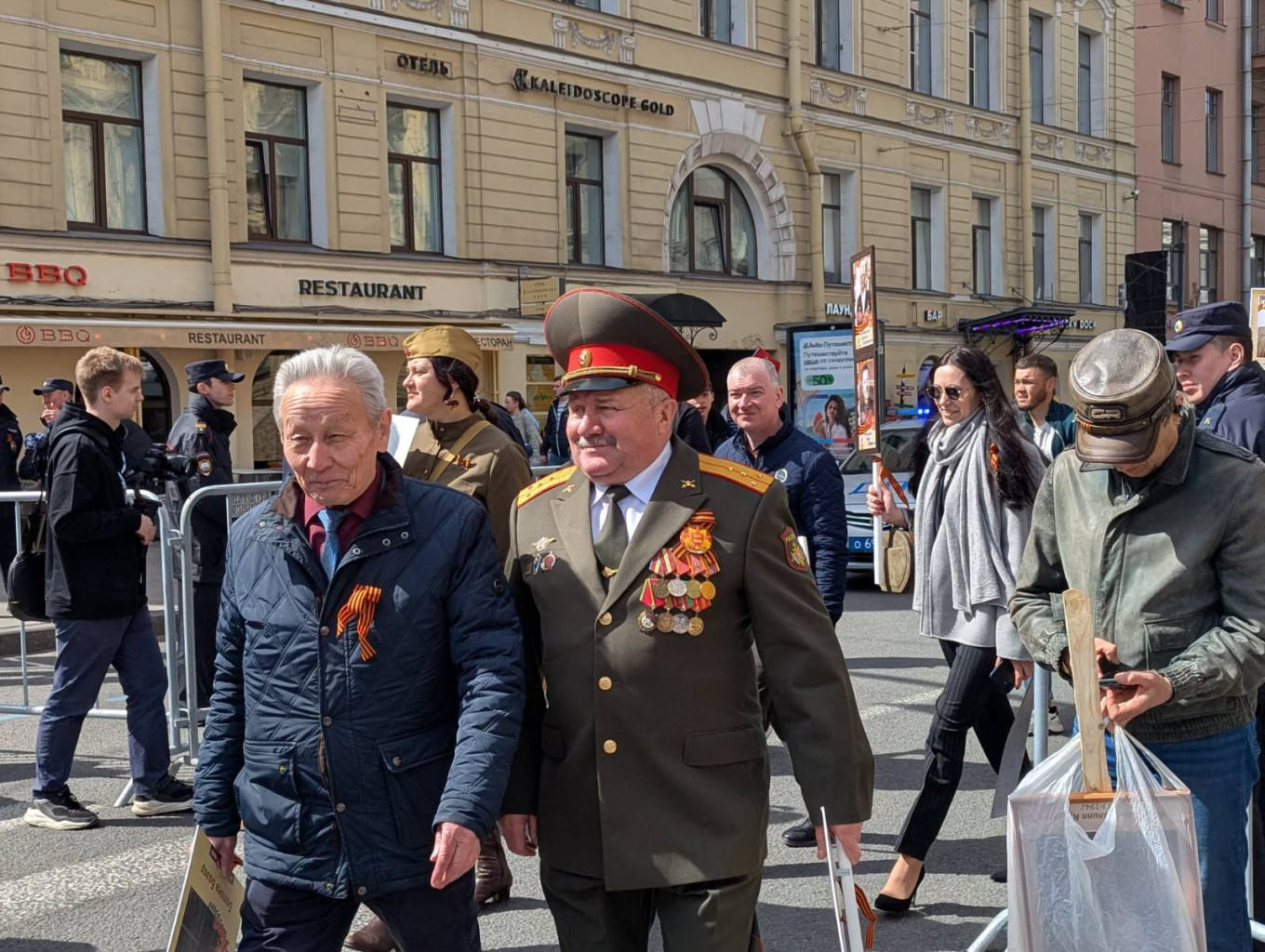
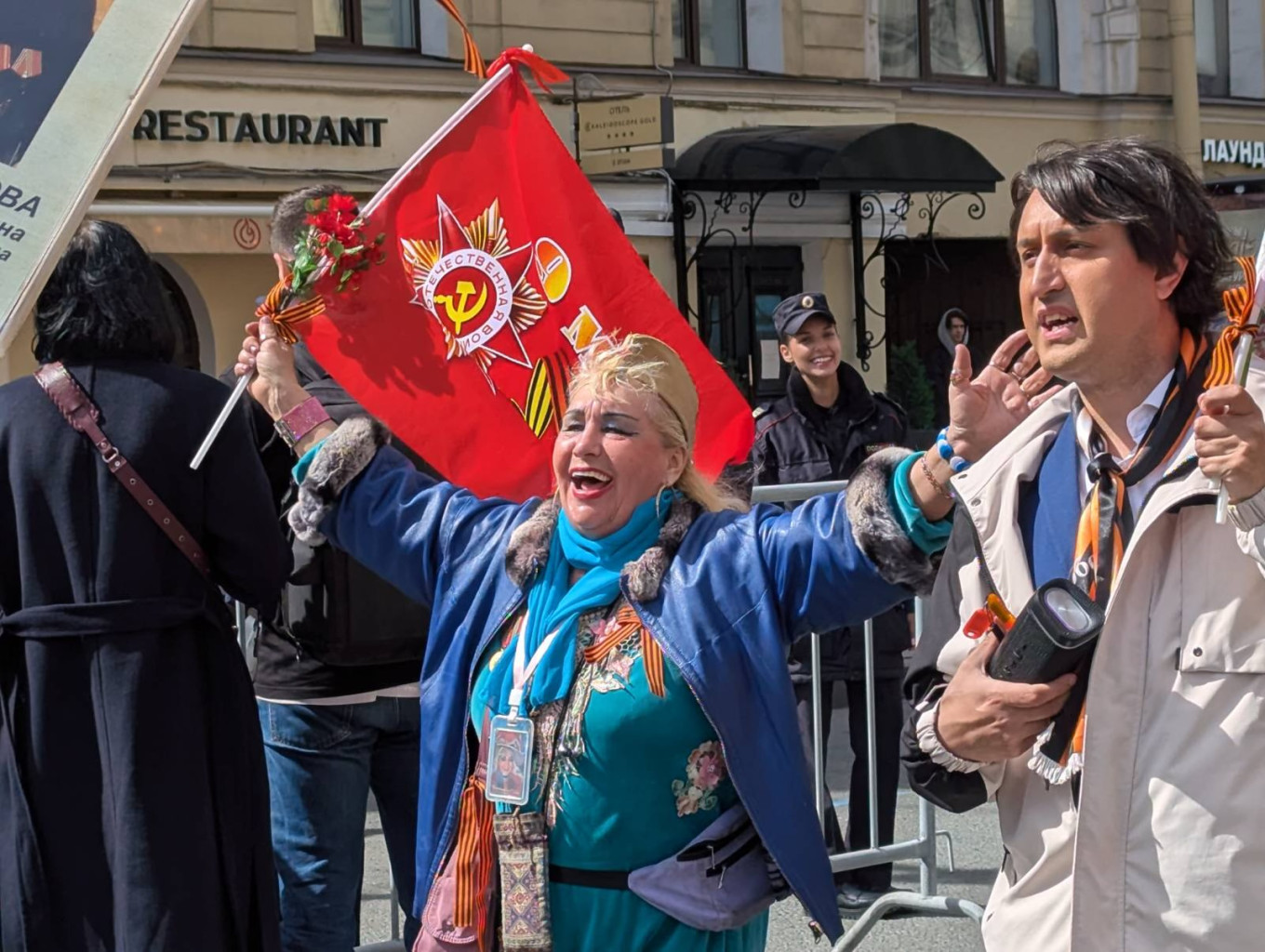
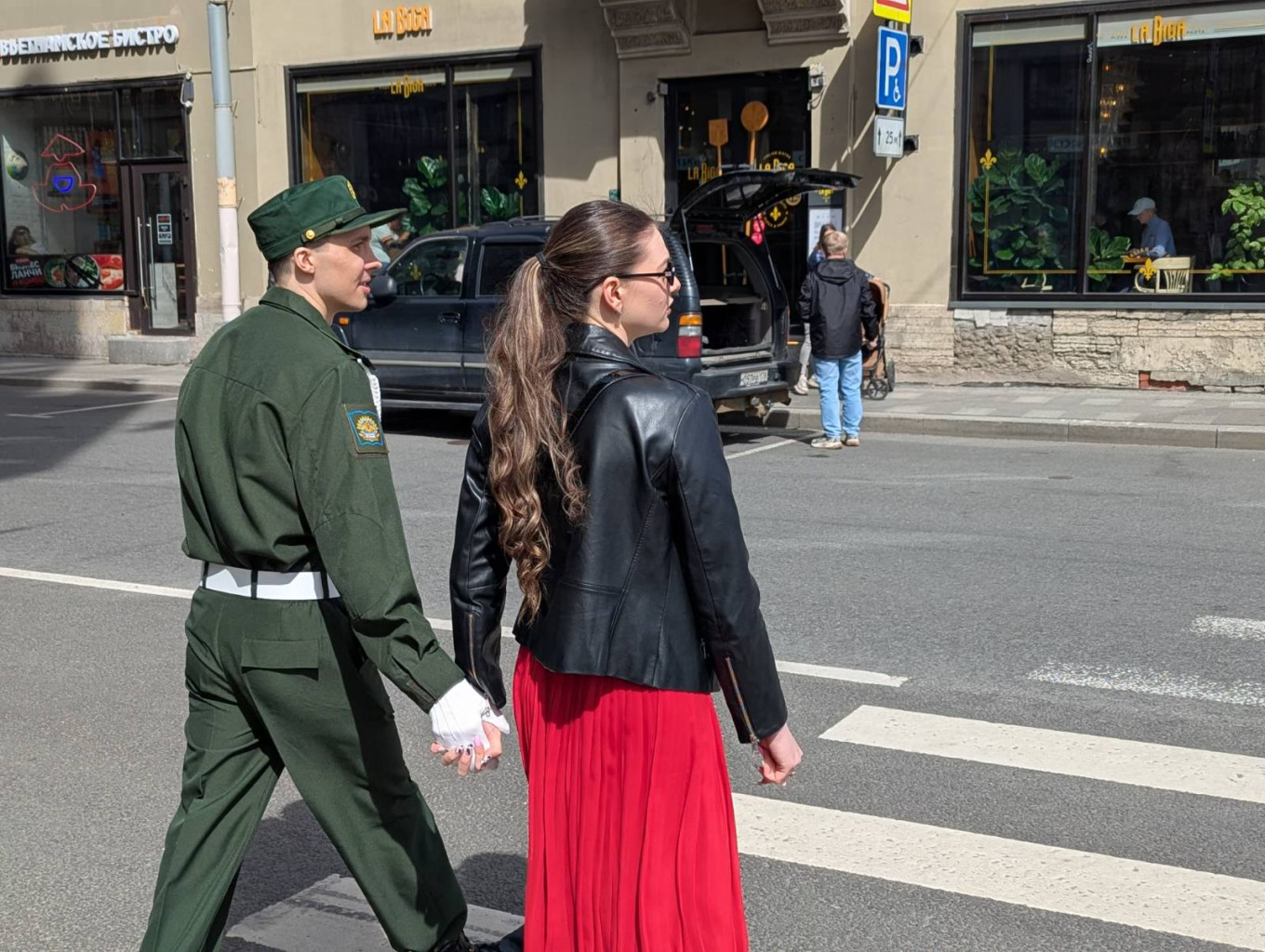
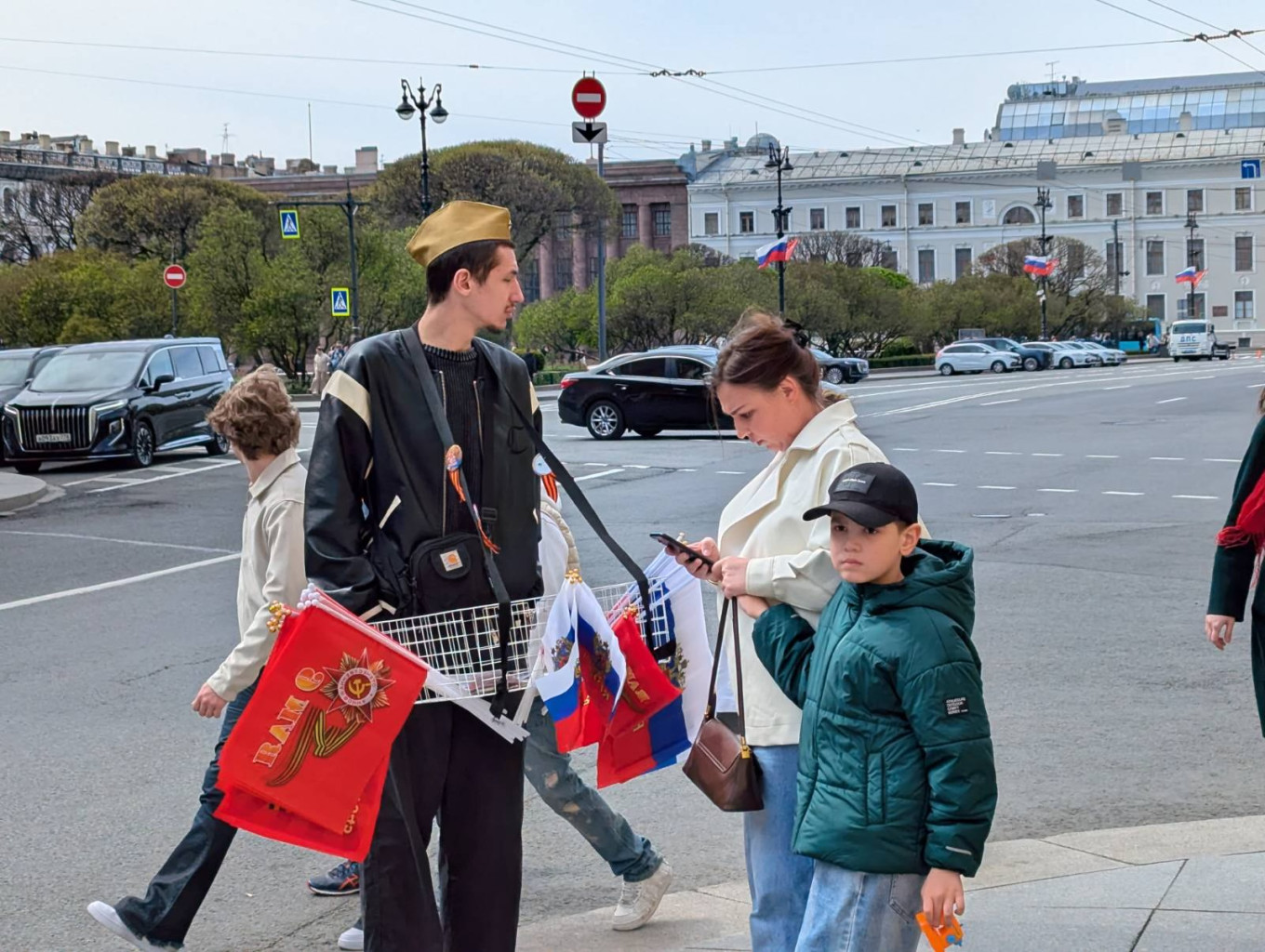
The atmosphere felt less like a celebration than a disaster film, with checkpoints, security patrols and an eerie calm hanging over the city.
Victory Day, which under President Vladimir Putin has become one of Russia’s central state holidays, was marked with unusual restraint this year as authorities imposed sweeping security measures amid repeated Ukrainian drone attacks nationwide.
St. Petersburg, Russia’s second-largest city with a population of 5.6 million, occupies a special place in the national memory of what Russians call the Great Patriotic War.
During World War II, the city endured an 872-day siege that caused one of the worst humanitarian catastrophes of the war.
Leningrad was subjected to relentless shelling and air raids by Hitler’s forces and their allies. Residents weakened by hunger collapsed in the streets, while hundreds of thousands died from starvation.
The scars of those years remain visible across the city. Some buildings still bear marks from wartime shelling. A granite plaque on the steps of St. Isaac’s Cathedral reads: “Here lie the marks of one of the 148,478 shells fired by the Nazis at Leningrad between 1941 and 1944.”
On Saturday, fresh red carnations had been placed beside it.
In previous years, Victory Day celebrations drew large crowds of tourists to St. Petersburg for military parades and Immortal Regiment marches, during which participants carry portraits of relatives who fought in World War II.
But this year, local authorities sharply scaled back events.
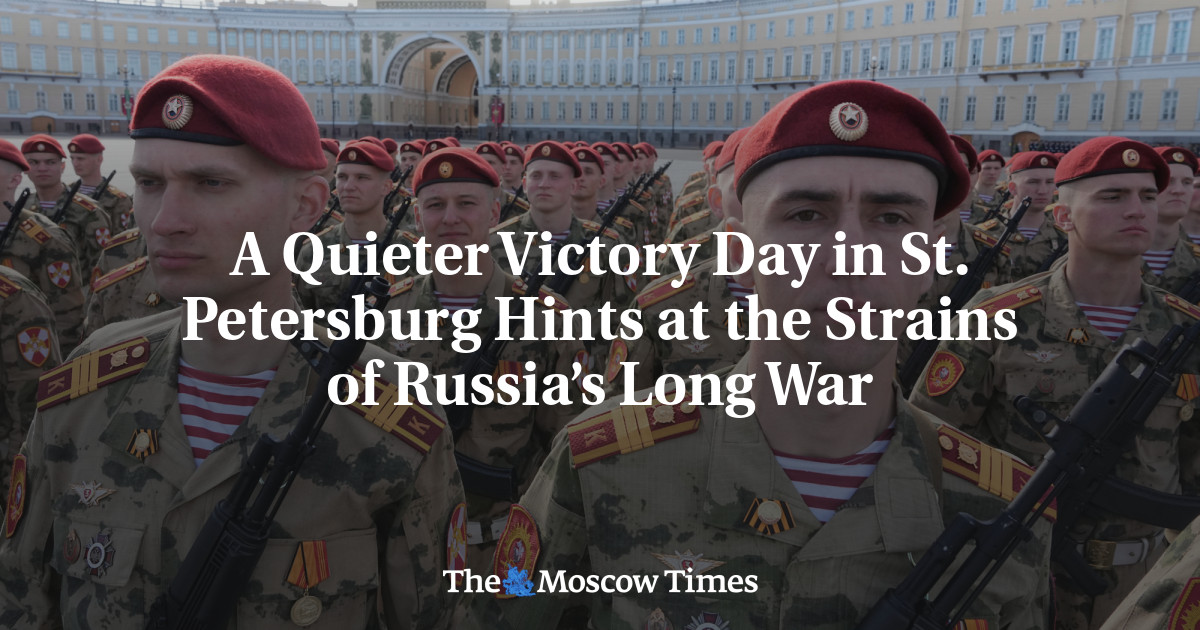
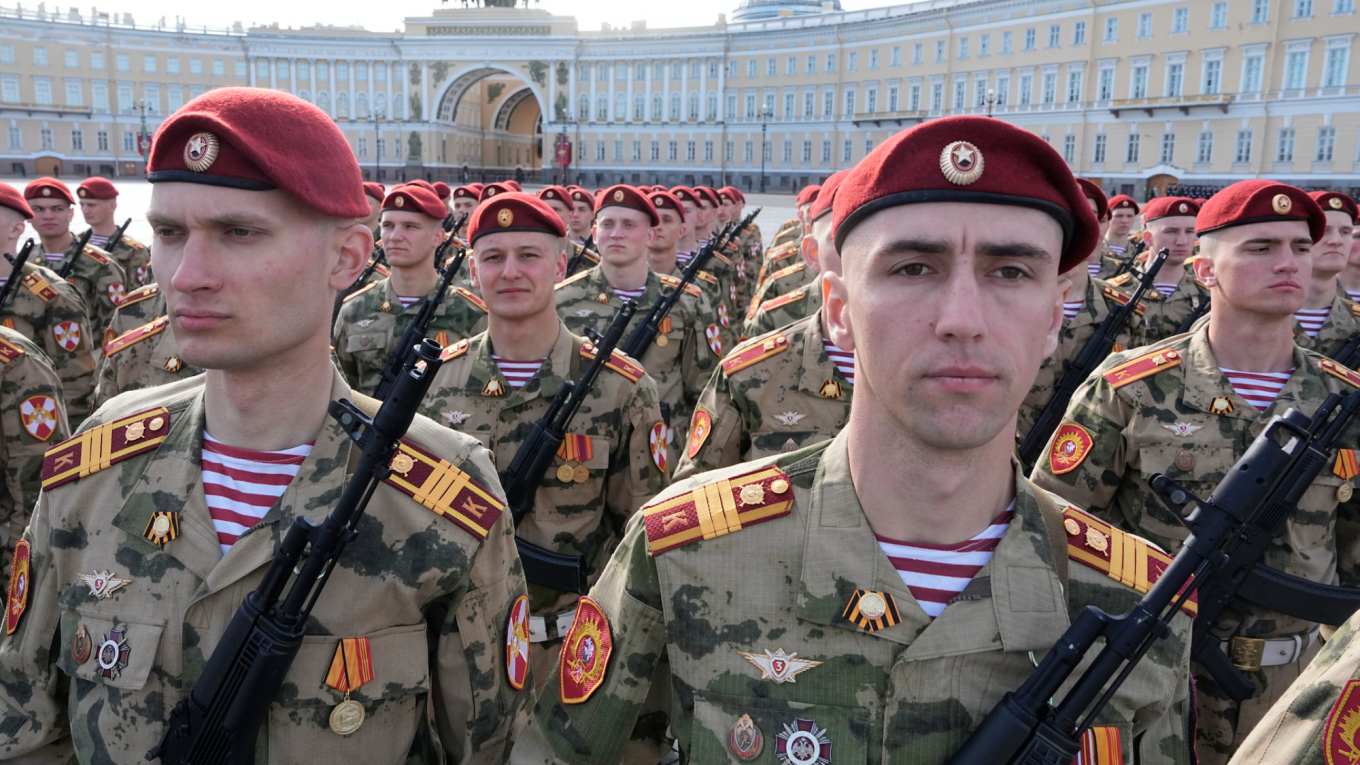
Palace Square, the site of the annual military parade, was closed to the public, and the parade itself was largely symbolic.
Following Moscow’s lead, St. Petersburg authorities staged the parade with no military vehicles or equipment. Only one grandstand for spectators was erected instead of three, and World War II veterans were reportedly not invited at all.
Due to fears of attacks by Ukrainian drones, mobile internet was shut down in the city for several days in a row during parade rehearsals.
‘A march carrying portraits of veterans of the war in Ukraine’
Unlike Moscow and many other Russian cities, St. Petersburg did not cancel its annual Immortal Regiment march.
While decurity was tighter than usual, with participants confined to a designated route inaccessible to outsiders, thousands of people nonetheless attended.
Among the marchers were people carrying photographs of relatives killed in Ukraine, placing them symbolically alongside veterans of World War II.
For years, Kremlin rhetoric has portrayed the war in Ukraine as a continuation of the Soviet struggle against Nazism, reinforced by state propaganda claims that Russia is once again fighting “Nazis” in Europe.
Some participants in the Ukraine war joined the march themselves. One of them carried a placard bearing the portraits of 16 of his fallen comrades.
According to local outlet Bumaga, two men in camouflage uniforms also carried a placard featuring Yevgeny Prigozhin, the late founder of the Wagner mercenary group who led a brief mutiny against Russia’s military leadership in June 2023 before dying in a plane crash two months later.
‘We liberated them and they will never forgive us for it’
Near Palace Square, the Defense Ministry opened a propaganda exhibition titled “(Un)grateful Europe.”
The first part of the installation features archival photographs of Europeans welcoming the Red Army at the end of World War II. Another section showed present-day images of anti-Soviet protests and the removal of Soviet-era memorials across Europe.
One photograph depicts a monument to Soviet Marshal Ivan Konev in Prague splashed with red paint and graffiti referencing events including the 1956 Soviet crackdown in Hungary and the suppression of the Prague Spring in 1968.
Another showed a man wearing a Ukrainian nationalist armband spray-painting the words “Monument to the occupier.”
In yet another image, demonstrators carrying Ukrainian and Bulgarian flags in Sofia are pictured against the backdrop of a Soviet monument bearing the inscription “Murderers.”
The exhibition opens with a quote widely attributed to Soviet Marshal Georgy Zhukov in Berlin in 1945: “We liberated them, and they will never forgive us for it.”
There is no evidence Zhukov ever said it.
‘If the Soviet Union had survived, this war would not have happened’
Amid widespread unhappiness with internet blackouts, economic malaise and the four-year war in Ukraine, Victory Day offers a sense of continuity and reinforces official calls for national unity against what authorities describe as a renewed fight against Nazism.
But Russia’s war in Ukraine, now in its fifth year, has already outlasted the Soviet fight in World War II. For many, this marks a psychological turning point that increasingly distances that war from this one.
On the eve of the holiday, an elderly Communist Party activist took to the streets for another solo protest in St. Petersburg.
She carried a placard featuring news headlines about rising prices and the mass culling of farmers’ livestock by authorities in Siberia, alongside the slogan: “Capitalism is Putinism.”
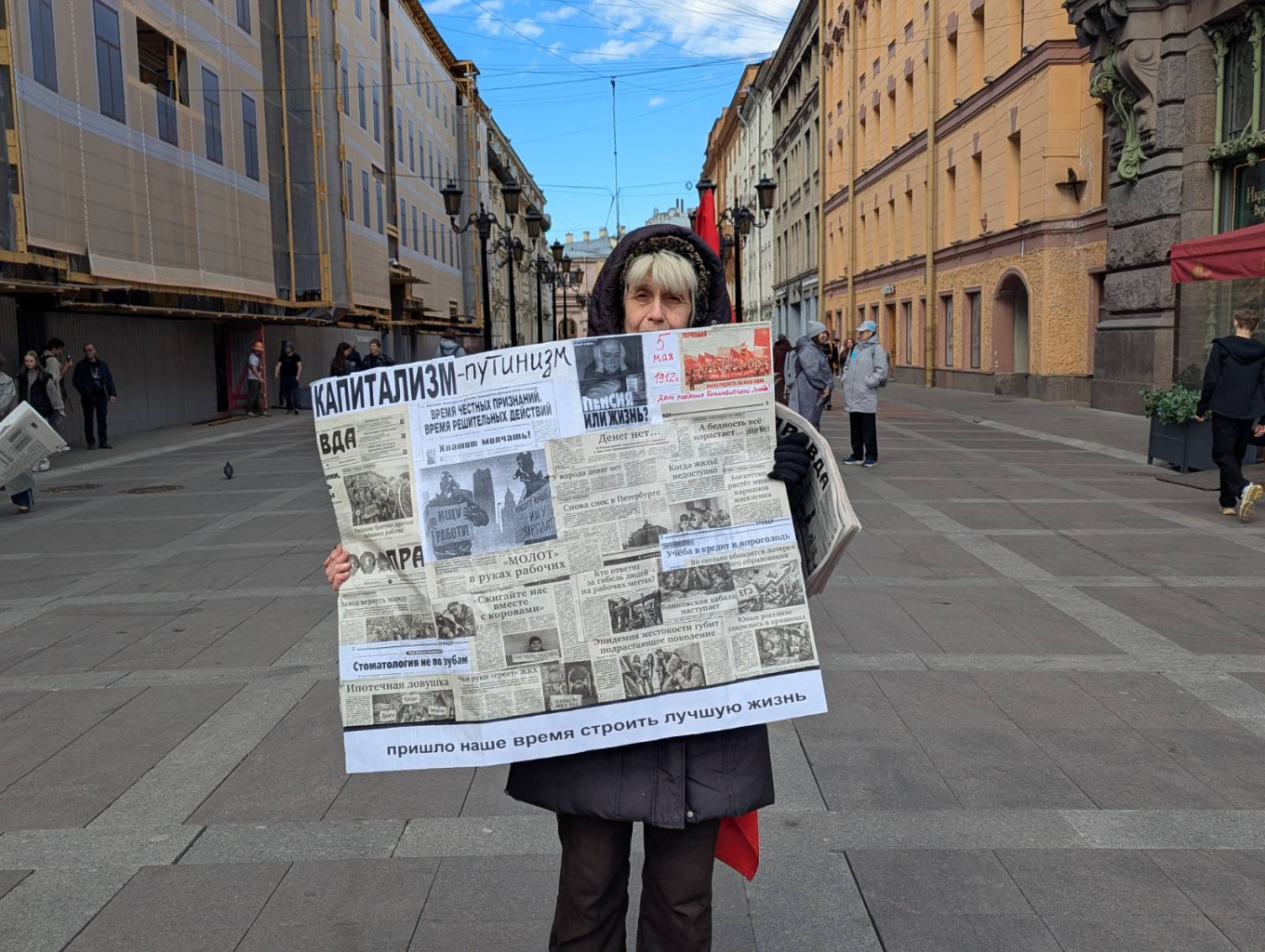
“Aren’t these exactly the problems people are worried about today?” she asks.
“There is one problem that isn’t mentioned on your placard,” a man replies.
Both immediately understand the reference.
“Yes, it’s the SVO,” she says, using the abbreviation for “special military operation,” the Kremlin’s term for the war in Ukraine.
“The SVO, which they constantly compare to the Great Patriotic War. And which has absolutely nothing to do with that war. I get so worried every time I read about how they’re bombing Ukraine. If the Soviet Union had survived, this war wouldn’t have happened. This war is a direct consequence of capitalist dictatorship,” she says.
The implication of her argument is clear: if “Putinism is capitalism,” and capitalism caused the war, then Putinism bears responsibility for it — but to say so openly in Russia carries serious risks.
Instead, she confines her criticism to capitalism itself, a form of dissent that remains relatively marginal and appears to attract less scrutiny from the authorities.
Even so, passersby frequently stop to express solidarity.
Read more about: St. Petersburg , Victory Day , WWIISign up for our free weekly newsletter
Our weekly newsletter contains a hand-picked selection of news, features, analysis and more from The Moscow Times. You will receive it in your mailbox every Friday. Never miss the latest news from Russia. Preview Subscribe Subscribers agree to the Privacy Policy We sent a confirmation to your email. Please confirm your subscription.A Message from The Moscow Times:
Dear readers,
We are facing unprecedented challenges. Russia's Prosecutor General's Office has designated The Moscow Times as an "undesirable" organization, criminalizing our work and putting our staff at risk of prosecution. This follows our earlier unjust labeling as a "foreign agent."
These actions are direct attempts to silence independent journalism in Russia. The authorities claim our work "discredits the decisions of the Russian leadership." We see things differently: we strive to provide accurate, unbiased reporting on Russia.
We, the journalists of The Moscow Times, refuse to be silenced. But to continue our work, we need your help.
Your support, no matter how small, makes a world of difference. If you can, please support us monthly starting from just $2. It's quick to set up, and every contribution makes a significant impact.
By supporting The Moscow Times, you're defending open, independent journalism in the face of repression. Thank you for standing with us.
Once Monthly Annual Continue Not ready to support today?
 Remind me later. ×
Remind me next month
Схожі новини
Japan to mull whether to call China 'threat' in key papers
War update: 60 clashes on front lines since midnight, Pokrovsk axis hottest
Renewables accounted for 11% of Ukraine's electricity generation in 2025 – regulator