2026 Best Golf Cart Battery: Vatrer 48V 105Ah (UTV/ATV Compatible) — The Ultimate Power Upgrade
 May 12, 20261 hour
Industry Sponsor
0 Comments
Support CleanTechnica's work through a Substack subscription or on Stripe.
May 12, 20261 hour
Industry Sponsor
0 Comments
Support CleanTechnica's work through a Substack subscription or on Stripe.
UTVs tend to get used very differently depending on where they’re operated. In some cases, they’re weekend machines: short runs, light loads, and relatively easy terrain. In others, they’re used almost every day, hauling tools, climbing uneven ground, or covering longer distances across properties.
In my experience, it’s really in those heavier, more consistent use cases where battery differences start to show up clearly.
Lead-acid setups rarely fail all at once. What I’ve run into more often is that gradual loss of “pull.” In most 48V systems I’ve worked with, output usually sits somewhere around 150A–200A under load, but that output becomes less stable as voltage drops. The first place I tend to notice it is on longer climbs. The vehicle still works, but it doesn’t feel like it’s responding the same way anymore.
That’s usually when lithium starts to make more sense.
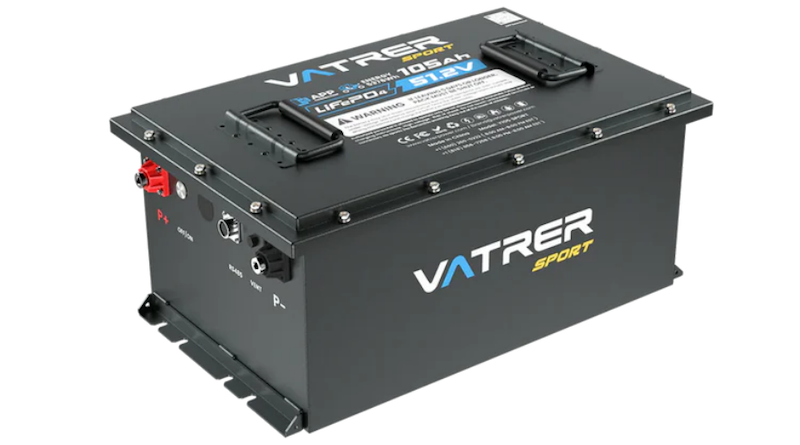
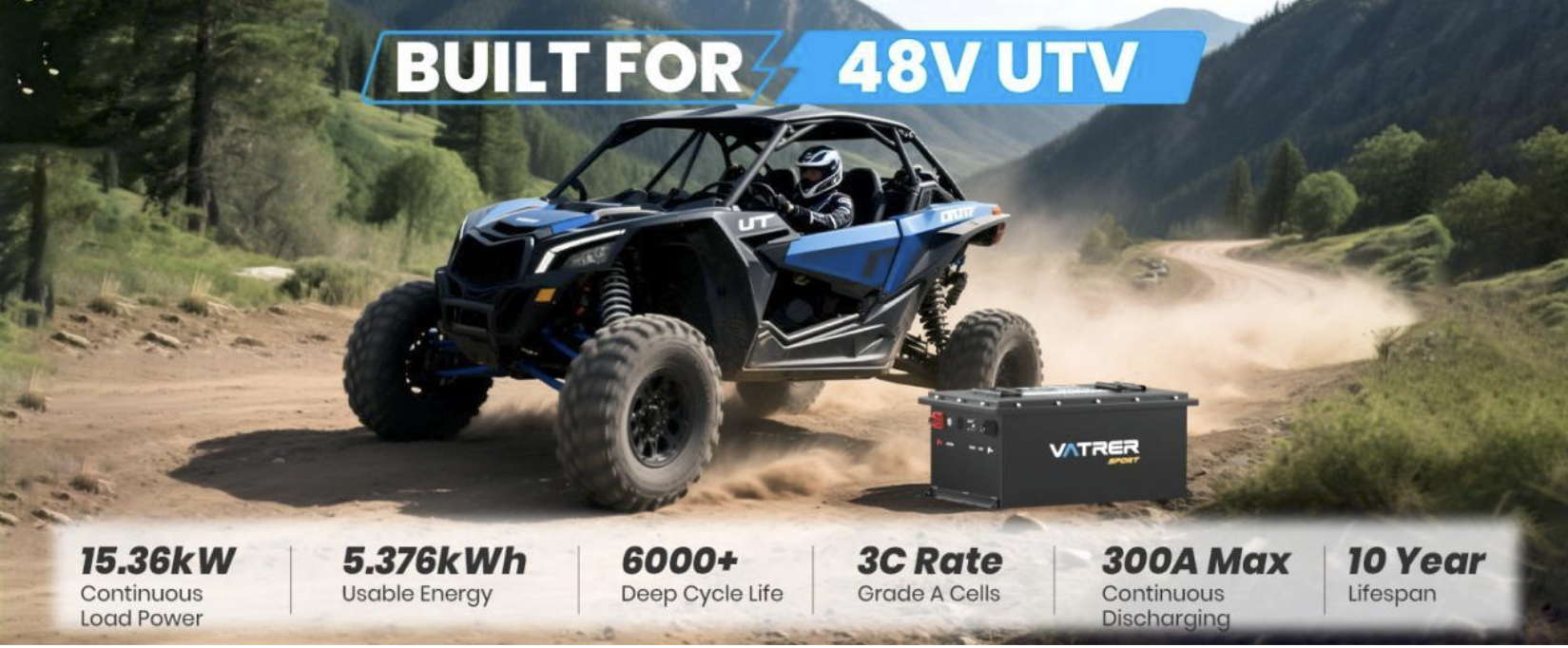
Looking at something like the Vatrer 48V 105Ah lithium UTV battery, the numbers are clearly in a different range, about 5.37 kWh of energy and up to 300A continuous discharge, with peaks around 600A. On paper, that’s a clear jump. What mattered more to me was whether that difference actually showed up once the vehicle was in use.
Power Under Load: Where the Difference Starts to Feel Real
The biggest change showed up once the vehicle was under load.
With lead-acid setups, I’ve seen output start to taper once current demand moves past 150A–180A. On longer inclines or when carrying a few hundred pounds of gear, the vehicle tends to feel like it’s gradually working harder, even if nothing else has changed.
With a lithium system capable of delivering 300A continuously, that behavior shifts in a noticeable way.
On repeated climbs or uneven terrain, the power doesn’t drop off the same way. Instead of fading halfway through, it holds much more consistently. The vehicle keeps pulling at roughly the same level, even as the load increases.
After spending some time around setups like this, that consistency stands out more than peak power itself. It just feels more predictable.

High Output: Where 300A Makes a Real Difference
The 300A continuous output (with 600A peak) is one of the specs that actually translates into something noticeable.
In my experience, that higher current capability shows up most clearly when demand changes quickly, starting on an incline, accelerating with load, or moving across uneven terrain.
Instead of the system feeling like it needs a moment to catch up, the response feels immediate and steady.
That said, I’ve also seen cases where the rest of the system limits that benefit. If the controller is capped, like around 200A–250A, then the battery won’t fully deliver what it’s capable of.
So the performance is there, but it still depends on the overall setup.
Weight: Something I Noticed More Than Expected
I didn’t expect the weight difference to stand out as much as it did, but it became noticeable pretty quickly.
A typical 48V lead-acid setup usually ends up somewhere between 250 lb and 300 lb. A Vatrer lithium UTV battery weighs only 100.31 lb.
That’s a reduction of over 100 lb, and it changes how the vehicle feels in small but consistent ways.
When turning, the steering feels a bit lighter. On uneven ground, the suspension reacts faster instead of feeling compressed. Acceleration feels slightly less burdened.
None of these changes are dramatic on their own, but taken together, they make the vehicle feel more responsive, especially when driving over rough terrain.
Energy & Range: Where Real Use Tells a Different Story
With 5.37 kWh of total energy, systems like this are often associated with 30–50 miles per charge under ideal conditions.
In practice, that number moves quite a bit, something that became clear pretty quickly.
From what I’ve seen during actual use, current draw shifts depending on how the vehicle is driven:
- Light cruising tends to sit around 50–80A
- Moderate use moves closer to 100–150A
- Climbing or acceleration can push into 200A–300A
At higher loads, energy drains much faster. During repeated climbs or heavier use, it becomes obvious that range isn’t a fixed number, it depends directly on how hard the system is being pushed.
That’s something that doesn’t really show up in specs, but becomes clear once the vehicle is actually in use.
Stability & Maintenance: The Difference Shows Over Time
Some of the biggest differences aren’t something that stands out right away, they show up over time.
With lead-acid, there’s usually ongoing maintenance:
- Checking water levels
- Cleaning terminals
- Watching voltage drop
And lifespan typically sits around 300–500 cycles.
With lithium systems rated for 4,000–6,000+ cycles, that pattern changes completely.
In longer use, the system just feels more stable. Voltage doesn’t drop as sharply after partial discharge, and there’s far less need to monitor or adjust anything between uses.
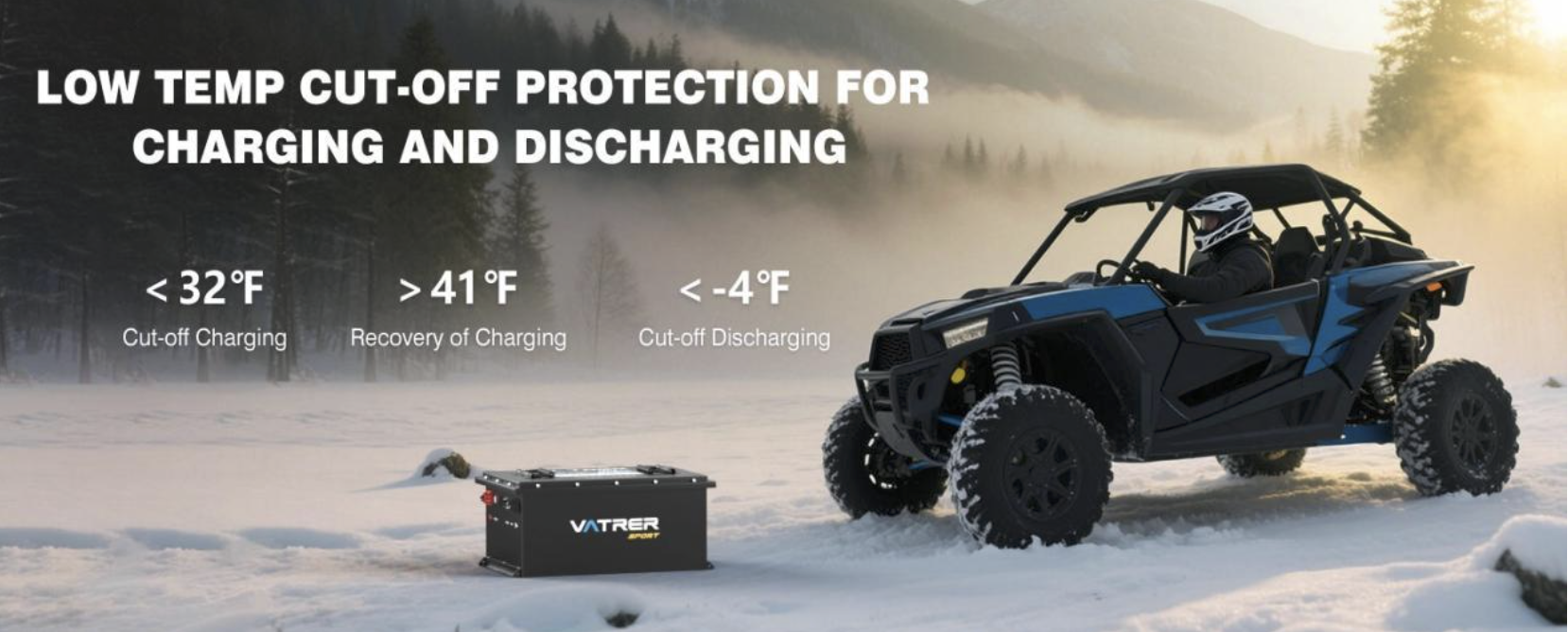
Temperature protection is another factor. Charging typically stops below 32°F, and discharge is limited below -4°F. That’s not something I actively noticed during normal use, but it’s part of what keeps the system consistent over time.
Installation: Easier Overall, But Still Depends on the Setup
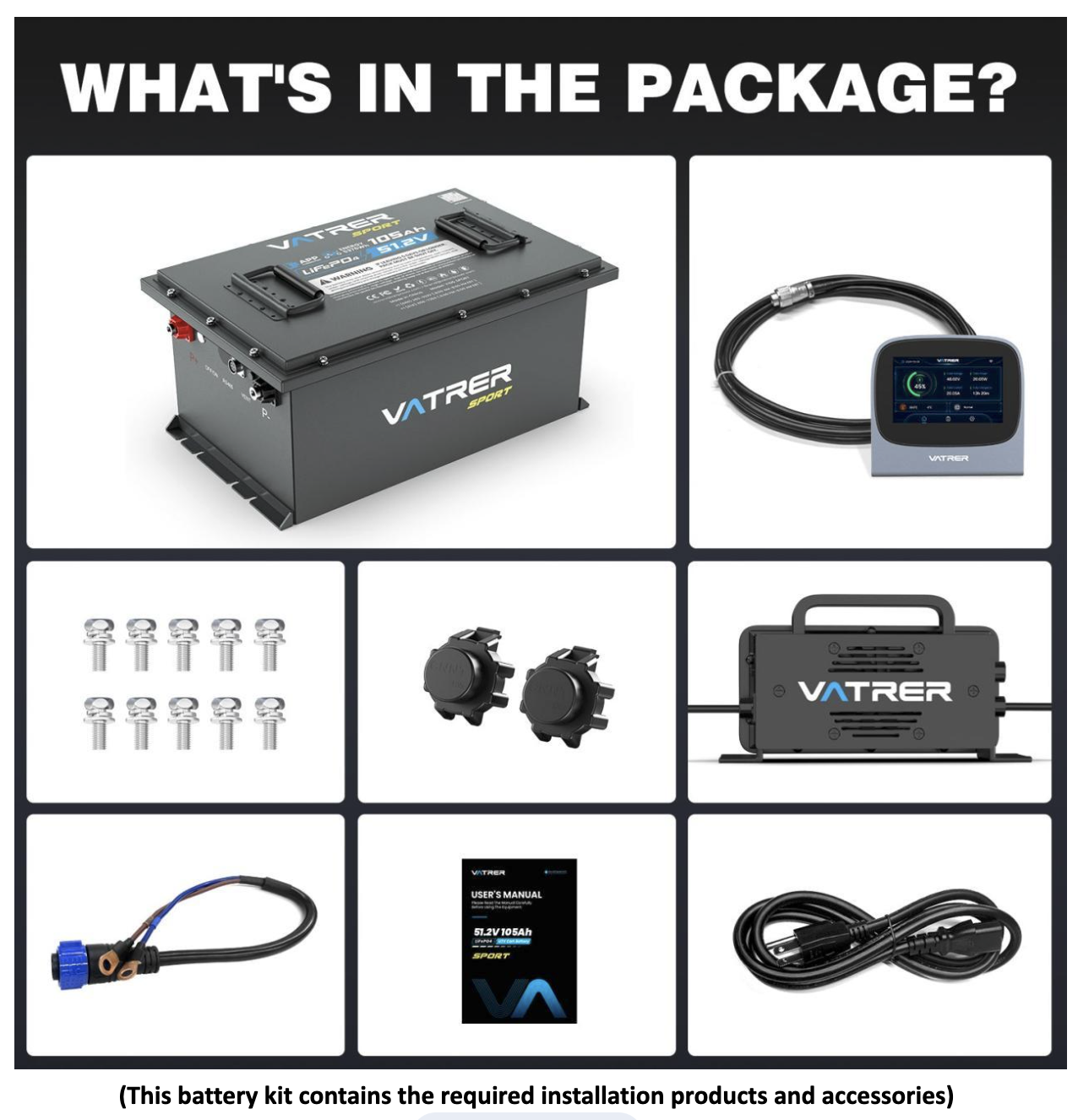
Vatrer lithium UTV batteries are described as drop-in replacements, and in many cases, that’s mostly accurate.
In setups that match well, installation can be fairly straightforward. But in practice, I’ve found it still depends on the vehicle.
Cable routing, mounting space, and controller compatibility can all affect how smooth the process is.
So, while it’s clearly simpler than building a system from scratch, it’s not always identical across every setup.
Where This Type of Upgrade Starts to Make Sense
From what I’ve seen, the benefits become more noticeable as usage increases.
In lighter, occasional use, the difference is there, but it doesn’t stand out as much.
In more demanding scenarios, daily use, carrying 200–500 lb of load, or frequent climbs, the combination of 300A output and 5.37 kWh capacity starts to feel much more relevant.
In those situations, the consistency of the system becomes the most noticeable improvement.
Final Thoughts
After spending time around setups like this, the shift from lead-acid to lithium doesn’t come down to a single spec.
It’s the combination of:
- Higher usable current (300A vs ~150–200A)
- Lower system weight (~100 lb vs 250–300 lb)
- Longer lifespan (4,000+ cycles vs ~500)
that changes the overall experience.
The Vatrer battery fits into that category. From what I’ve seen, it’s clearly designed for more consistent use rather than occasional driving.
And in the end, how much of a difference it makes comes down to one thing, how the vehicle is actually used day to day.
For more information, please visit the Vatrer Power website.
Article by Hannah Lee.
This article was kindly sponsored by Vatrer.
Sign up for CleanTechnica's Weekly Substack for Zach and Scott's in-depth analyses and high level summaries, sign up for our daily newsletter, and follow us on Google News! Advertisement Have a tip for CleanTechnica? Want to advertise? Want to suggest a guest for our CleanTech Talk podcast? Contact us here. Sign up for our daily newsletter for 15 new cleantech stories a day. Or sign up for our weekly one on top stories of the week if daily is too frequent. CleanTechnica uses affiliate links. See our policy here.CleanTechnica's Comment Policy
Share this story!
Схожі новини
Investors say they want Trump and Xi to stay out of AI’s way

Ціни на нафту падають: Трамп прямує на зустріч з Сі

У стилі "Бріджертонів": Чарльз III й Камілла підкорили весняними образами на садовій вечірці